

The Three Elements of AI Data Algorithms and Compute
Overview
Introduction
You’ve seen the headlines. An AI personal assistant writes your emails. A generative AI tool creates product images in seconds. The biggest AI companies raise billions in funding. It feels like magic, right?
But here’s the thing. Every breakthrough you’ve seen this year comes from the same three building blocks. Researchers call it the AI triad: data, algorithms, and computing power.
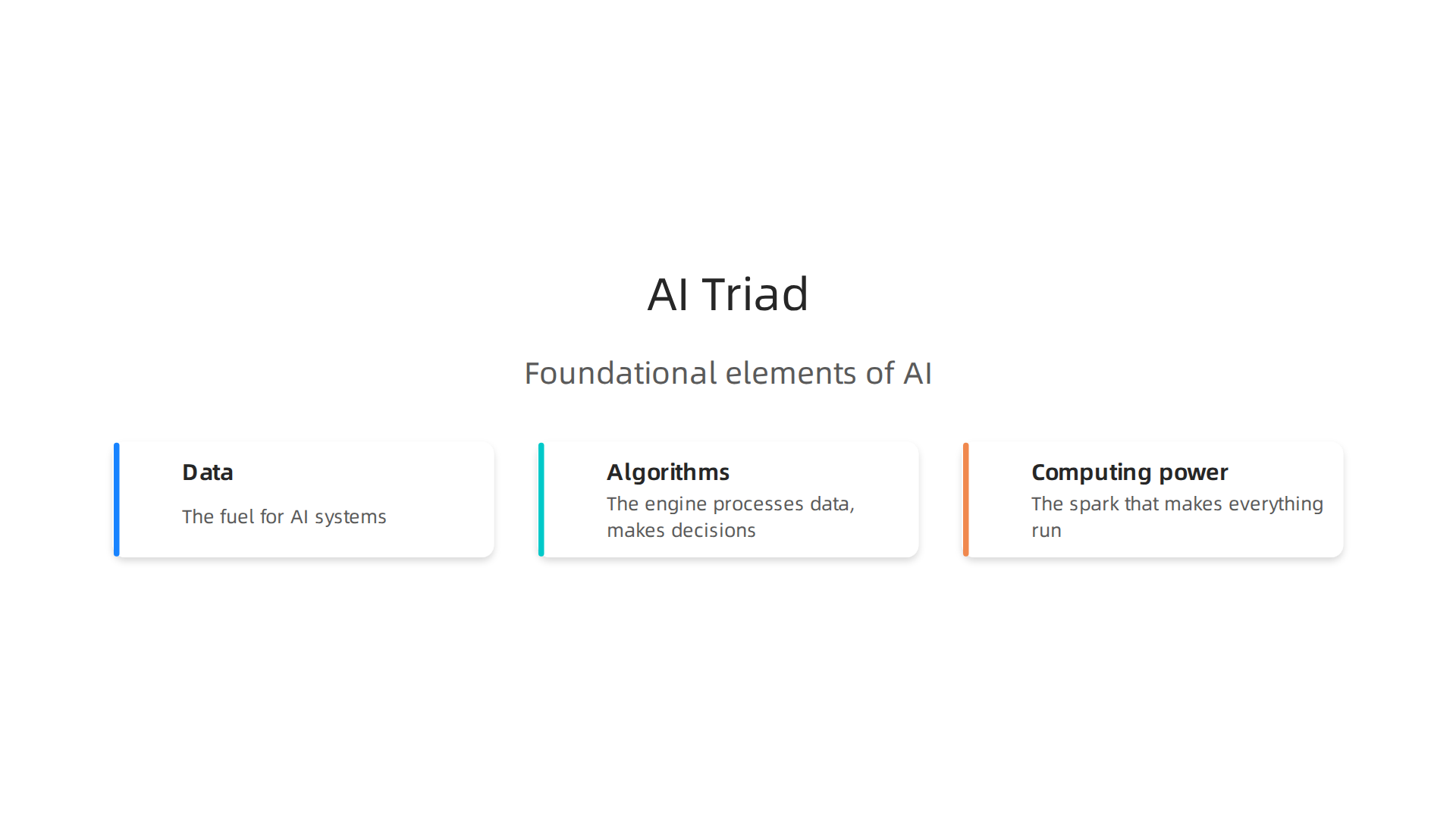
Think of it this way. Data is the fuel. Algorithms are the engine that turns that fuel into decisions. And computing power is the spark that makes everything run. Together, these components of AI power everything from a simple chatbot to the most advanced generative AI assistants on the market.
The numbers are staggering. The generative AI market alone is expected to grow from over $121 billion in 2026 to nearly $901 billion by 2033. That growth is creating massive opportunities for founders, investors, and executives. But here’s the problem most people face.
They see the results, but they don’t understand the machine underneath.
That’s where this article comes in. We’re going to break down the elements of AI using clear, research-backed explanations. You’ll learn how data, algorithms, and compute work together. You’ll see how they connect to the tools you use every day. And you’ll walk away with a framework you can actually use to evaluate opportunities.
If you’re an investor looking for the next big bet, a founder building your pitch, or an executive trying to separate real innovation from hype, this guide is for you.

Understanding these fundamentals gives you an edge. For a deeper dive on the financial side, check out our analyst perspective on AI stocks in 2026.
Before we dig into each element, here’s a quick heads up. The AI landscape moves fast. What’s cutting edge today might be table stakes next quarter. That’s why staying on top of industry intelligence matters. The Deep View Newsletter delivers clear daily updates on AI funding, trends, and breakthroughs straight to your inbox. It’s a simple way to keep your finger on the pulse.
What Are the Elements of AI? A Deep Dive into Data, Algorithms, and Compute
Let’s pull back the curtain and look at each element up close. Because when you understand these three building blocks, the hype starts to make sense.
Data: The Fuel
Every AI system runs on data. Think of it as the raw material. Without it, an algorithm is just an empty machine. According to an analysis of the fundamental components of AI, data is essential for AI systems to learn and make informed decisions. The bigger and cleaner the dataset, the better the results.
In 2026, data has evolved far beyond spreadsheets. The biggest ai companies now collect text, images, video, and sensor data from billions of sources. An ai personal assistant learns your speech patterns from thousands of voice samples. A generative ai assistant like ChatGPT trains on massive text libraries. The quality of that data determines whether the output is brilliant or garbage.
Algorithms: The Engine
If data is the fuel, algorithms are the engine. Algorithms are the rules that tell the system how to process data and make decisions. Machine learning algorithms, for instance, don’t just follow static instructions. They actually learn patterns from the data and improve over time, as IBM explains in their overview of machine learning.

There are three main types of AI algorithms: supervised learning, unsupervised learning, and reinforcement learning.
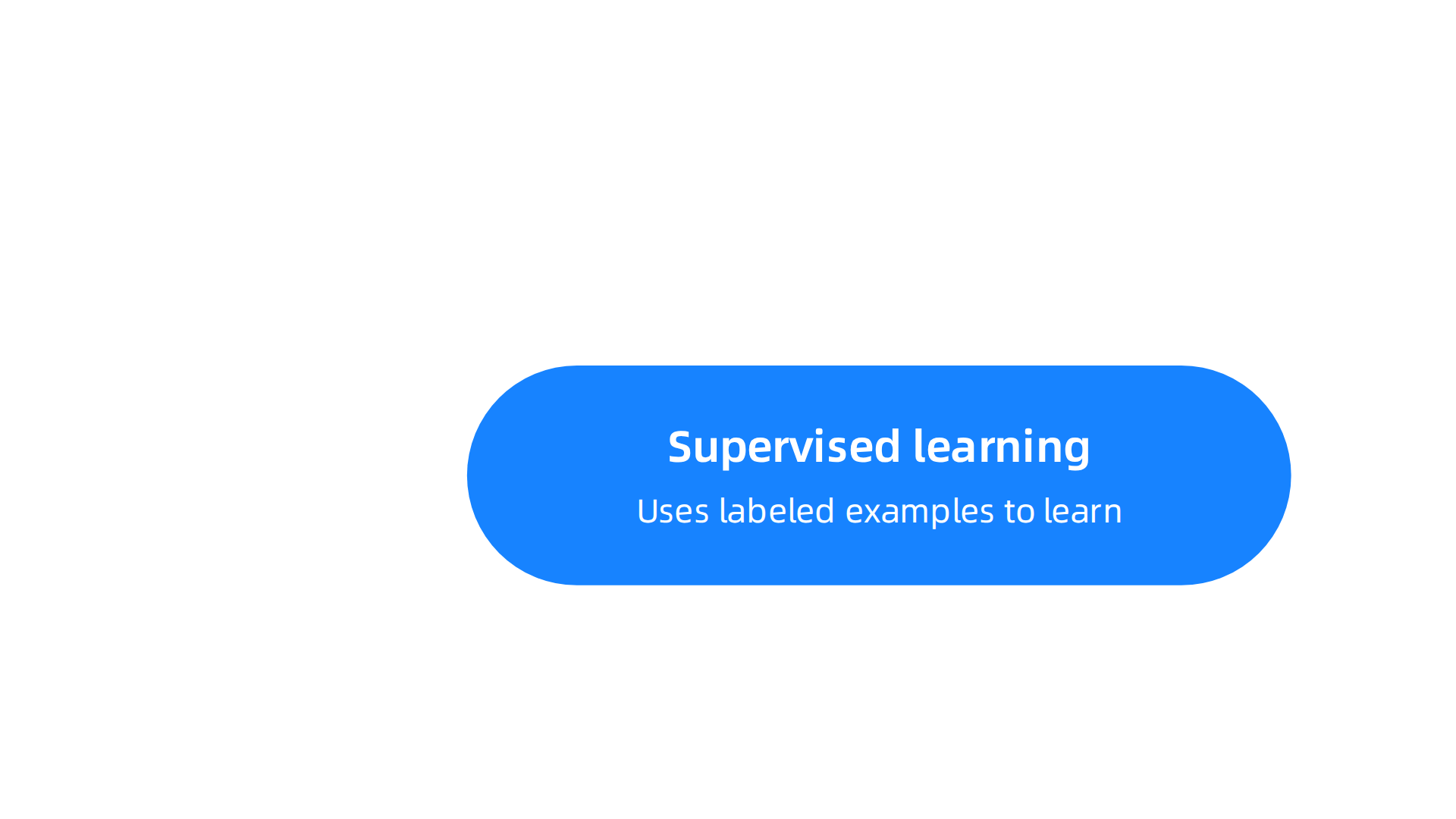
Each works differently. Supervised learning uses labeled examples. Unsupervised learning finds hidden patterns on its own. Reinforcement learning learns by trial and error, like a game player getting better with each round.
Most generative ai assistants use a type of algorithm called a transformer model. That’s the breakthrough that powers tools like ChatGPT, Claude, and Gemini. It allows the system to understand context and generate human-like responses.
Compute: The Spark
Here’s where the rubber meets the road. Algorithms need raw computing power to run. A simple algorithm on a laptop can handle small tasks. But training a large language model takes massive compute resources.
This is why the biggest ai companies spend billions on specialized processors. Graphics processing units (GPUs) and tensor processing units (TPUs) are designed to run AI workloads at incredible speeds. The AI triad of data, algorithms, and compute is now central to national security strategy, as researchers at Georgetown’s CSET have documented.
In 2026, the compute landscape is changing fast. Cloud providers race to offer faster chips. Startups build custom hardware to optimize their models. The cost of compute is a major barrier for smaller players.
Why These Elements Matter to You
Understanding these elements helps you evaluate AI companies and technologies more critically.

Is the data high quality and diverse? Is the algorithm proven and efficient? Does the company have access to enough compute power? Ask these questions and you’ll spot real innovation versus vaporware.
If you’re evaluating AI tools for your business, check out our guide on generative AI solutions for business. It walks through the practical side of choosing the right tools in 2026.
Want to stay on top of how these elements evolve in real time? The Deep View Newsletter delivers clear daily updates on AI funding, breakthroughs, and the companies shaping the future. It’s a quick way to keep your finger on the pulse without getting lost in the noise.
Generative AI: How It Leverages the Core Elements of AI
So you now know the three building blocks: data, algorithms, and compute. But here’s where it gets really interesting. Generative AI takes these elements of AI and cranks them up to a whole new level. Instead of just analyzing data, these systems actually create new content. They write essays, generate images, compose music, and even code software. And they do it by leaning hard on the same three pillars.
Data at massive scale
Generative AI assistants like ChatGPT, Claude, and Gemini train on datasets that are almost impossible to imagine. We’re talking hundreds of billions of words, millions of images, and endless hours of video and audio. The bigger and more diverse the training data, the better these models can understand context and produce realistic output. According to experts at Michigan Technological University, algorithms learn by processing data and making decisions. Generative models take that concept and supercharge it with data at internet scale.
Advanced neural network algorithms
The real magic happens inside the algorithm. Most modern generative AI assistants use a type of neural network called a transformer. This architecture was a breakthrough because it lets the model pay attention to relationships between words or pixels, no matter how far apart they are in the input. That’s why a tool like GPT-4 can write a coherent article that stays on topic for pages. The three major categories of AI algorithms are supervised learning, unsupervised learning, and reinforcement learning, as Tableau explains. Generative models often use a mix of these, especially reinforcement learning from human feedback to refine their outputs.
Compute at mind blowing levels
Training a large generative model requires enormous compute power. The biggest AI companies spend hundreds of millions of dollars on specialized chips from NVIDIA and Google. This is why the AI triad of data, algorithms, and compute is so critical. Without enough compute, even the best algorithm and data will fall short. In 2026, the race for compute is heating up fast, with cloud providers competing to offer the fastest and cheapest AI training infrastructure.
Real world examples and market momentum
Models like GPT-4, Claude 3, and Gemini Ultra show exactly how these elements work together. Their performance directly reflects the quality of their training data, the innovation of their algorithms, and the scale of compute they access. And the market is taking notice. The generative AI market was valued at over $121 billion in 2026, with projections to grow at more than 33% annually through 2033. That kind of growth drives massive funding for startups pushing the boundaries of what generative AI can do.
If you’re exploring how these models can help your business, check out our guide on generative AI solutions for business. It breaks down the practical side of choosing and implementing these tools in 2026.
Want to stay ahead of the rapid changes in generative AI and funding? The Deep View Newsletter delivers clear daily updates on breakthroughs, investments, and the companies shaping the future. It’s a quick read that keeps you informed without the noise.
AI Personal Assistants: From Simple Commands to Agentic Helpers
Remember when AI assistants could only set timers and answer basic questions? That feels like ancient history now. In 2026, the AI personal assistant landscape has completely transformed. We moved past simple voice commands into something much bigger.
Today’s generative AI assistants don’t just talk to you. They take action. They book meetings, write reports, manage your inbox, and even negotiate prices.

This shift from passive helper to active agent is called agentic AI, and it relies on the exact same elements of AI we just covered.
The evolution happened fast
Early assistants like Siri and Alexa followed rigid rules. Ask the same question, get the same answer. They had no real understanding of context. Now, tools like ChatGPT, Claude, and dedicated AI personal assistants use massive natural language datasets and reinforcement learning to understand what you actually mean. According to the team at SDG Group, this evolution from intelligent assistants to high-productivity digital peers represents a major leap forward. These systems learn from your habits, remember your preferences, and even predict what you need next.
How the elements of AI power this change
Think back to the three pillars: data, algorithms, and compute.
First, data. Modern AI personal assistants train on enormous collections of conversational text. They learn how people actually talk, ask questions, and give instructions. This real world language data makes them feel natural to use.
Second, algorithms. Reinforcement learning plays a huge role here. The assistant tries an action, gets feedback from the user, and adjusts. Over time, it gets better at completing multi-step tasks without needing step-by-step guidance. The three major categories of AI algorithms show up in different ways across these tools, but reinforcement learning is the star for agentic behavior.
Third, compute. These agents need fast processing to handle multiple tasks at once. Some processing happens in the cloud, some on your device. The biggest AI companies are racing to build faster, cheaper infrastructure. In 2026, the competition between cloud providers is intense, and that benefits everyone using these tools.
Market momentum and startup activity
The market for AI personal assistants is exploding. According to a 2026 guide from Skywork AI, the landscape is evolving from simple chatbots to complex, autonomous agents capable of transforming entire workflows.
That shift attracts serious venture funding. Startups building specialized assistants for healthcare, legal work, coding, and customer service are raising rounds at record valuations. If you track AI startup funding, you already see this pattern.
Independent reviews like the one from Arahi AI show that the best tools now compete on memory and cross-app action. That means your assistant can jump between your calendar, email, and CRM without losing context. That’s the dream, and it’s real today.
Want to follow the latest funding rounds and product launches in the agentic AI space? The Deep View Newsletter delivers clear daily updates on which startups are raising, which tools are winning, and where the smart money is going. It’s a fast read that keeps you in the loop without the clutter.
How the Elements of AI Are Driving Startup Funding and Investment
So here’s the thing. The same core elements of AI that turned personal assistants into agents are also what investors are betting on. If you’re trying to understand where the money is flowing in 2026, you need to look at how startups handle data, algorithms, and compute.
Investors aren’t throwing cash at every company with "AI" in its name. They are looking for real technical moats. And those moats come from mastering the elements of AI.
Data as a moat
Some startups own proprietary data that nobody else has. Think of a healthcare AI company that trained on millions of anonymized patient records. Or a legal AI that ingested every court case from the last 20 years. That data is hard to replicate. According to the team at Eqvista, seed-stage AI startups get valuations about 42% higher than non-AI peers. Why? Because investors believe that unique data gives these startups a head start that competitors can’t easily copy.
Algorithms as a moat
Other startups build novel algorithms that solve problems in smarter ways. Maybe they developed a new reinforcement learning technique that trains agents faster. Or they created a lightweight model that runs on a phone instead of a server. These algorithmic breakthroughs attract venture capital because they promise better performance with less cost. The generative AI market was already valued at $121.1 billion in 2026 and is expected to hit $900.7 billion by 2033, according to Coherent Market Insights. Much of that growth will go to companies with superior algorithms.
Compute as a moat
Then there’s the infrastructure layer. The biggest AI companies and a wave of new startups are racing to build more efficient chips, cheaper cloud clusters, and faster inference engines. Compute isn’t just about raw power anymore. It’s about cost efficiency. A startup that can run the same model at half the price has a massive advantage. Q1 2026 shattered all venture funding records, with investors pouring $300 billion into 6,000 startups globally, as reported by Crunchbase.
A huge chunk of that went to compute-focused plays.
Three clear segments in 2026 funding
If you track funding rounds today, you’ll see three distinct categories:
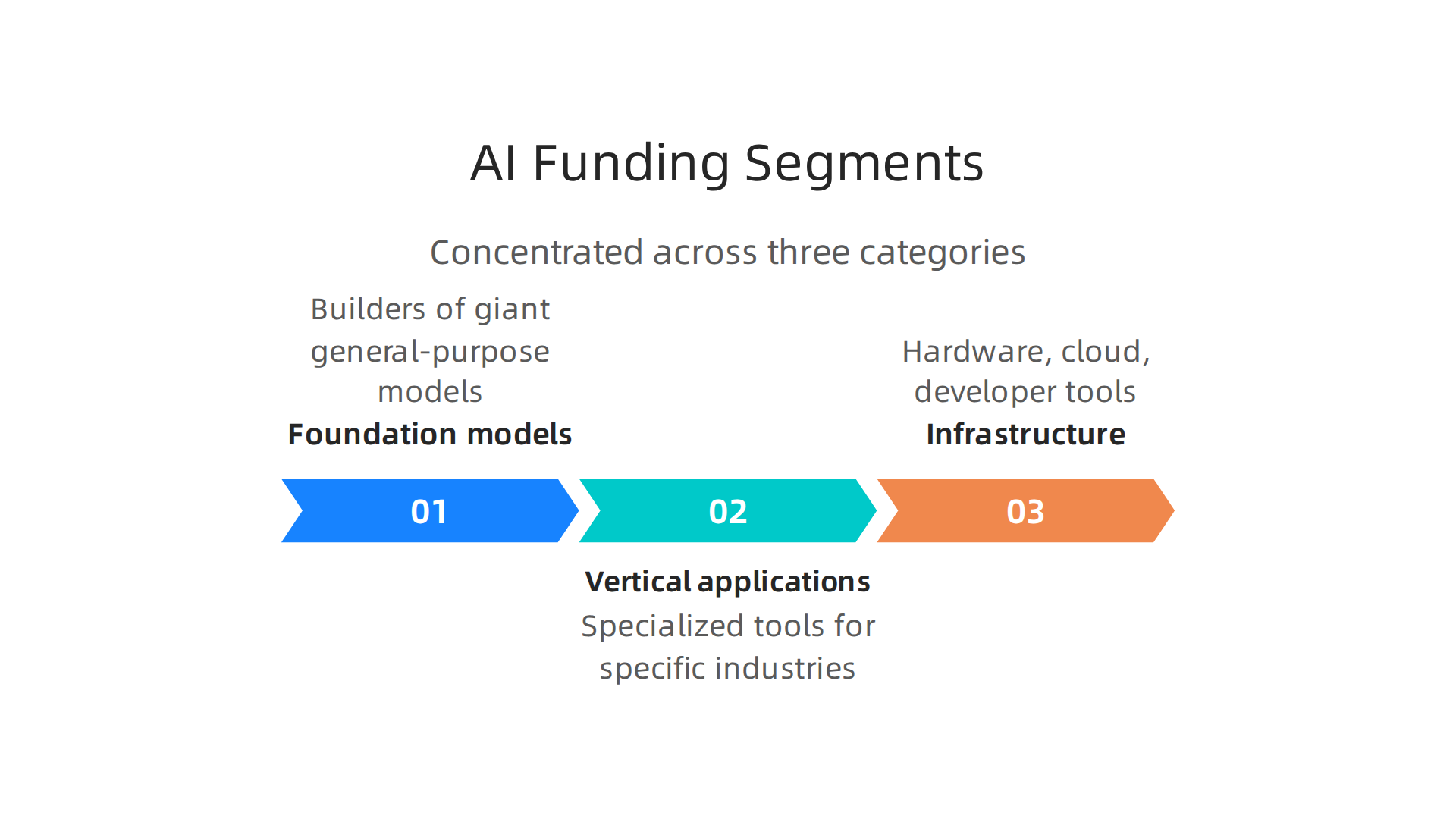
- Foundation model companies: Think OpenAI, Anthropic, and other builders of giant general-purpose models. They attract the largest rounds, often in the billions.
- Vertical AI applications: Startups building specialized tools for healthcare, legal, coding, or customer service. These companies use existing foundation models but layer on proprietary data and workflow algorithms. Our coverage of recent funding rounds in AI highlights some of the most interesting vertical plays.
- Infrastructure and tooling: Companies providing the hardware, cloud services, and developer tools that make AI possible. These are the picks-and-shovels plays of the AI gold rush.
Understanding the elements of AI helps you evaluate which startups in each category have genuine staying power. A vertical AI app with weak data or a thin algorithmic layer might be easy to copy. A foundation model company without an efficient compute strategy could burn through cash too fast.
Why this matters to you
Whether you are an investor, a founder, or just someone watching the space, knowing how these elements drive funding gives you a sharper lens. You can spot hype versus real substance. And you can make smarter decisions about where to put your time or your money.
The AI funding landscape moves fast. New rounds close every day. To stay ahead of the biggest deals and the smartest strategies, you need a reliable source. The Deep View Newsletter delivers clear daily updates on which startups are raising, which tools are winning, and where the smart money is going. It’s a fast read that keeps you in the loop without the clutter.
Challenges and Considerations: What Professionals Need to Know
Here’s the honest truth. All that money and all those headlines can make your head spin. In 2026, the AI space is moving so fast that staying informed feels like a full time job. And that creates real problems for professionals.
Information overload is real
Every day there are new funding rounds, new model releases, and new claims about what AI can do. In Q1 2026 alone, investors poured $300 billion into 6,000 startups globally, according to Crunchbase. That is a lot of announcements to track. The problem is not a lack of information. It is having too much and not knowing what matters.
Most professionals end up reading dozens of sources. Tech blogs. VC newsletters. Company press releases. Social media threads. It is fragmented and exhausting. You spend hours scanning headlines but still feel like you might miss the one deal or trend that actually matters for your work.
Fragmentation makes it worse
The information you need rarely lives in one place. A startup funding announcement might be on Crunchbase one day and in a niche newsletter the next. Investor sentiment shows up in podcast clips and Twitter threads. Regulatory updates pop up in government PDFs. Piecing it all together takes serious effort.
This is exactly why having a reliable filter is so important. If you are looking for a way to cut through the noise, you might find value in how a platform like How YouLearn AI cuts through information overload.

It shows that smart curation beats endless scrolling every time.
Ethical and regulatory concerns are growing
Beyond the noise, there are serious questions that professionals cannot ignore. Bias in AI models. Safety risks from generative systems. Copyright battles over training data. These issues directly affect investment decisions and adoption rates.
The Stanford HAI 2026 AI Index Report notes that generative AI reached 53% population adoption within three years, faster than the PC or the internet.

That speed brings scrutiny. Regulators in the EU, US, and elsewhere are drafting new rules. Companies that ignore these risks may face fines, lawsuits, or reputational damage.
For investors and founders, ethical concerns are now a due diligence item. A startup with a biased model or unclear data rights is a liability. Understanding the elements of AI helps you spot these red flags early. If a company cannot explain how its data was collected or how its algorithm makes decisions, that is a warning sign.
How the elements of AI give you clarity
This is where your mental model of data, algorithms, and compute becomes your superpower. Instead of trying to follow every headline, you can ask three simple questions:
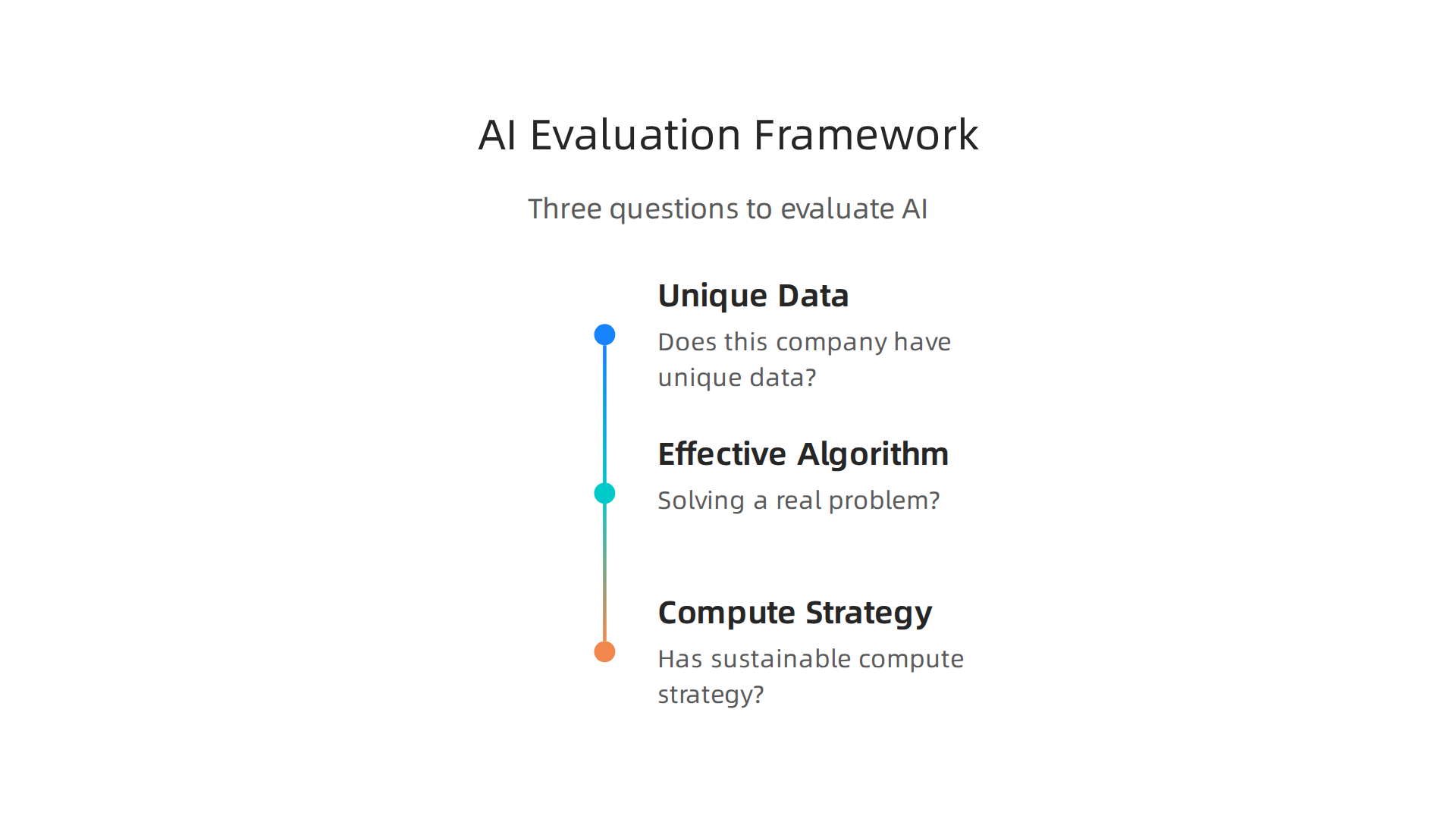
- Does this company have unique or high quality data?
- Is its algorithm solving a real problem better than alternatives?
- Does it have a sustainable compute strategy?
When you filter news and opportunities through these three lenses, the noise falls away. You stop chasing hype and start focusing on substance. The same framework that helps investors pick winners can help you decide which tools to use, which companies to watch, and which trends to ignore.
The bottom line
The AI landscape in 2026 is exciting but messy. Information overload, fragmentation, and ethical concerns are real barriers. But you do not have to solve them alone. A clear understanding of the elements of AI gives you a compass. And a trusted source of curated intelligence saves you time.
If you want to stay ahead without the clutter, The Deep View Newsletter delivers clear daily updates on funding, tools, and strategies. It is a fast read that keeps you focused on what actually matters. Skip the noise and get the signal.
Summary
This article breaks down the three core elements that power modern AI—data, algorithms, and compute—and explains how they work together to produce everything from chatbots to advanced generative assistants. It describes what each element does (data as fuel, algorithms as the engine, compute as the spark), why scale and quality matter, and how generative AI and agentic personal assistants amplify those needs. The guide connects these fundamentals to real-world concerns: startup funding, technical moats, compute costs, and ethical or regulatory risks. Readers learn practical questions to evaluate AI tools and companies, how to spot hype versus substance, and ways smaller teams can compete. The piece also emphasizes the pace of change in 2026 and recommends focused intelligence to stay informed without getting overwhelmed. After reading, you’ll have a simple, usable framework to assess AI technology, tools, and investment opportunities.