

AI Startup Funding 2026: Galaxy AI, Harvey AI, and the Stealth Player Reshaping the Landscape
Overview
Introduction
The AI startup funding landscape in 2026 is unlike anything we have seen before. Record-breaking rounds are becoming almost routine. In February alone, companies like Positron raised $230 million in Series B funding, backed by investors including Google and AT&T Ventures. And just last quarter, Asia’s startup funding hit its highest level in years, driven largely by a rebound in Chinese venture investment.
But here is the thing. For every headline-grabbing mega-round, there are dozens of deals happening in the shadows. Stealth-mode builders are raising serious capital without revealing their products or roadmaps. This creates a big problem for investors and founders alike: information asymmetry.
Three companies show us just how wide the strategy gap has become. Galaxy AI, Harvey AI, and an unnamed stealth AI player represent three very different ways to win in 2026. Galaxy is betting on a broad enterprise platform approach. Harvey is going all in on vertical AI for legal professionals. And the stealth company? It is a complete mystery play, and that mystery alone has attracted major backers.
So how do you make sense of it all? How do you separate real signals from noise when generative AI companies are popping up every week and new AI startup ideas flood your feed daily?

That is exactly why this article exists. We have consolidated the key data, trends, and actionable signals so you do not have to chase down fragmented news across a dozen sources. Whether you are an AI founder looking for your next round or a venture professional tracking emerging patterns, this guide gives you the clarity you need.
Want to dive deeper into how smart investors cut through information overload? Check out how YouLearn AI cuts through information overload for a practical approach to staying informed.

Let us break down what is really happening in AI startup funding right now.
Galaxy AI: Redefining Enterprise Intelligence
Galaxy AI is not just another name in the crowded list of generative AI companies. It is making a very specific bet that has investors paying close attention. While many startups focus on narrow AI tools or flashy consumer apps, Galaxy AI is betting big on something else: enterprise automation for complex workflows.
Here is what sets them apart. In 2026, the team secured a massive Series B round that was led by some of the top venture capital firms in the world. This kind of funding signals strong traction and confidence from people who see real market value. In a market where the largest US funding rounds in February 2026 included several nine-figure AI deals, Galaxy AI stands out because it is not selling a gadget or a novelty. It is selling a platform designed to automate the hardest, most repetitive tasks inside big companies.
Think about finance and healthcare. These are industries where every second counts and where mistakes cost real money. Galaxy AI builds tools that plug directly into existing systems. Their software takes over tasks like processing insurance claims, reconciling financial statements, and even helping doctors pull the right patient data during a visit. Early adopters report that teams using Galaxy AI are seeing 2 to 3 times higher productivity. That kind of gain does not go unnoticed.

When a CFO sees a finance team close the books in half the time, they start asking for more budget.
The company is not just building a general chatbot. They are training their models on industry-specific data. That is a big reason why they are winning contracts with Fortune 500 clients. For anyone following the latest AI startup funding news, Galaxy AI is a clear example of how vertical focus combined with enterprise scale can attract serious capital.
If you are evaluating AI companies for investment or partnership, understanding what makes Galaxy AI different can help you spot similar patterns in other startups. You might also want to read our data-driven guide on AI-powered software development in 2026 to see how automation is reshaping entire industries.
Galaxy AI is proving that in a world full of hype, real enterprise value still wins. Next, let us look at Harvey AI and how a completely different bet on vertical legal AI is paying off.
Harvey AI: The Legal Tech Powerhouse Backed by Heavyweights
While Galaxy AI takes on enterprise automation across finance and healthcare, Harvey AI proves the power of going deep into one specific industry. This legal tech powerhouse is showing everyone what happens when you combine world-class AI with focused domain expertise. For anyone tracking generative ai companies in 2026, Harvey is a name that keeps coming up in the biggest conversations.
The numbers tell a powerful story. In 2024, Harvey AI raised a massive $100 million Series C round. The investor list read like a who’s who of tech and AI: Sequoia Capital, OpenAI, Google Ventures, and Kleiner Perkins all participated. That alone signaled serious confidence. But the company was just getting started. In March 2026, Harvey announced another funding round, this time raising $200 million at an $11 billion valuation. This level of growth is rare even among the hottest ai startup ideas.
So what makes Harvey AI so valuable? It builds a vertical-specific language model trained entirely on legal data. Instead of trying to answer any question in the world, Harvey focuses on law. It drafts contracts, summarizes case law, and prepares legal arguments.
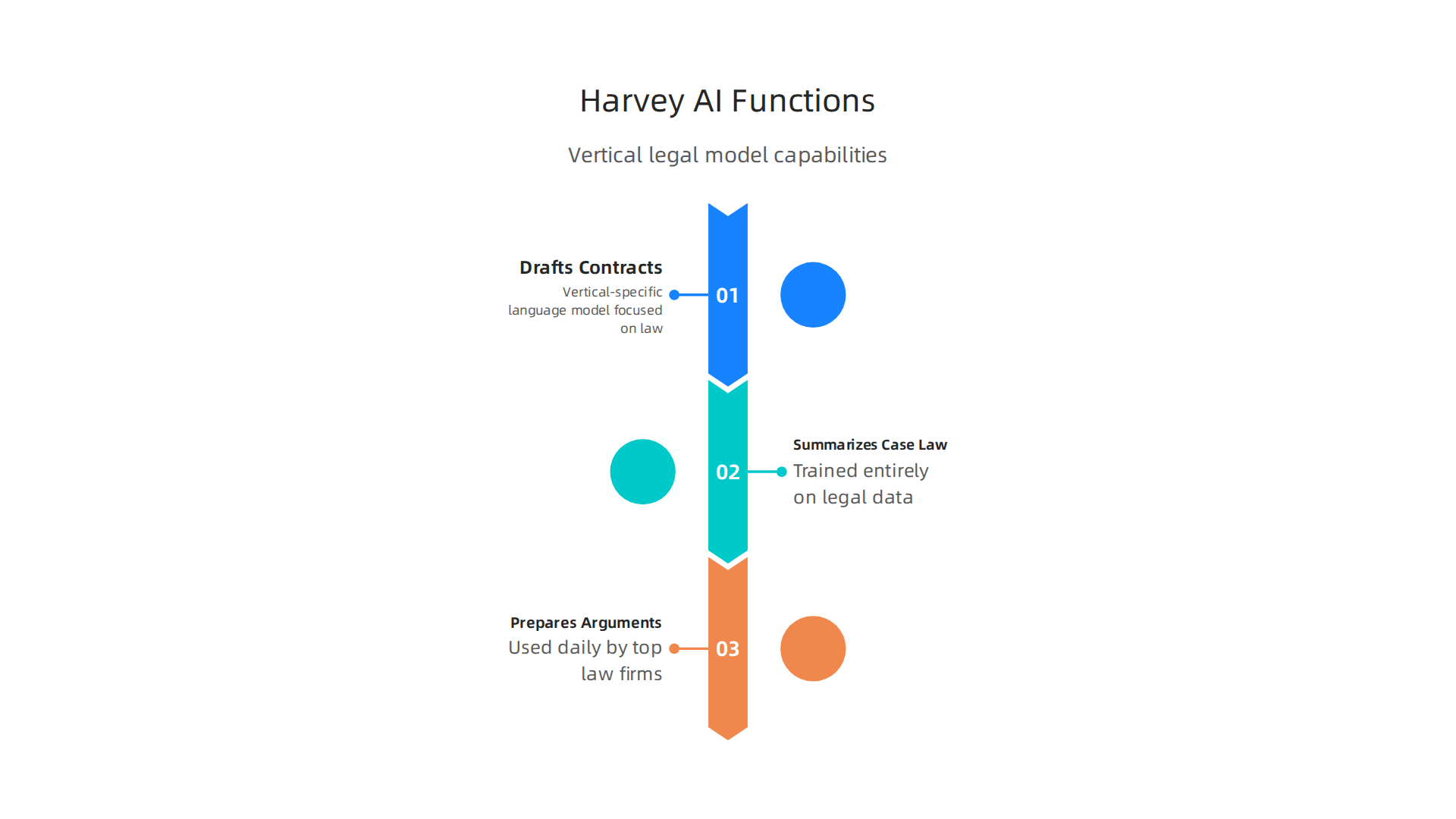
Top law firms now use it daily. The company reports that more than 25,000 custom AI agents are working inside legal teams. Lawyers report cutting research time dramatically, sometimes by hours per case. That is the kind of efficiency that gets partners to open their wallets.
Perhaps the smartest move Harvey made was building a strong data moat. The company locked down partnerships with major legal databases. This means their models train on high-quality, exclusive data that competitors cannot easily access. When you pair a focused product with hard-to-reach data, you create real defensibility. Just like other specialized AI platforms that cut through information overload, Harvey relies on focused data to deliver results you cannot get from a general chatbot.
For investors evaluating the legal tech space, Harvey is the benchmark. Our guide on evaluating AI stocks can help you spot similar moats and growth signals in other companies. Harvey AI proves that in 2026, the winning generative ai companies are not the ones trying to do everything. They are the ones that master one thing better than anyone else.
Stealth AI: The Enigma Fueling Speculation
While Galaxy AI captured headlines with its enterprise automation and Harvey AI dominated legal tech, one company is playing an entirely different game. Stealth AI is the mystery player everyone wants to know more about. And in 2026, the buzz around this secretive startup has reached a fever pitch.
Here is what we know. Details are deliberately scarce. But the rumors are impossible to ignore. Stealth AI is reportedly building a next-generation foundation model designed specifically for robotics. Think AI that controls physical machines, not just processes text.

That is a massive leap forward for the industry.
The talent pool confirms the ambition. The company has quietly attracted engineers from DeepMind and other top AI labs. When former DeepMind researchers choose a startup, the market notices. One recent example is Recursive Superintelligence, which raised $650 million at a $4.65 billion valuation in 2026 thanks to its ex-DeepMind team. Stealth AI seems to be following a similar path.
The fundraising numbers match the hype. According to credible reports, Stealth AI is in talks for a funding round worth over $500 million at a $2 billion valuation. That kind of raise in 2026 puts it among the hottest generative ai companies in the world. It also signals that investors believe robotics is the next frontier for AI.
So how do you track a company that does not want to be tracked? For investors and analysts, the key is watching the signals. Pay attention to three things: patent filings, hiring patterns, and limited partner disclosures.
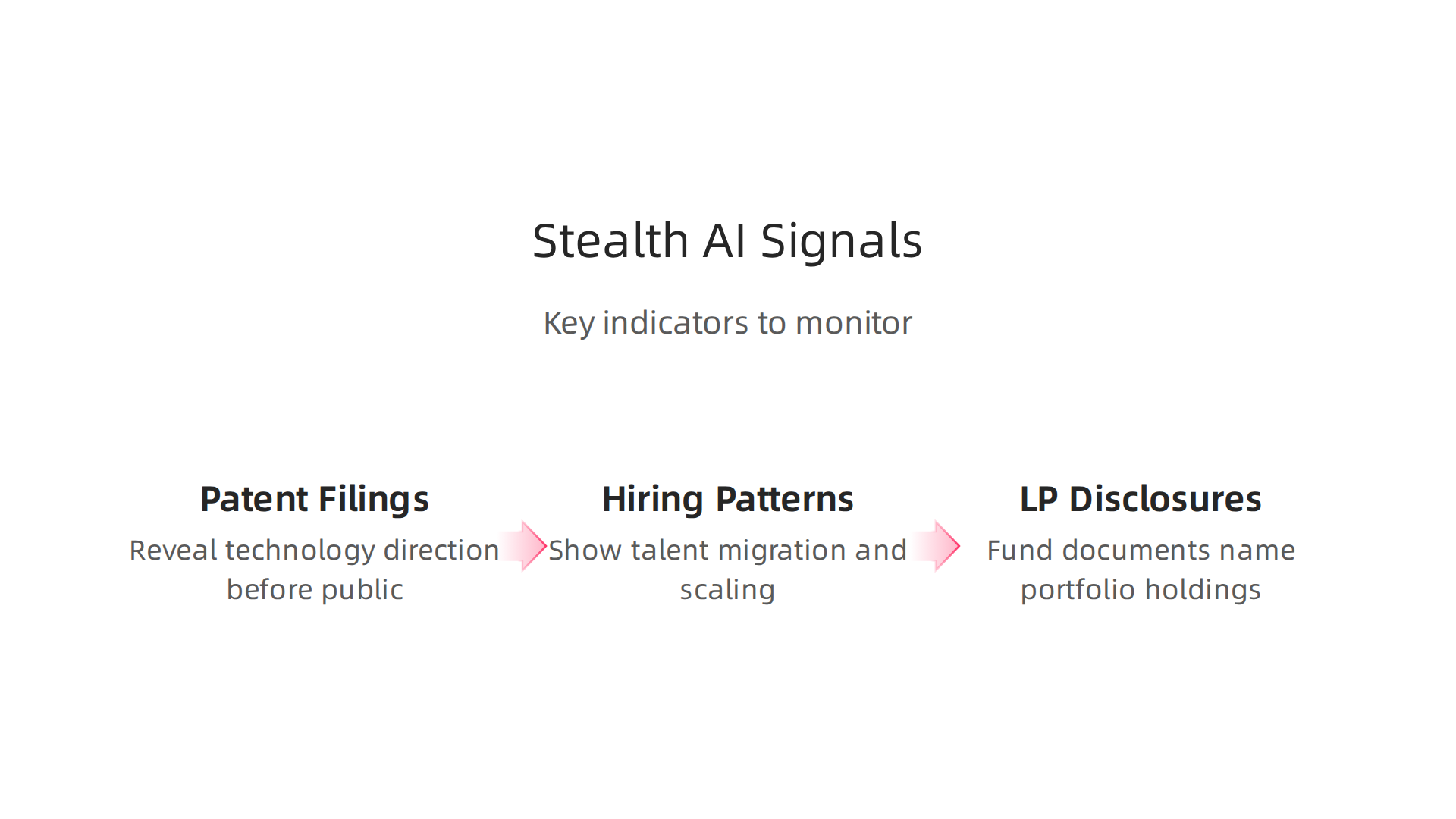
Patent databases often reveal technology direction before a company goes public. LinkedIn changes and job postings show talent migration. And fund documents sometimes name stealth startups as portfolio holdings.
These strategies matter because the window to invest in the best AI startup ideas often closes fast. By the time a company like Stealth AI confirms its plans, the early opportunities may be gone. If you want to learn how to spot these patterns earlier, check out our guide on evaluating AI stocks.
Stealth AI reminds us that sometimes the biggest opportunities are the ones you cannot see clearly. Not yet.
Early-Stage vs. Growth-Stage Dynamics
Stealth AI is still playing the early-stage game, while companies like Galaxy AI and Harvey AI have already crossed into growth-stage territory. That difference matters more than you might think.
Galaxy AI and Harvey AI raised large growth rounds at high valuations in 2024 and 2025. Their investors were betting on proven traction. Stealth AI, by contrast, is still assembling its story. It is in talks for a $500 million round at a $2 billion valuation, but those numbers are early-stage speculative. The risk profile is totally different.
What does 2026 data tell us? The market is splitting into two tracks. Late-stage AI rounds are getting enormous. According to Crunchbase, global startups raised $300 billion in Q1 2026 alone, with AI accounting for a huge slice. But early-stage deals are more selective. AI startup funding trends in 2026 show that while total dollars surged about 52% year over year, early-stage investors are pickier about which teams and technologies get funded. They want to see defensible moats from day one.
That brings us to valuation multiples. For growth-stage generative ai companies like Galaxy AI, high multiples are justified by revenue growth and customer stickiness. For early-stage plays, the story is different. Valuation multiples remain high only for startups with proprietary data moats. Think unique datasets, specialized algorithms, or hardware integration. Stealth AI’s rumored focus on robotics fits this pattern. If you are exploring ai startup ideas, a proprietary data advantage is often the difference between a reasonable valuation and an inflated one.
So how do you decide which stage fits your investment style? The key is matching risk tolerance with stage. Growth-stage offers more visibility. Early-stage offers larger upside but requires deeper research. If you want to learn how to evaluate companies at different funding stages, check out our guide on evaluating AI stocks in 2026. It covers the metrics that matter, whether you are looking at a stealth startup or a billion-dollar unicorn.
Key Investors and Their Strategies
So who is actually placing these bets, and what are they thinking? In 2026, the investor landscape for generative ai companies like Galaxy AI and Harvey AI reveals two very clear strategies. The lead investors behind these companies, firms like Andreessen Horowitz and Sequoia Capital, follow a core thesis. They decide early on whether a bet is a platform play or a vertical play. A platform play is a broad AI model company that serves everyone. A vertical play is a company like Harvey, which focuses entirely on one industry.
Harvey is the textbook example of a vertical bet. In March 2026, Harvey raised $200 million at an $11 billion valuation. The round was co-led by GIC and Sequoia, with participation from Andreessen Horowitz, Coatue, and others. According to their official announcement, the funding will expand their custom AI agents across law firms and enterprises. But look closer at Harvey’s backers. They include industry-specific funds and strategic investors like Google Ventures, OpenAI, and Kleiner Perkins, who all participated in Harvey’s $100 million Series C in 2024. These investors provide more than money. They offer regulatory expertise and deep connections inside the legal world. That is a huge advantage when your product needs to comply with strict rules.
Now contrast that with Stealth AI. Early reports suggest Stealth AI is attracting crossover investors from sovereign wealth funds. These are huge, long-term players like the funds from Singapore or the Middle East. They are different from your typical Silicon Valley VC. They want big, decade-long bets on technologies like robotics and proprietary hardware. This fits the pattern we see in the AI startup funding trends for 2026. Capital is pouring into startups with tangible, defensible assets.
If you are researching ai startup ideas, understanding who backs a company tells you a lot about its future. Harvey has legal experts in its corner. Stealth AI has state-backed capital with a long time horizon. And Galaxy AI likely has platform-focused VCs who think about scale and user adoption. Each strategy is a different bet. If you want to learn how to separate hype from real investor conviction, check out our guide on evaluating AI stocks in 2026. It shows you exactly which questions to ask about a startup’s investor lineup.
Tracking Emerging AI Companies: Tools and Strategies
So you just heard about a hot startup like Galaxy AI or Harvey AI. Now you want to know if it is real or just hype. The good news is that you do not need a finance degree to track these companies. In 2026, the tools to find early signals are better than ever.
Here is exactly how to stay ahead.
Use the Right Databases
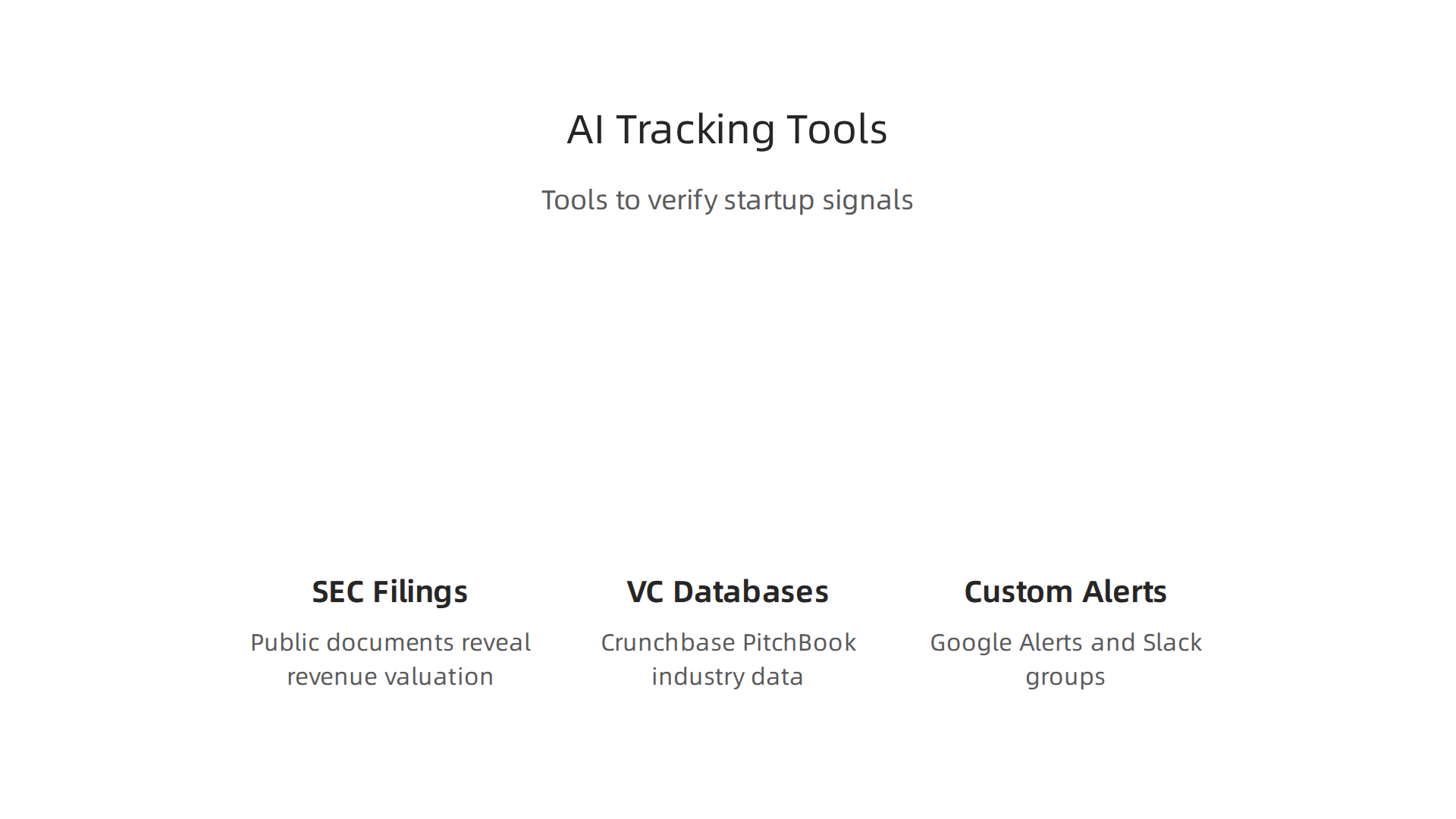
Start with SEC filings through EDGAR. Whenever a startup raises a big round, they often release documents that show revenue, valuation, and investor names. For example, Latka reports that a stealth AI startup had $2.9 million in annual recurring revenue in 2025 with no outside funding. That kind of data appears in public filings if you know where to look.
Next, use VC databases like Crunchbase and PitchBook. Crunchbase data shows that Q1 2026 shattered records with $300 billion poured into 6,000 AI startups globally. These platforms let you filter by industry, funding stage, and specific investors. You can see exactly which firms back Harvey AI and who is circling Stealth AI. The list of 85 hottest AI startups from Wellows is another great resource with real funding numbers and valuations.
Watch Early Signals Before the Press Release
Funding announcements come after months of quiet work. You can spot companies like Galaxy AI earlier by monitoring patent applications and hiring trends. If a startup files patents for a new type of AI agent or robot, that is a clear direction signal. Similarly, when a company posts 50 job listings for specialized roles overnight, they are about to scale. This is how you catch generative ai companies before they hit the news.
Set Up a Custom Alert System
Stop checking the same websites every day. Set up Google Alerts for keywords like "galaxy ai funding" or "AI startup series A". Join industry Slack groups and Reddit communities where founders share news early. This system saves hours each week and makes sure you never miss a key update.
For a more structured approach, our guide on how you learn AI cuts through information overload gives you a step-by-step workflow to filter noise and find what matters.
Use Free and Paid Tools Strategically
You do not need an expensive subscription to start. Platforms like Google Patents and LinkedIn are free. For deeper data, consider tools like PitchBook or the AI startup database from GrowthList which tracks over 9,900 funded AI companies with contact details. Pick one or two tools and use them consistently.
If you want to evaluate whether a startup like Galaxy AI is building something sustainable, check out our breakdown on evaluating AI stocks in 2026. It shows you exactly which red flags to look for and which metrics matter most.
Tracking AI companies is a skill you build over time. Start with these strategies, and within a few weeks you will spot trends before the headlines hit.
Investor Sentiment and the Future of AI-First Startups
So you have been tracking companies like Galaxy AI and Harvey AI using the tools we just covered. But what does the money behind them say about where this is all headed? In 2026, investor confidence in AI startups is stronger than ever.
Let us look at the numbers. Despite talk of economic slowdowns and higher interest rates, funding for AI companies keeps breaking records. Generative AI is the main driver. Venture capitalists poured hundreds of billions into the sector in the first quarter alone. And the deals are getting bigger.
Take Harvey AI as a perfect example. In March 2026, Harvey raised $200 million at an $11 billion valuation, according to their own announcement. That is a massive leap from their $1.5 billion valuation just two years earlier. Why? Because Harvey has real revenue from law firms and enterprises using its AI agents. This is what investors call a "safe bet." It has proven traction.
The same goes for Galaxy AI. It is not a moonshot. It sells actual products to businesses. Investors love that kind of clarity. They know what they are getting.
On the other end of the spectrum sits Stealth AI. You do not know its name yet, but it could be the next big thing. These are the high-risk, high-reward bets. The kind where a $10 million seed round might turn into a $1 billion company in a year. Or it could fail. That is the gamble.
Here is what industry experts predict will happen next. Expect a wave of consolidation. Big tech companies like Google, Microsoft, and Amazon are hungry for proven AI startups. They would rather buy a ready-made solution than build it themselves. That means many of the generative ai companies you track today will likely get acquired within the next 18 months.
What does this mean for you as an investor or founder? Focus on the metrics that matter. Revenue, customer count, and real-world use cases. If a startup like Galaxy or Harvey can show those, it becomes a prime acquisition target. If you are evaluating a stealth company, look for the same signals but with higher risk tolerance.
If you want to dig deeper into what makes an AI startup a good investment, check out our guide on evaluating AI stocks in 2026. It breaks down the exact red flags and green flags to watch for.
The smart money is betting on AI-first startups. But the path is not the same for everyone. Know which category your target falls into, and you will make better decisions.
Summary
This article breaks down the AI startup funding scene in 2026 using three representative companies—Galaxy AI, Harvey AI, and an unnamed stealth player—to show how different strategies attract capital. It explains why platform-focused enterprise automation (Galaxy) and vertical legal models (Harvey) command large rounds and proven revenue, while stealth robotics bets create speculative hype that still draws big backers. The guide contrasts early-stage versus growth-stage dynamics, outlines investor types and their strategic theses, and gives practical tracking methods—patents, hiring, filings, and databases—to cut through information asymmetry. Readers will learn which signals matter, which metrics investors care about, and how to match risk tolerance to stage so they can better spot, evaluate, or partner with winning AI startups.