
How to Find Flexible Remote Jobs for AI Professionals in 2026
Overview
Let’s be honest. You’ve been there. You search for flexible remote jobs and get flooded with listings that look too good to be true.

Some expect you to pay for training. Others aren’t remote at all. And a few are just straight-up scams.
This is the reality of the 2026 job market. About 36 million Americans work remotely at least part of the time, according to 2026 remote work statistics. But here’s the thing that matters most: only 4% of new job postings are fully remote, based on data from Robert Half’s 2026 remote work trends. That means the competition for each real opening is fierce.
For AI professionals, the stakes are even higher. You don’t just need any job. You need a role that gives you the flexibility to focus on complex problems, collaborate across time zones, and keep learning without the drain of a long commute. The wrong listing wastes your time. The wrong company wastes your talent.
That’s exactly why this guide exists. We have built a research-backed roadmap to help you identify legitimate opportunities. You will learn how to spot red flags, which platforms actually work, and where to focus your search for real remote jobs in fields like remote jobs canada and remote jobs dallas.
The goal is simple: help you find a role that is actually remote, actually flexible, and actually worth your skills.
Before diving into the strategies, there is one resource that makes staying ahead of the AI job market much easier. The AI Newsletter Worth Reading delivers clear daily updates on industry shifts, emerging companies, and funding trends. It keeps you informed without the noise.
Now let’s get into the practical steps. First up: understanding which job boards are worth your time and which ones you should skip entirely.
The State of Flexible Remote Work in 2026
But before we compare job boards, let us get clear on what "flexible remote work" actually means in 2026. Not all remote jobs give you the same freedom. Some let you set your own hours and work asynchronously. Others just move the office to your living room and expect the same 9-to-5 schedule.
Here is what the data tells us. About 73 million remote-capable jobs exist worldwide right now. Most are in tech, finance, and digital fields, according to global remote job estimates. But truly flexible roles where you control your own time are still rare.
Hybrid work is now the dominant model. Gallup reports that 52% of remote-capable employees work a hybrid schedule. Only 27% are fully remote, as shown in remote work statistics for 2026. So most jobs labeled "flexible" still require some in-office days.
The industry you choose matters a lot. Technology leads in offering genuine flexibility. Marketing and creative roles follow close behind. But retail, manufacturing, and education offer almost no remote options at all.
For AI professionals, this is actually good news. Tech companies understand that deep thinking does not fit a strict schedule. Many offer asynchronous communication and self-managed timelines. That is the kind of real flexibility worth pursuing.
If you are searching for remote jobs worldwide for AI professionals, focus your energy on industries that actually deliver on their promises.
With that context in your pocket, let us look at which job boards are worth your time.
Best Platforms to Find Vetted Flexible Remote Jobs
Not all job boards are created equal when it comes to flexible remote jobs. Some platforms go the extra mile to verify every listing. That means you spend less time dodging scams and more time applying to real opportunities.
For AI professionals, targeting the right platforms makes a huge difference. Tech-focused boards tend to offer better flexibility and higher quality roles. According to a detailed roundup of the top remote work platforms for 2026, sites like Crossover, FlexJobs, and We Work Remotely lead the pack.
Here are a few platforms worth your attention:
FlexJobs is the gold standard for vetted listings. Every single job is hand-screened. You pay a small fee, but you get real remote jobs with no fluff. It covers over 50 career categories, so it works for many fields.
We Work Remotely is one of the oldest and largest remote job boards. It attracts millions of visitors each month. Many tech and startup companies post their openings here first.
Wellfound (formerly AngelList) focuses on startup roles. If you want to work at a fast-growing AI company, this is a great place to browse. The roles tend to be more flexible because startups need self-starters.
Dynamite Jobs also vets its listings. Their tagline is "the best remote jobs" and they mean it. Each listing gets reviewed before it goes live.
AI professionals should focus on platforms that cater to tech. Avoid general boards like Indeed or Monster for remote roles. They have too many unverified postings. Stick with niche boards that care about quality.
If you are new to remote work, check out our guide to remote entry level IT jobs in 2026. It shows how to break in without prior experience.
The key is to pick 2 to 3 platforms and go deep. Do not spread yourself across ten sites. Focus on one or two that match your skill level and industry.
How to Spot and Avoid Remote Job Scams
Remote job scams are everywhere in 2026. As demand for flexible remote jobs keeps climbing, so do the number of fake listings designed to steal your time and money. Scammers know that professionals are eager to work from home, and they use that urgency against you.
The Federal Trade Commission reports that job scam losses have surged in recent years. Many victims are smart, qualified people who just missed the warning signs. The good news is that once you know what to look for, most scams become obvious.

Here are the biggest red flags to watch for:
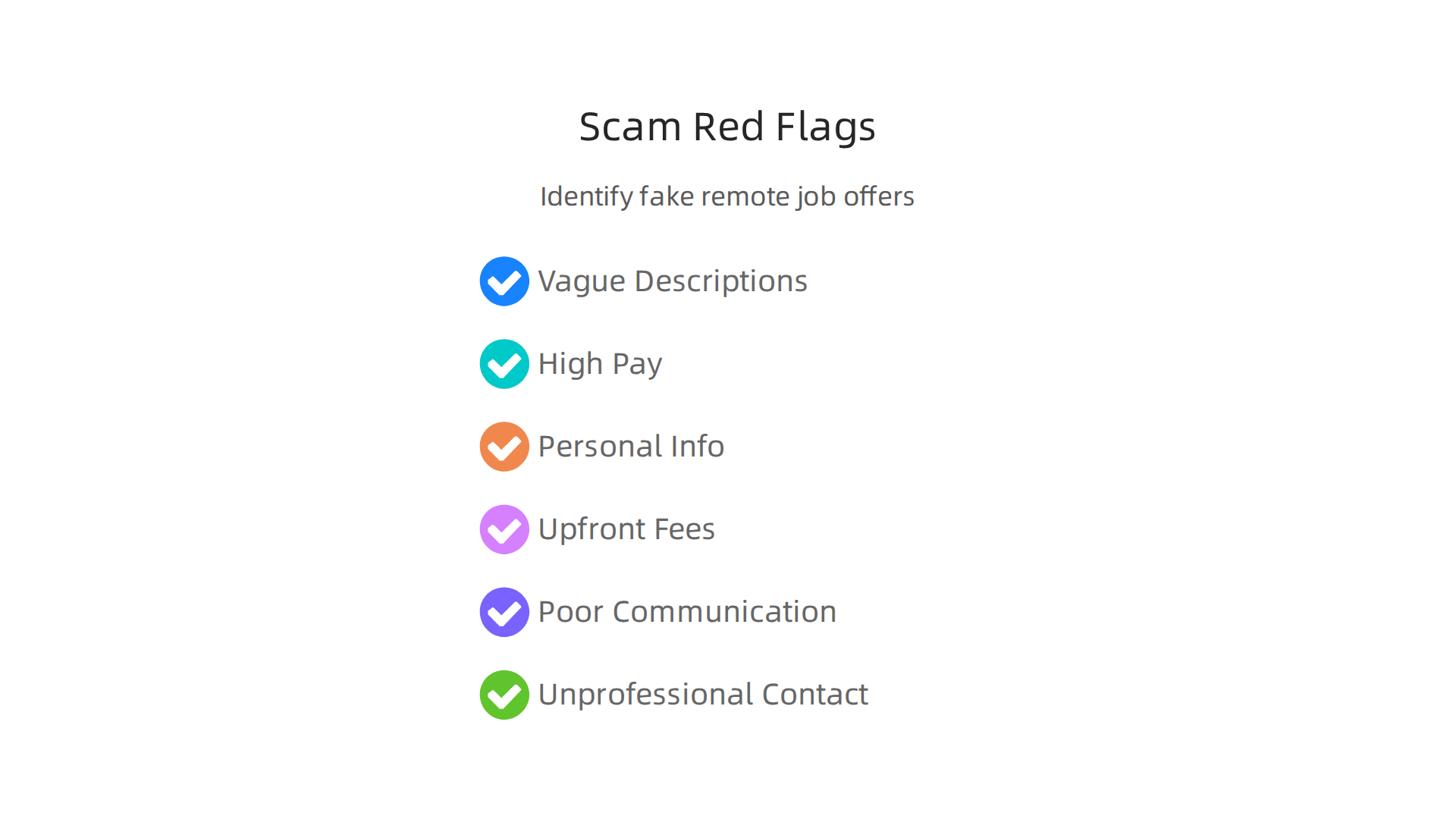
Vague job descriptions. Legitimate postings clearly explain the role, responsibilities, and required skills. If a listing says "help grow our business" with no detail about what you will actually do, that is a warning sign.
High pay for minimal work. If an ad promises thousands of dollars per week for just a few hours of data entry or simple tasks, it is almost certainly a scam. Real remote jobs offer fair pay that matches the skill level required.
Requests for personal information too early. No legitimate employer asks for your Social Security number, bank details, or a copy of your ID before you have been formally hired. Scammers use this info for identity theft.
Upfront fees. Real employers never ask you to pay for training, background checks, or equipment. If a company wants money before you start working, walk away. Many professionals share their experiences with these tactics on platforms like Reddit, where users discuss legit remote job sites that aren’t full of scams.
Poor communication. Scammers often rush you through the process. They pressure you to accept quickly or avoid phone calls. Legitimate companies take time to interview properly and answer your questions.
Unprofessional contact. If the job offer comes from a Gmail address instead of a company domain email, be suspicious. Real companies use branded email addresses.
For AI professionals, there is an extra layer of protection. You can use tools like LinkedIn to cross-check company pages and employee profiles. If a company has few employees, almost no online presence, or negative reviews from current staff, skip that listing.
Another smart move is to search for the company name plus the word "scam" to see what comes up. Communities of remote workers often flag bad actors quickly.
If you are actively searching, stick with platforms that verify their listings. Boards like FlexJobs and Dynamite Jobs hand-screen every posting. That alone filters out most of the garbage. The safest approach is to apply directly on company career pages after finding a promising lead on a trusted board.
We also recommend checking out our guide to remote jobs worldwide for AI professionals in 2026 for more tips on finding safe, high-quality opportunities that match your skills.
Trust your gut. If something feels off, it probably is. There are plenty of real remote jobs out there. Do not let a scam stop you from finding one.
Leveraging Your AI Expertise for Remote Flexibility
Here is the truth. After you learn to spot the scams, the market for real remote jobs in 2026 is wide open for AI professionals. And you have something that gives you real bargaining power.
Your AI expertise is rare and valuable. A global report from PwC’s AI Jobs Barometer shows that companies across six continents are scrambling to hire people who can work alongside AI tools. When employers cannot find enough qualified candidates, the professionals who have the skills get to set the terms.
Use that leverage to negotiate flexibility. If you want a fully remote schedule that fits your life, ask for it.

Many companies are willing to offer flexible terms to attract AI talent. Surveys show that workers value remote arrangements so highly that 37% would accept a 10% pay cut to keep working from home. When you bring in-demand skills, you have room to negotiate the setup you want.
Build a portfolio that proves your value. The strongest candidates in 2026 do not just list skills on a resume. They show real projects. Build something that solves a genuine problem. Share it on GitHub or your own site. When a hiring manager can see what you have actually built, they are much more likely to trust you with a flexible arrangement.
Go where the AI roles are. General job boards are noisy. Specialized AI communities and niche platforms list better roles with fewer scammers. These spaces attract companies that already see the value in remote talent. If you want a structured path to build the skills that set you apart, this proven six-month plan to learn AI can help you get there faster.
Staying current with what is happening in AI also helps you stand out during interviews and negotiations. The AI Newsletter Worth Reading delivers clear daily updates so you always know which companies are hiring and where the industry is headed.
Your skills are in demand. Use that leverage to find the flexible remote job you deserve.
Key Metrics to Evaluate Job Postings
Here is something that surprises many job seekers in 2026. Not every posting that says "flexible" actually means it. Some companies use the word loosely while still expecting you in an office three days a week. Others change their policies right after you accept the offer.
So how do you avoid wasting time on fake flexibility?
You need to read between the lines. Real flexible remote jobs have clear signals. False ones have red flags. Once you know what to look for, the difference becomes obvious.
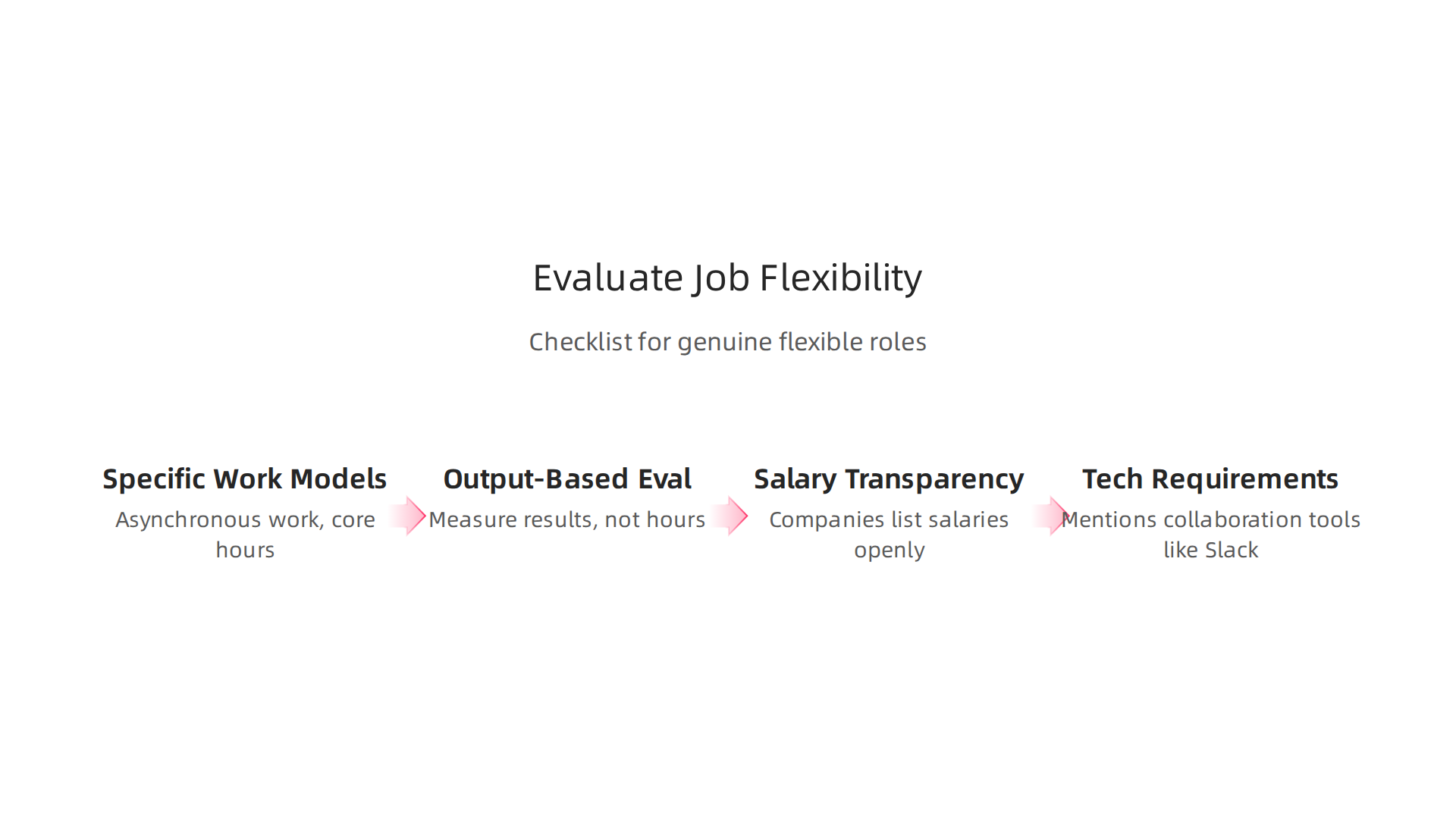
Check for specific work models. The best postings tell you exactly how the team operates. Look for terms like "asynchronous work allowed" or "core hours defined." These phrases tell you the company has built its culture around flexibility, not just written it into a job title. According to the Remote Work FAQ for 2026, you should ask directly about minimum office days and onboarding schedules during your interview. If the answer sounds vague, treat that as a warning.
Look for output-based evaluation. Companies that measure results instead of hours are much more likely to offer true flexibility. If the posting talks about goals, deliverables, and project milestones instead of "butts in seats" time tracking, that is a great sign. This shift toward outcome-based performance models is one of the top trends redefining remote work in 2026, according to workplace analysts.
Track salary transparency and tech requirements. Companies that list salaries openly are usually more serious about fair treatment across locations. The same goes for postings that mention specific collaboration tools like Slack, Notion, or Zoom. Those details show the company has invested in supporting remote teams rather than just tolerating them.
If you want to see which regions have the strongest remote job markets right now, check out this guide to remote jobs worldwide for AI professionals. It breaks down where the real opportunities are hiding.
Your skills give you leverage. But that leverage only helps if you apply to the right roles in the first place.
Networking in AI Communities for Hidden Opportunities
Here is a truth that changes everything. Many of the best flexible remote jobs never show up on job boards. They get filled through referrals, internal recommendations, or word of mouth inside trusted networks.

That means your next opportunity might not come from a search engine at all. It might come from a conversation in a Slack channel or a Discord server.
AI communities are goldmines for unlisted roles. Spaces like the AI Discord servers, LinkedIn AI groups, and specialized Slack workspaces are filled with people who share job leads before they go public. Some even have dedicated job channels where founders post openings directly. Being active in these spaces puts you first in line.
Why does this work so well? Companies that hire for remote AI roles want people who already understand the culture. They prefer candidates who come recommended by someone in their network. According to the Remote Work Trends in 2026 overview, employers now expect people to know how to work alongside AI tools. Communities are where that learning happens in real time.
Conferences and webinars open hidden doors too. Events like AI summits, meetups, and virtual roundtables are not just for learning. They are where hiring managers and team leads hang out. A quick question after a session or a thoughtful comment in a chat can turn into a job offer.
Here is a practical tip. Join two or three active AI communities this week. Introduce yourself. Share what you are working on. Ask questions. Over time, people will remember you. When they hear about an opening, you will be the first person they think of.
And if you want to stay ahead of the curve with daily AI updates that help you sound informed in these conversations, check out The AI Newsletter Worth Reading. It delivers clear, actionable insights straight to your inbox.
For a deeper look at how to build the skills that make you stand out in these communities, this guide on AI training 2026 gives you a research-backed roadmap to follow.
Negotiating Flexible Work Arrangements
You found a promising role, and the company seems open to remote work. Now comes the part that makes many people nervous. Asking for flexibility.
Here is the truth. Many employers are more open to flexible terms than you think, but they need to hear a professional proposal. You cannot just say "I want to work from home." You have to show why it works.
Focus on outputs, not hours. This is the single biggest shift in how you should approach the conversation. Instead of saying "I need to start at 10 AM," say "I will complete all weekly deliverables by Friday at 5 PM regardless of when I start." Employers care about results, not the clock. When you frame your request around what you will produce, the conversation changes entirely.
The data on The Rise of Remote Work makes it clear that employers still have obligations to remote workers around wages, breaks, and overtime. Knowing these norms helps you sound informed and prepared during negotiation.
Bring data to the table. Before you ask, research what is standard for your industry and location. If you are looking for flexible remote jobs in Canada, for example, know the local wage and hour rules. If you are based in Dallas, understand what companies in that market typically offer. Come armed with facts about how other companies handle flexible schedules, and you will look like a professional who has done their homework.
A good starting point is to look at current listings for remote jobs worldwide for AI professionals to see what flexible arrangements are already being offered. This gives you real examples to reference in your conversation.
The key takeaway is simple. Negotiate from a place of preparation, not neediness. Show what you bring and how flexibility helps you deliver more. That is how you turn a request into a yes.
Essential Tools for Managing Remote Flexibility
Getting the flexible remote job is one thing. Making it work daily is another. The right digital tools keep you productive and help you maintain boundaries.
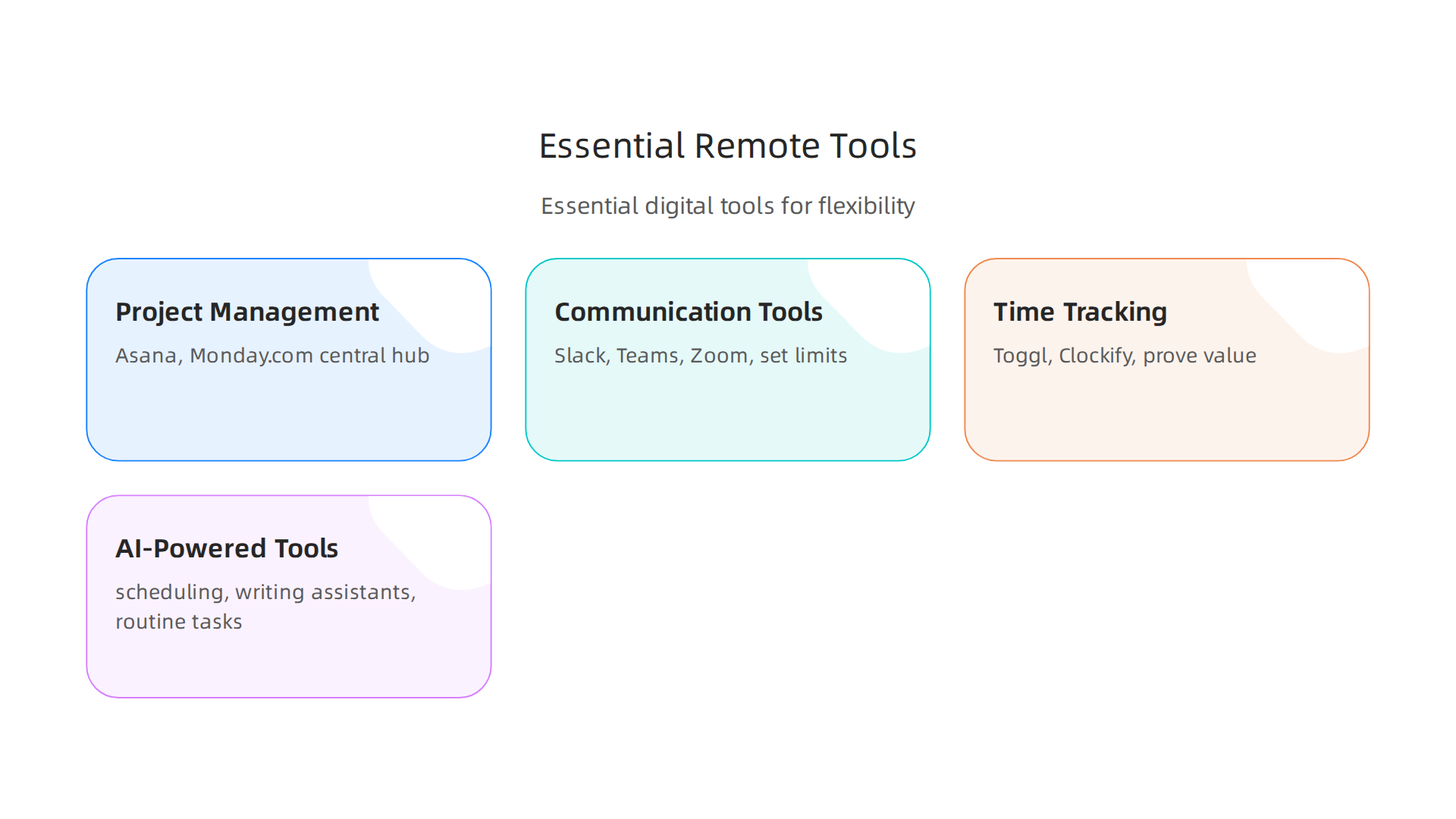
Project management tools keep everyone on track. When your team works across different time zones, a shared platform like Asana or Monday.com becomes your central hub. Tasks, deadlines, and progress updates live in one place. No more digging through email chains to find what is due.
Communication tools need boundaries too. Slack, Teams, and Zoom are essential, but using them well means setting limits. Use status indicators for focused time. Send recorded video updates instead of scheduling yet another meeting. This protects the flexibility you negotiated for.
Time tracking helps you prove your value. Tools like Toggl or Clockify show where your hours go. When performance reviews come around, you have real data on how long projects take and what you deliver. That data strengthens your case for keeping flexible terms.
AI-powered tools are a game changer in 2026. Automated scheduling, AI writing assistants, and smart inbox management cut down repetitive tasks. According to industry analysis, AI-powered productivity tools are transforming remote workflows by handling routine work so you can focus on higher value projects. Before picking a platform, you can find the best AI tools for businesses that match your specific needs.
Staying on top of these fast-changing tools takes effort. The AI Newsletter Worth Reading delivers clear daily updates on AI developments, so you always know what is worth adopting next.
The right tools let you deliver results on your own schedule. And that is what makes flexible remote work actually work.
Summary
This guide helps AI professionals find truly flexible remote jobs in the crowded 2026 market by combining data, practical checks, and platform recommendations. It explains why only a small share of listings are genuinely fully remote, how industries and role types affect real flexibility, and which job boards (like FlexJobs, We Work Remotely, Wellfound, Dynamite Jobs) reliably surface vetted opportunities. You’ll learn clear red flags that expose scams—vague descriptions, upfront fees, early requests for sensitive data—and step-by-step ways to verify companies and listings. The article also shows how to use your AI expertise to negotiate asynchronous schedules, build a portfolio that proves value, and tap AI communities and networking channels for unadvertised roles. Finally, it covers the metrics hiring managers use (output-based goals, core hours, salary transparency) and the essential tools that make flexible remote work productive and sustainable.