
AI Training 2026: Your Research Backed Roadmap to Real Skills and Career Results
Overview
Introduction: Navigating the AI Training Landscape in 2026
Feeling overwhelmed by all the AI training options out there? You are not alone.

In 2026, the demand for AI skills keeps growing, and so does the number of courses, certifications, and learning paths. Every week a new platform promises to make you an expert. But how do you know which ones actually deliver real skills and career results?
The truth is, most professionals struggle to find training that is authoritative, up to date, and structured in a way that actually sticks. Information overload is real. You can spend hours clicking through flashy course catalogs without getting closer to your goal. A recent look at 10 AI Training Trends Defining How People Learn in 2026 shows that personalized, adaptive learning is now the norm — yet many resources still feel like a maze.
That is where this guide comes in. We have done the hard work of cutting through the noise. This article delivers a curated, research-backed roadmap for AI training at every level. Whether you are a complete beginner or an experienced professional looking to level up, you will find clear, actionable advice here.
We also believe you should not have to chase scattered pieces of information. If you want to cut through noise and lead with confidence, our platform, AI Startup Funding News Today, is built to help you stay sharp on the most important AI developments.
And if you want daily, clear AI updates straight to your inbox, consider The AI Newsletter Worth Reading. It cuts through the clutter so you can focus on what truly matters.
Let us dive into the best AI training paths for 2026 — starting with how to choose the right certification for your career goals.
Foundational AI Courses and Certifications: Where to Start in 2026
You have decided to get serious about AI. Now comes the big question: where do you actually begin? Building any real skill starts with a solid foundation. For AI, that means understanding the basics of mathematics, programming, and core machine learning concepts. Skip the foundations and you will struggle later. But get them right, and everything else clicks into place.
The best way to build that foundation in 2026 is through a structured course or certification.
The top platforms like Coursera, edX, and Udacity have refreshed their tracks to match what employers actually need. A detailed comparison of the best AI certifications for 2026 shows that even short certifications can open doors if they are aligned with industry demand.
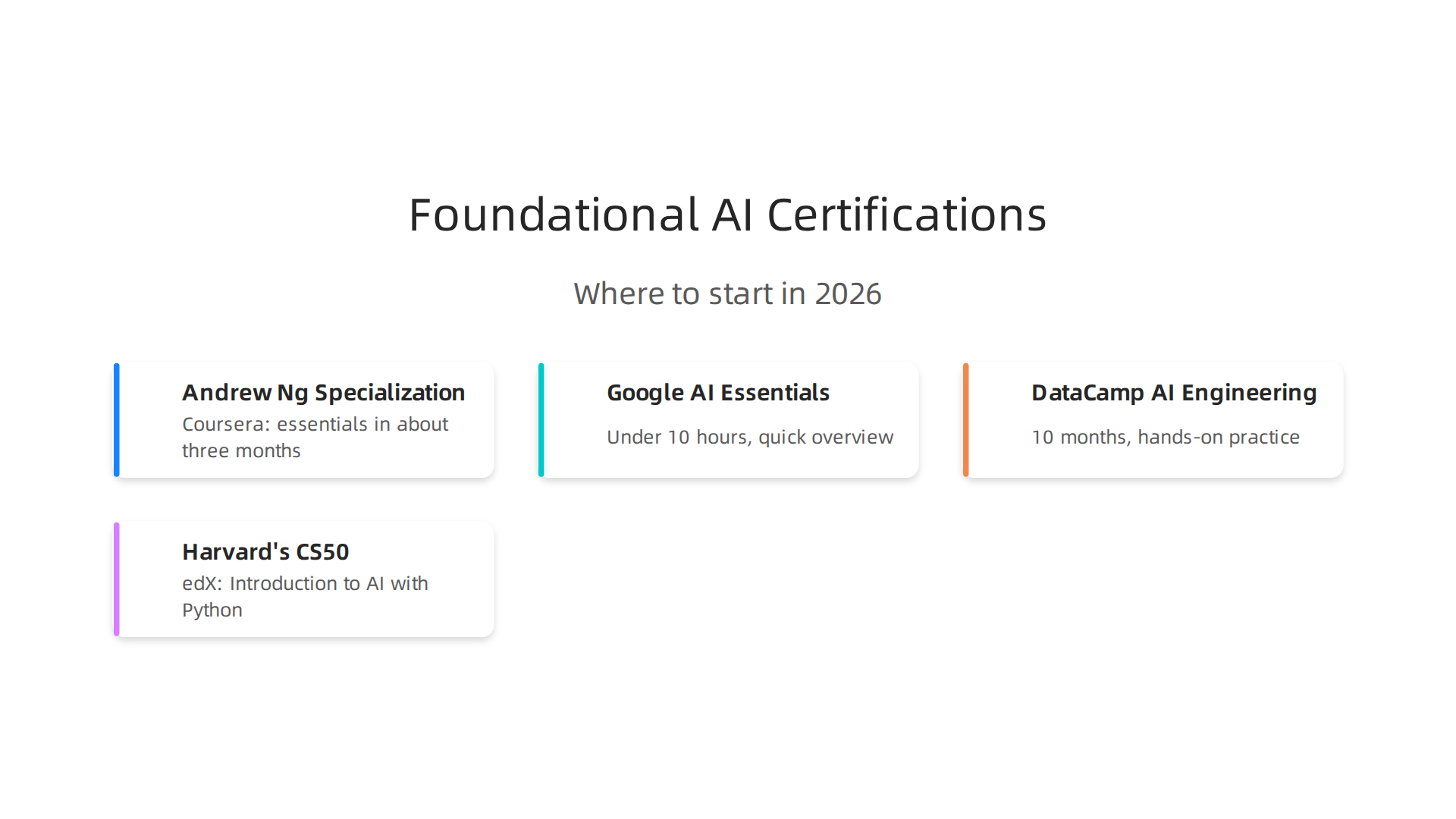
One name keeps coming up as the gold standard for learning machine learning: Andrew Ng. His Machine Learning Specialization on Coursera has been taken by over 4.8 million people.
It covers the essentials in about three months and costs around $147. For complete beginners, the Google AI Essentials certification is a great start. It takes under 10 hours and costs $49 per month. You get a quick overview without getting lost in deep theory.
If you prefer a more interactive approach, DataCamp offers an AI Engineering track that runs about 10 months. It is designed for career switchers who want hands-on practice with real data. And if you are looking for a free option, Harvard’s CS50 Introduction to AI with Python is available on edX at no cost. ZDNET calls it one of the best free AI courses and certificates for upskilling in 2026. It gives you a strong start without spending a dime.
As you begin your AI training, you might also wonder about the broader landscape of AI tools and platforms. We have a guide on how to find the best AI tools for businesses that can help you see how these skills apply in the real world.
Remember, your goal is not to collect certificates. It is to build real skills that help you solve problems. Start with one of these foundational options, practice the basics, and then move to more advanced topics. That simple approach works every time.
University Programs and MOOCs: Deep Dives for Serious Learners
Once you have the basics down, you might want to go deeper. That is where university programs and MOOCs (Massive Open Online Courses) come into play. They offer structured, rigorous training that goes far beyond quick introductory courses.
Top universities now offer dedicated AI master’s degrees and micro-credentials. Georgia Tech’s Online Master of Science in Computer Science with an AI specialization is one standout. It costs around $7,000 total. That is a fraction of the price of a traditional degree. The curriculum covers machine learning, computer vision, NLP, and reinforcement learning. And since it is an accredited degree from a major university, it carries serious weight with employers. According to DataCamp’s ranking of the best AI courses to take in 2026, Georgia Tech’s program is the best educational value in graduate AI training.
If a full degree feels like too much, many universities offer shorter micro-credentials. These are bite-sized programs that focus on specific skills like deep learning or generative AI. They usually cost less than $500 and take a few months to complete. The best part is many of them partner with big tech companies. Microsoft, Google, and AWS all work with universities to create courses that match what employers actually need.
MOOCs give you flexibility. You can learn at your own pace while holding down a job. Many courses include hands-on labs where you work with real AI tools. This matters because you need practice, not just theory. As you dig deeper, check out our proven six-month plan for learning AI to structure your time and stay on track.
Remember that serious learners do not just watch videos. They code, build projects, and solve problems.

A university program or a high-quality MOOC forces you to do the work. And that is exactly what builds real, lasting skill.
As you advance in your AI training, staying informed about the latest industry developments is crucial. The AI Newsletter Worth Reading delivers clear daily updates so you never miss important shifts in the field.
Public Datasets for AI Training: Where to Find Quality Data
You cannot build a good AI model without good data. Think of it this way: your model learns from examples. If your examples are limited, biased, or messy, your results will be too. Understanding the three elements of AI data, algorithms, and compute helps you see why data is the foundation.
The good news is you do not have to start from scratch. Many public repositories offer ready-to-use datasets. The trick is knowing which ones to trust and how to use them legally.
Top Places to Start
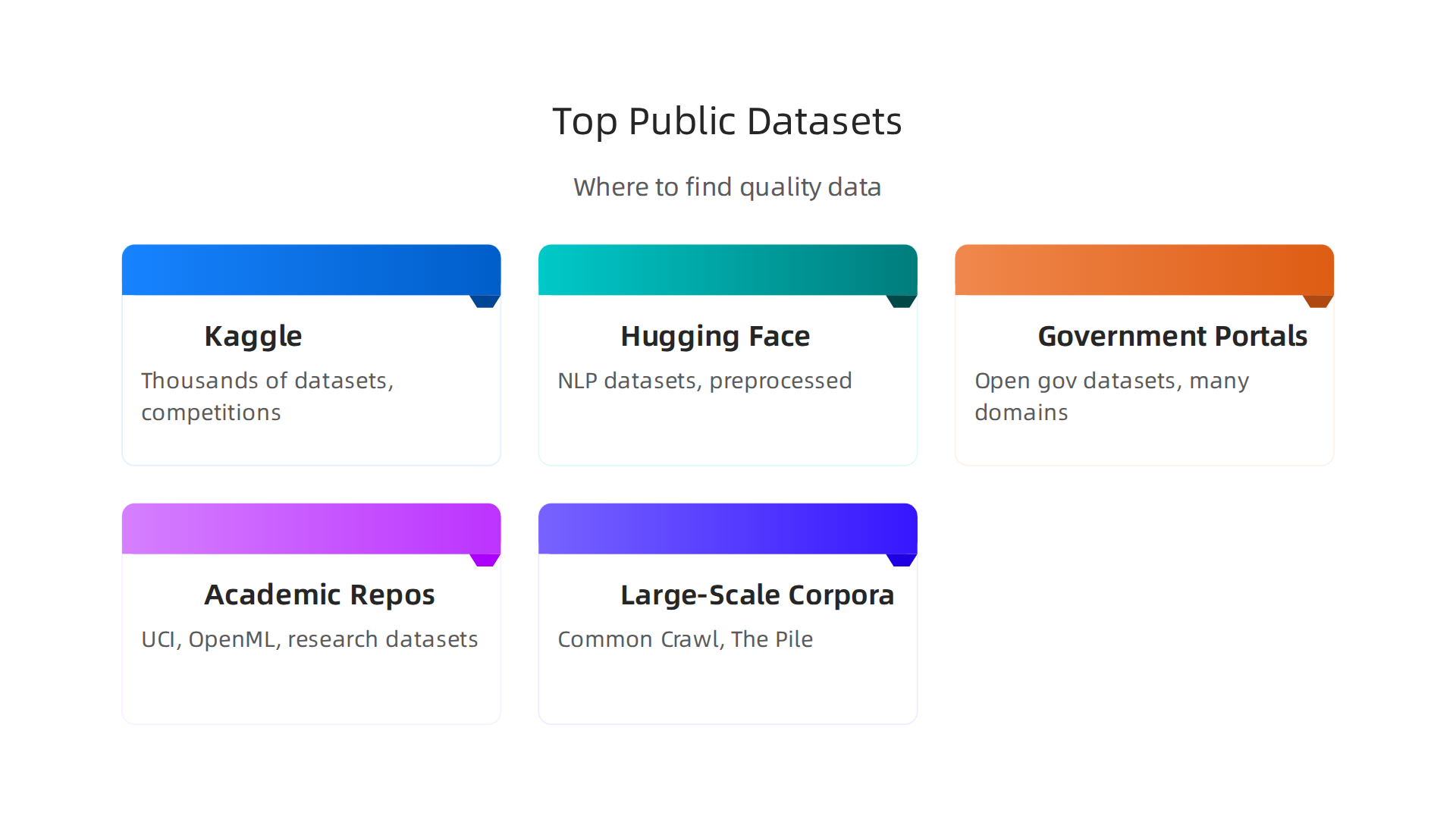
- Kaggle: This platform hosts thousands of datasets on topics from finance to sports. You can also join competitions to test your skills.
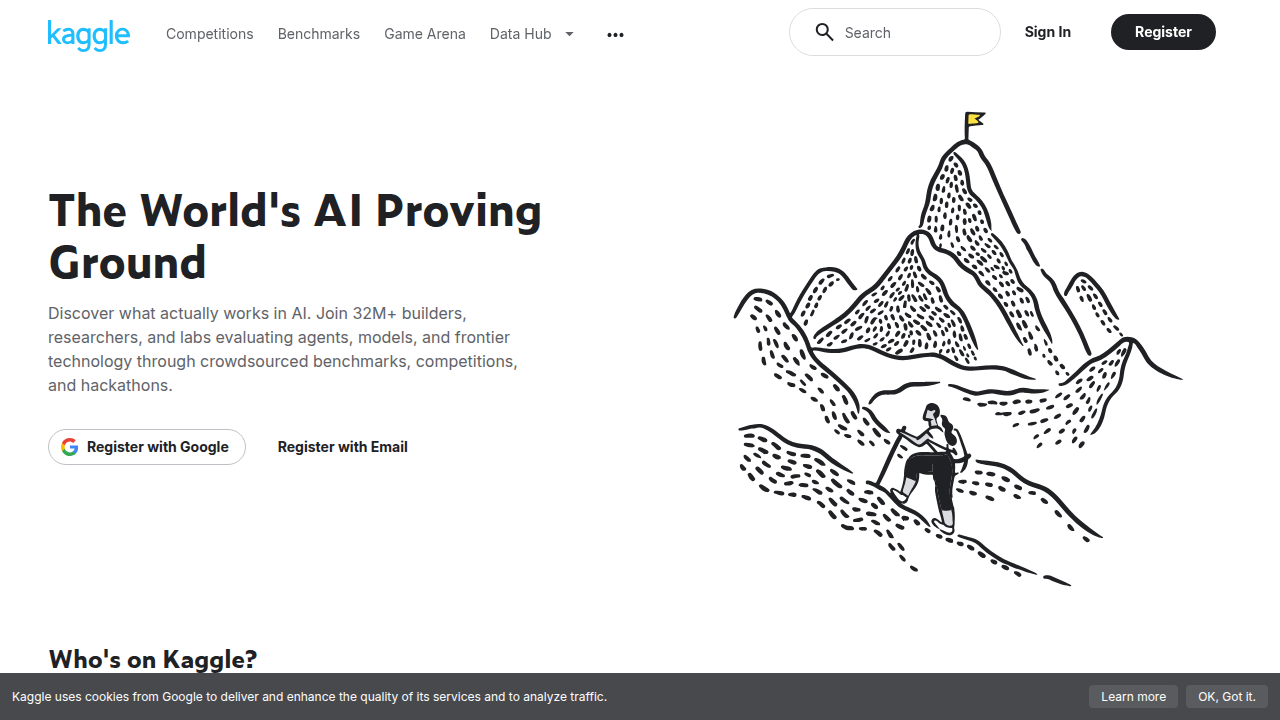
According to a guide on the best AI training datasets for machine learning, Kaggle is a go-to for both beginners and experts.
-
Hugging Face Datasets: Essential for NLP tasks. It offers thousands of datasets for text, image, and audio tasks, many preprocessed and ready to load with minimal code.
-
Government Portals: Websites like Data.gov provide enormous datasets on climate, healthcare, and transportation. These are usually well-maintained and free to use.
-
Academic Repositories: UCI Machine Learning Repository and OpenML contain classic datasets used in research. If you want to compare your model against established benchmarks, start here.
-
Large-Scale Corpora: For deep learning, you might need massive datasets like Common Crawl or The Pile. An overview of the top 10 LLM training datasets for 2026 highlights Common Crawl’s 345 terabyte March 2026 crawl as a go-to for pretraining language models.
Watch Out for Licensing
Not all public data is free to use however you want. Some datasets are for research only. Always check the license before downloading. Ignoring this can get you into legal trouble later.
Ethical Sourcing Matters
Beyond legality, think about ethics. Was the data collected with consent? Does it contain harmful stereotypes? Building responsible AI starts with responsible data choices.
As you work with datasets, you will want to stay updated on the latest tools and trends. The AI Newsletter Worth Reading delivers clear daily updates on AI research, datasets, and industry shifts straight to your inbox.
Start exploring these platforms today. The sooner you get quality data, the sooner you will build models that actually work.
Computing Power and Cloud Platforms: Training Without Breaking the Bank
Getting quality data is only half the battle. Once you have your dataset, you need serious computing power to actually train your model. Training a modern AI model can take hours or even days. And the hardware to do that is not cheap. But in 2026, you have smart ways to keep costs down without sacrificing performance.
Cloud GPUs Are the Go-To Option
The biggest names in cloud computing offer powerful GPU instances built specifically for AI training. AWS, Google Cloud, and Azure all let you rent computing power by the hour. This means you only pay when you are training. No need to buy expensive hardware upfront. You can scale up for a big training run and scale back down when you are testing small changes. This pay as you go model is why most teams choose cloud platforms for their AI training work.
Free Tiers and Grants Lower the Barrier
You do not need a big budget to start. Google Colab Pro gives you access to GPUs for a very low monthly fee, and the free version still works well for small projects. AWS Educate and Google for Education offer credits to students and researchers. These free AI study tools let you learn the ropes and build your first models without spending much money. They are a great way to get hands-on practice before committing to larger budgets.
Other Options Worth Knowing About
Cloud is not your only choice. Some teams choose on-premise clusters when they work with sensitive data that cannot leave their control. Others use edge computing for real time applications where low latency matters. Each option has trade-offs in cost, speed, and control. The right choice depends on your specific needs.
Building a strong AI foundation means understanding both data and compute. If you want to go deeper on how these pieces fit together, check out this guide on building strong AI foundations for lasting success.
AI Research Papers and Repositories: Staying at the Cutting Edge
AI changes fast. What was state of the art last month might be old news today. If you want to build useful models, you need to know what the smartest researchers are working on right now. Following the right papers and repositories is how you keep your skills sharp and your models competitive.
Pre-Print Servers Give You Early Access
The best AI research does not wait for journal publication. It shows up first on pre-print servers like arXiv and TechRxiv. These platforms let researchers share their findings the moment they are ready. You can read about new architectures, training techniques, and datasets days after they are written. This early look helps you apply fresh ideas to your own ai training projects before they become mainstream. The 2026 AI research landscape is still driven by these rapid-sharing communities, as noted in the latest AI Research Papers 2026 overview from JNGR 5.0.
Curated Repositories Help You Find Breakthroughs
Not every paper is worth your time. That is where curated collections come in. Sites like Papers With Code link each paper to actual working code, so you can see how results were achieved. GitHub trending for AI repos shows you what the community finds most exciting each week. These free ai study tools let you skip the noise and focus on implementations that actually work. Lists like the Top AI Papers of the Week on LinkedIn give you a human-curated filter, saving hours of manual searching.
Tools to Organize What You Learn
Once you start collecting papers, you need a system. Zotero and Mendeley help you save, tag, and annotate research literature. You can add notes, highlight quotes, and organize everything by project. These tools make it easy to revisit a paper months later and instantly remember why it mattered. If you prefer AI-powered assistance, the best AI research tools for 2026 include platforms that summarize papers and visualize citation networks, making your reading time much more efficient.
Staying current with research is a habit. If you want a complete plan for building your AI knowledge this year, check out this guide on how to learn AI in 2026 with a proven six-month plan. And for daily updates that cut through the noise, subscribe to The AI Newsletter Worth Reading for clear AI updates straight to your inbox.
AI Newsletters and Publications: Curated Intelligence for Busy Professionals
You have a full schedule. Between work, projects, and staying current with research papers, finding time to track every AI update feels impossible. The good news? You don’t have to.
Specialized AI newsletters do the heavy lifting for you. They scan hundreds of sources each week, pick the most important stories, and deliver them straight to your inbox in a format you can read in five minutes.
This is how busy professionals stay sharp without drowning in noise.
Three Newsletters Worth Your Attention
The best newsletters combine expert curation with clear writing. Here are three that consistently deliver high-signal updates:
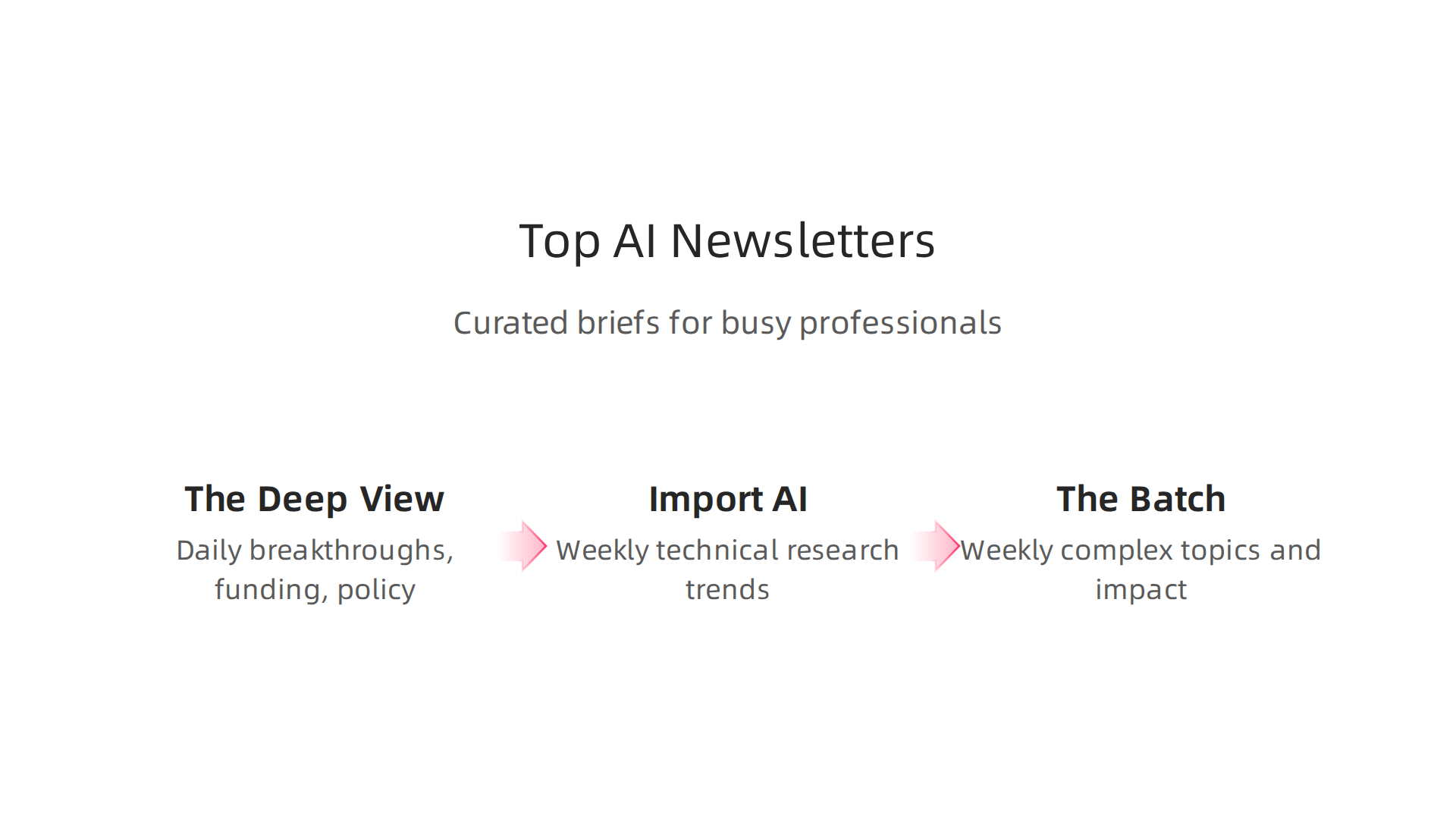
- The Deep View — A daily newsletter that covers AI breakthroughs, funding rounds, and policy changes. It focuses on what actually matters for professionals, not hype. The writing is direct and skimmable, perfect for your morning coffee.
- Import AI — Written by AI researcher Jack Clark, this weekly roundup dives into technical developments, research papers, and industry trends. It gives you the context behind the headlines, helping you understand why a paper or announcement matters.
- The Batch — From the team at Andrew Ng’s DeepLearning.AI, this weekly newsletter breaks down complex AI topics into digestible summaries. It covers new models, tools, and applications with a focus on practical impact.
Each of these newsletters saves you hours of manual searching. They act like a personal research assistant who already knows what you care about.
Why Newsletters Are Essential in 2026
The pace of AI change is accelerating. Major model releases, startup funding rounds, and regulatory shifts happen weekly. If you rely only on social media or random articles, you will miss critical developments. Newsletter curators apply expert judgment to filter noise and highlight what is truly important for your work and investments. As highlighted in the shift from AI tools to AI partners in 2026, staying informed about how AI is evolving from instruments to collaborators gives you a strategic edge.
Make It a Habit
Pick one or two newsletters and commit to reading them consistently. Bookmark them in your inbox, set a recurring time each week, and treat the reading as non-negotiable. Over time, this small habit builds deep knowledge without the overwhelm. For more strategies on staying ahead while cutting through the daily firehose, check out this guide on cutting through AI noise and leading with confidence.
Community, Forums, and Events: Learning Together
Newsletters give you a weekly snapshot, but real mastery comes from talking with people who are building and using AI every day.

Communities, forums, and live events turn passive reading into active learning.
Online Communities Where Problems Get Solved
Reddit forums like r/MachineLearning and r/artificial are goldmines for practical questions and real-world debugging. When you get stuck on an ai training workflow or need advice on the best free ai study tools, chances are someone has already asked and answered it there. Discord servers for specific AI platforms let you chat directly with developers and power users. Stack Overflow offers a searchable archive of coding and implementation issues.
A good starting point is the curated list of 39 Best Artificial Intelligence Communities as of 2026. It covers everything from Slack groups for product managers to Discord servers for solopreneurs. You can browse by platform and topic to find your tribe.
Conferences and Meetups That Change Your Perspective
Major conferences like NeurIPS, ICML, and AAAI are where the latest research and cutting-edge models get presented. Attending even online gives you a front row seat to the future of ai training. Local meetups on platforms like Meetup.com offer lower cost networking with practitioners in your city. The top AI conferences to watch in 2026 include events that focus on everything from regulation to automation of junior roles.
Mentorship and Guided Growth
Some communities run formal mentorship programs where experienced AI professionals guide newcomers through structured learning paths. AI focused Slack groups often have dedicated channels for career advice, project feedback, and study groups. This kind of direct guidance can cut months off your learning curve.
To connect all these dots into a clear learning path, check out this guide on how to study AI in 2026 with a proven roadmap. It shows you how to layer community participation with structured courses and hands on projects for the fastest progress.
Designing Your AI Learning Path: From Novice to Expert
You found the right communities. Now you need a plan that turns scattered resources into real progress. Jumping between random tutorials and YouTube videos wastes time. A structured learning path moves you faster from beginner to confident practitioner.
Start Where You Are
Your background matters. If you are a software engineer, you already know how to code. Focus on machine learning libraries and model deployment. A data analyst should build on statistics and data handling skills. Fresh graduates often need to start with programming fundamentals before touching advanced ai training concepts.
For each stage, pick a core topic and stick with it until you can build something small. Do not try to learn everything at once. Master one ai platform or tool, then move to the next.
Build Projects That Stick
Theory without practice fades fast. The best way to solidify new knowledge is to create something real. Try to build a simple chatbot, a recommendation system, or an image classifier. Each project forces you to debug, search for solutions, and understand tradeoffs. This hands on approach turns abstract ideas into skills you can use at work or in your own startups.
Lean on communities when you get stuck. The list of Top 10 AI Communities for Learning and Growing Your Skills in 2026 includes groups where beginners ask questions and share projects without judgment.
Layer Free Tools and Targeted Study
You do not need a big budget to learn. Many free ai study tools exist, from Google Colab notebooks to open source libraries. Use them to experiment without risk. As you progress, invest time in understanding how models are trained and evaluated. That is the core of ai training no matter which platform you use.
Keep Your Learning Current
AI changes fast. Last year’s best practice might be outdated today. A daily newsletter delivers small, digestible updates so you stay aware of new tools and techniques without wasting hours scrolling. The AI Newsletter Worth Reading gives you clear, daily AI updates that fit into any morning routine.
For a complete roadmap tailored to your situation, check this detailed guide on how to learn AI in 2026 with a proven six-month plan. It breaks down month by month what to study, which projects to build, and how to measure your progress. That structure turns the overwhelming world of AI into a clear, doable journey.
Benchmarking and Evaluating Your AI Skills
You have put in the work. You built projects, joined communities, and followed a learning plan. But how do you know if you are actually good at AI? Guessing does not help. You need a way to measure your progress.
For AI models, there are clear benchmarks. Researchers use tests like GLUE, ImageNet, and SWE-bench to see how well a model performs. The 2026 AI Index Report from Stanford shows that performance on key coding benchmarks jumped from 60% to near 100% in just one year. That is a big deal for the field. But for individual learners, the path to knowing your skill level is less clear.
Start with standardized certifications. Vendor exams like the AWS Machine Learning Specialty or Google Professional Machine Learning Engineer give you a credential that employers recognize. Passing one of these tests proves you understand the core concepts and can apply them in a real cloud environment. It is a concrete signal on your resume.
Use real projects as your best proof. A certification shows you can pass a test. A portfolio of projects shows you can solve problems. Build a recommendation system, a fine-tuned language model, or an AI agent that automates a task you hate. Then share the code on GitHub. Employers and investors pay more attention to what you have actually built than to a line on your resume.
Check your skills against real-world standards. The State of AI Jobs and Skills Report 2026 found that only 44% of employees feel confident evaluating whether AI output is correct. That means most people overestimate their own ability. To avoid that trap, practice evaluating model outputs and fact-checking results. Join a study group or use free online quizzes to test yourself.
For a deeper look at what it takes to cut through AI noise and lead with confidence, explore that guide on our site.
Stay current with daily insights. AI skills that are hot today might shift in six months. Keep your understanding fresh by following a trusted source. The AI Newsletter Worth Reading delivers clear daily updates that help you spot new benchmarks, emerging skill demands, and shifts in the job market. It fits right into your morning and keeps you ahead of the curve.
Summary
This guide cuts through the noise around AI training in 2026 and gives a clear, practical roadmap for learners at every level. It explains where to start with foundational courses and certifications, when to choose university programs or MOOCs, and how to deepen skills with public datasets, cloud compute, and hands‑on projects. The article shows how to stay current using research papers, curated repositories, and daily newsletters, and it emphasizes community, mentorship, and measurable benchmarks so you can prove your skills. You’ll learn concrete options for low‑cost compute, where to find legal, high‑quality data, and a structure for turning scattered resources into a focused learning path that leads to real-world results. By following the advice here, you’ll be able to plan a realistic training timeline, pick the right tools, and demonstrate competence with projects and recognized credentials.