

Thrive Capital’s Playbook for AI Startup Investing
Overview
If you pay close attention to AI funding news in 2026, one name keeps popping up: Thrive Capital. It is not just the size of their funds that grabs attention. It is how they invest. While most venture firms spread their bets across dozens of startups, Thrive does the opposite. They put big money into a small number of companies and stick with them for the long haul. That concentrated approach has helped them back winners like Instagram, Twitch, and more recently, OpenAI.

Joshua Kushner started Thrive Capital in 2009 when he was just 24 years old.

He did not have a traditional venture capital background. But he had a sharp eye for consumer internet companies with network effects. That instinct paid off early and set the stage for what Thrive is today. As of 2026, the firm manages over $50 billion and has raised more than $22 billion total. According to the Thrive Capital Wikipedia entry, the firm is an American venture capital firm based in New York City that focuses on software and internet investments.
For AI founders and investors, understanding Thrive’s playbook is essential. Their concentrated portfolio model means they go deep with a few founders rather than spreading themselves thin. That creates a different kind of partnership, one built on loyalty and long-term commitment. This article gives you a complete look at Thrive Capital’s history, investment thesis, standout portfolio companies, and how they work with the founders they back. You will also learn what makes their strategy unique in the fast moving world of AI startup funding.
If you want to go deeper into how AI startup funding is evolving in 2026, check out our analysis on reshaping the AI startup funding landscape. And to stay informed every day, get clear daily AI updates from The Deep View Newsletter. It helps you cut through the noise and focus on what actually matters.
Who Is Thrive Capital? History and Founding Principles
So where did this powerhouse really come from? The story starts in 2009, right after the financial crisis. Most people were scared to invest in anything. Joshua Kushner saw that moment differently.
He had just graduated from Harvard College and spent a brief time at Goldman Sachs. But he did not want to work inside a big bank. He wanted to back the kind of companies he believed would define the next decade. So at 24 years old, with no venture capital track record, he started Thrive Capital in New York City.
The beginning was small. Really small. Joel Cutler, a co-founder at General Catalyst, gave Kushner a $5 million seed check to get started. That was the entire first fund. Most people would have spread that money across 20 or 30 small bets. Kushner did the opposite. He made a few concentrated bets on companies he believed in deeply. That pattern has never changed.
Those early bets tell you everything about Thrive’s philosophy. Kushner invested in Instagram before Facebook bought it for $1 billion. He backed Twitch before Amazon acquired it for nearly $1 billion. He also put money into GroupMe, which sold to Skype within a year. These were not safe bets. They were conviction bets on founders building products with real network effects. According to a detailed breakdown of Josh Kushner investments, this early pattern of concentrated, high conviction investing set the foundation for everything Thrive has become.
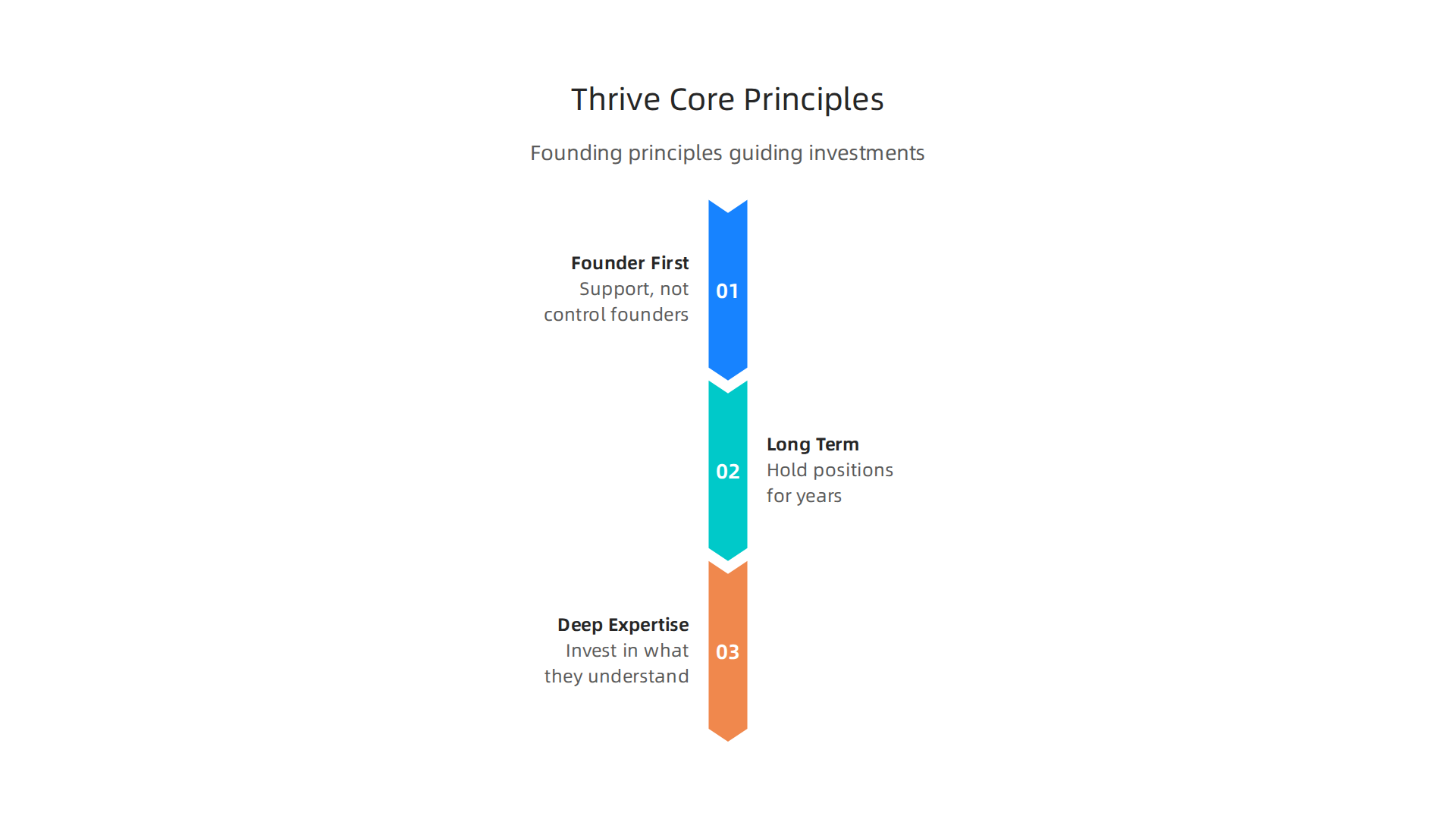
The core principles that guided Thrive from day one are still its DNA today. First is the founder-first mentality. Thrive does not try to control founders. They support them. Second is long-term orientation. The firm holds positions for years, not quarters. Third is deep sector expertise. They do not invest in things they do not understand deeply.
As the firm grew, those principles scaled. By 2011, Thrive raised its first institutional fund of $40 million from investors like Princeton University and Peter Thiel. By 2014, funds were $400 million. By 2023, a single fund hit $3.3 billion. And in early 2026, Kushner announced the close of Thrive X at over $10 billion. That is a long way from that first $5 million check.
This evolution mirrors a bigger shift in venture capital. As software and AI have become the engines of the global economy, the firms that invest in them have had to get smarter, more specialized, and more committed. Thrive was built for that world from the start.
If you want to understand how to identify the kinds of companies Thrive looks for, our guide on top AI companies in 2026 gives you the framework for spotting tomorrow’s market leaders. And if you are an aspiring founder wondering how to start a venture capital firm yourself, the most important lesson from Thrive’s story is this: start small, stay concentrated, and bet on people you trust.
One quick note on names. If you hear someone mention "triumph business capital," that is a different company entirely. Thrive Capital is its own firm with its own track record. The venture capital advantages and disadvantages of Thrive’s approach are clear: high concentration means higher potential returns, but it also means higher risk. For Kushner and his team, that tradeoff has worked out remarkably well.
Thrive Capital’s Investment Thesis and Focus Areas
Now that you know where Thrive Capital came from, let’s look at what they actually invest in. The answer is simpler than you might expect: software companies that use artificial intelligence to transform entire industries.
Thrive’s investment thesis has stayed remarkably consistent since day one. They make concentrated bets on a small number of category-defining companies. They do not spread money across dozens of startups hoping one works out. Instead, they pick a few winners and go all in.
According to a detailed breakdown of Thrive Capital’s investment preferences, the firm is stage-agnostic. They invest from seed rounds all the way to late-stage growth rounds. But they concentrate their capital on companies that have already shown a clear path to market dominance. Typical early-stage tickets range from $500,000 to $5 million. Growth-stage tickets go up to $30 million or more. When they believe in a company, they keep writing checks at every subsequent round.
Sectors Thrive Cares About
Thrive focuses on four main sectors:
- Software and Internet: B2B SaaS, developer tools, and infrastructure companies
- Fintech and Payments: Startups that reimagine financial services
- Healthcare and Biotech: Digital health platforms and AI-driven drug discovery
- AI and Machine Learning: Foundation models, applied AI, and AI infrastructure
Within these sectors, Thrive looks for a specific kind of company: one with network effects and data moats. That means the product gets more valuable as more people use it. Think Instagram, where every new user makes the network more connected. Or Stripe, where every new merchant makes the payment infrastructure more essential.
The Big Bet on AI
In recent years, Thrive’s thesis has become heavily organized around artificial intelligence. As one investor profile explains, the firm’s current strategy is substantially centered on AI, covering everything from foundation model infrastructure to AI application layers. This includes OpenAI, Anthropic, and companies building AI-powered tools for healthcare, legal, financial services, and education.
Thrive sees AI as the next infrastructure layer of the economy, similar to cloud computing but with even higher barriers to entry. They are making platform bets rather than application bets. Instead of guessing which specific AI app will win, they invest in the underlying models and tools that every app will need.
If you want to understand how AI is reshaping funding patterns, our guide on how AI reshapes fintech startup funding in 2026 gives you a clear picture of where the smart money is flowing.
Emerging Themes Thrive Follows
Right now, three themes dominate Thrive’s deal flow:
- Generative AI: Companies like ElevenLabs that build voice synthesis and content generation tools.
- AI Infrastructure: The compute, storage, and networking that makes AI possible.
- Vertical AI Applications: AI solutions built for specific industries like drug discovery (Isomorphic Labs) or scientific research (Lila Sciences).
Thrive’s willingness to concentrate on these themes, even when the outcomes are uncertain, sets them apart from other firms. They do not hedge. They commit deeply.
For anyone tracking the AI investment landscape, staying current on these shifts is critical. That is why we recommend getting clear daily AI updates from The Deep View Newsletter. It cuts through the noise and delivers the insights you need to make smarter decisions about where the market is heading.
Notable Portfolio Companies and Exit Strategies
Now let’s get into the real proof of Thrive Capital’s success: the companies they have backed and how they turn those bets into big returns. If you want to understand the venture capital advantages and disadvantages of a concentrated portfolio, Thrive’s track record is a perfect case study.
The All-Stars in Their Portfolio
Thrive Capital has invested in some of the most recognizable names in tech. These include Instagram, Stripe, GitHub, and Spotify.
These are not just random bets. Each one became a category-defining company that changed how millions of people work, pay, or connect.
More recently, Thrive has built a powerful lineup of AI companies. According to a detailed analysis of Thrive Capital’s AI strategy on Obsidian, the firm has backed foundation model leaders like OpenAI and Anthropic, as well as applied AI startups such as Isomorphic Labs and ElevenLabs. They have also invested in infrastructure plays like Scale AI and Anysphere. This shows how they cover the entire AI stack, from the models to the tools to the applications.
Beyond AI, Thrive holds stakes in SpaceX, Databricks, and Anduril Industries. These are companies that could become trillion-dollar businesses over time. In fact, the same source notes that Thrive first backed SpaceX at a $38 billion valuation, and it is now expected to go public north of $1 trillion. That is the kind of return that makes limited partners excited to write big checks.

How Thrive Exits Its Investments
Thrive does not rush to sell. Their whole approach is built on long-term ownership. When they find a winner, they hold on through multiple funding rounds and even buy more shares in secondary markets. Their strategy for exiting focuses on two main paths: IPO readiness and strategic acquisitions.
In 2025, Thrive’s portfolio saw a healthy number of exits. As reported by Yahoo Finance, one notable exit was Alphabet’s $32 billion acquisition of Wiz, a cloud security company Thrive had backed. Another big win was the IPO of Figma, the design software platform. Figma went public in 2025 at a strong valuation, giving Thrive and its LPs a big payout.
Looking ahead, Thrive has a pipeline of companies expected to go public soon. These include data software leader Databricks, fintech giant Stripe, defense tech company Anduril, and neobank Monzo. With Thrive X raising $10 billion, the firm is well positioned to support these companies through their IPOs and beyond.
For anyone trying to spot the next wave of breakout companies, understanding Thrive’s portfolio is a great starting point. That is why we have put together a guide to spotting tomorrow’s market leaders. It shows you the patterns that top investors like Thrive look for.
A Portfolio Built to Last
Thrive’s portfolio is not about chasing trends. It is about finding companies with durable advantages, like network effects and data moats. Instagram had the social network effect. Stripe has the payment infrastructure effect. OpenAI has the AI model effect. Each company becomes harder to replace as more people use it.
That is the core of Thrive’s exit strategy. They do not look for quick flips. They prepare companies to be strong enough to go public or become attractive acquisition targets. When you invest like that, the returns take care of themselves.
Whether you are a founder, an investor, or just curious about how venture capital works, Thrive’s portfolio and exit moves offer a masterclass in patient, high-conviction investing.
How Thrive Capital Partners with Founders: Beyond Capital
When a founder gets a term sheet from Thrive Capital, they are not just getting a check. They are getting a full support system designed to help them win. That is why many entrepreneurs say the real value lies in what happens after the deal closes.
Operational Support That Scales
Thrive Capital has built a dedicated platform team that works directly with portfolio companies. This team covers talent recruiting, product design, and growth marketing.

Instead of handing over money and walking away, Thrive’s team rolls up their sleeves and helps solve real operational problems.
According to a detailed breakdown of Thrive Capital’s investment thesis and preferences on F4 Fund, the firm actively partners with founders on hiring, board strategy, and scaling the business. The same source notes that Joshua Kushner takes a hands-on approach and engages deeply with each portfolio company. That means founders get access to people who have done this before.
Thrive also takes board seats in many of its portfolio companies. This gives them a front-row seat to strategic decisions. They do not micromanage, but they do offer guidance on everything from product roadmaps to go-to-market planning. For first-time founders, having a board member who has seen Stripe, GitHub, and OpenAI grow from the inside is incredibly valuable.
Network Effects Between Portfolio Companies
One of the biggest advantages Thrive offers is the network itself. When you are part of the Thrive portfolio, you are connected to other founders who are building massive companies. This creates a powerful ecosystem where companies share insights, talent, and even customers.
For example, a founder building AI infrastructure at Scale AI can swap notes with someone building foundation models at OpenAI. That kind of cross-pollination does not happen by accident. Thrive intentionally creates opportunities for its portfolio companies to learn from each other.
If you are a founder trying to understand what top-tier venture capital firms look for in 2026, check out our guide to spotting tomorrow’s market leaders. It shows you the exact patterns investors like Thrive Capital use to identify breakout companies.
The bottom line is simple. Thrive Capital treats its portfolio companies like long-term partners, not short-term bets. They provide capital, but they also provide the people, the strategy, and the network to turn that capital into something huge. For founders who want more than a check, that makes all the difference.
Stay ahead of the curve. For daily updates on which startups are getting funded and what investors are backing them, get clear daily AI updates from The Deep View Newsletter. It is the easiest way to spot the next big opportunity before everyone else does.
Thrive Capital vs. Other Top-Tier VC Firms: A Comparative Analysis
So how does Thrive Capital stack up against the biggest names in venture capital? Firms like Sequoia, Andreessen Horowitz (a16z), and Kleiner Perkins have been around for decades. They have huge track records. But Thrive is now sitting at the same table. In fact, according to 2026 rankings of the largest venture capital firms by assets under management, Thrive Capital now holds a spot among the top five, right alongside a16z and Sequoia.
The way Thrive competes is different. Most large firms spread their bets across hundreds of companies. Thrive takes a more focused approach. They make fewer investments but go much bigger on the ones they choose. This concentrated strategy is a key differentiator. While a firm like Sequoia might invest in many early-stage startups across several sectors, Thrive picks a handful of companies and then doubles down with massive follow-on rounds.
Look at their fund structure. In 2026, Thrive closed its Thrive X fund at over $10 billion. That is one of the largest venture funds ever raised. But here is the interesting part. As reported by Newcomer, Thrive netted a 2.4x DPI from their 2016 fund.
DPI stands for distributions to paid-in capital. It measures how much cash they have actually returned to investors. A 2.4x DPI is very strong. It shows that Thrive does not just mark up valuations on paper. They exit companies and give money back.
That performance matters because it shows conviction. Thrive’s leaner partnership model means fewer partners making decisions. But those decisions carry a lot of weight. They are not afraid to keep buying into a company at higher and higher valuations. They first backed OpenAI at a $29 billion valuation. Then they bought more at $157 billion, then $300 billion, and even at $500 billion through secondary purchases. Most firms would stop after the first big jump. Thrive keeps going.
Compared to Kleiner Perkins or Sequoia, Thrive is also more focused on later-stage follow-ons. They let other firms take the earliest risk. Then Thrive steps in when the company has traction but still needs a massive growth round. This approach reduces risk while still capturing huge upside. If you want to understand how funding patterns work across different stages, check out our analysis on how AI reshapes fintech startup funding in 2026. It shows how investors like Thrive think about timing.
The bottom line is that Thrive competes by being different. They are not trying to be the biggest firm by number of deals. They want to be the most concentrated and the most convicted. The data backs them up.
How to Get on Thrive Capital’s Radar: Tips for AI Founders
So you are building an AI startup and you want Thrive Capital as a partner. That makes sense. They are one of the most respected firms in the space.

But getting their attention is not easy. Thrive receives thousands of pitches every year. And here is the thing: cold emails almost never work. Thrive relies heavily on warm introductions and deep outbound research.
So what can you do to stand out? Let us walk through what Thrive actually looks for.
Focus on a Deep Technical Moat
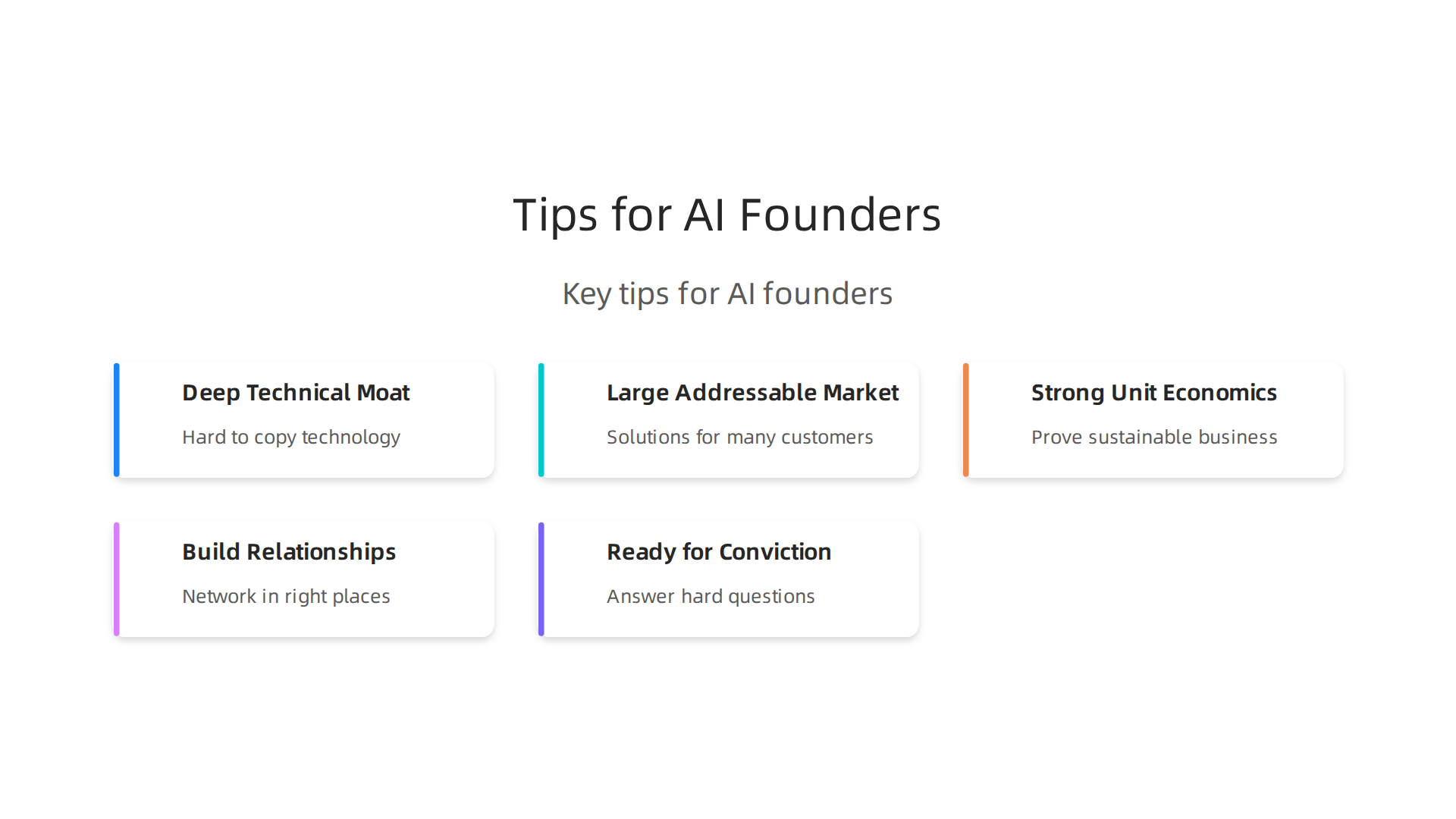
Thrive wants to back companies that are hard to copy. That means you need real technical depth. If your AI startup is just wrapping a GPT model with a nice interface, that is not enough. Thrive looks for proprietary data sets, novel architectures, or strong research breakthroughs. In fact, one of Thrive’s must-haves, according to Thrive Capital’s investment thesis and preferences, is a clear path to category leadership. They want to see that you own a unique piece of technology that others cannot easily replicate. While some founders chase triumph business capital through flashy demos, Thrive values substance over style.
Show a Large Addressable Market
Thrive only invests in companies that can become huge. They look for founders who understand their market size and have a realistic plan to capture it. You need to demonstrate that your AI solution solves a big problem for a large number of customers. When you talk to them, be clear about your total addressable market and how you plan to grow. This aligns with Thrive’s focus on long-term category-defining companies.
Prove Strong Unit Economics
Thrive likes businesses that make money. Even if you are early stage, you should show signs of strong unit economics. How much does it cost to acquire a customer? What is the lifetime value? Can you scale profitably? Thrive’s partners dig into these numbers. They want to see that your AI company can become a sustainable business, not just a hype story. Understanding the venture capital advantages and disadvantages can help you position your model honestly and prepare for tough questions.
Build Relationships in the Right Places
Thrive is a relationship-driven firm. They want to know you before you pitch. Attend the same conferences. Share your thinking on AI trends through blog posts or social media. Build a reputation as a thoughtful founder. This is where our guide on how to build AI strong foundations for lasting success can help you structure your technical roadmap and communicate it clearly. The more visible you are, the more likely a Thrive partner will notice you. Also, learning the basics of how to start a venture capital firm can give you insight into the investor mindset and help you tailor your approach.
Be Ready for High Conviction
Remember, Thrive makes concentrated bets. They will only back you if they have extreme conviction. That means you need to be ready to answer hard questions about your technology, your team, and your market. Do not be afraid to share the risks. Honesty builds trust.
The bottom line is that Thrive Capital is looking for founders who are building something truly special. If you want to stay on top of AI trends and funding signals, get clear daily AI updates from The Deep View Newsletter. It will help you spot opportunities and prepare for conversations with top VCs.
Summary
This article profiles Thrive Capital — the New York venture firm founded by Joshua Kushner in 2009 — and explains why its concentrated, high-conviction approach matters for AI founders and investors in 2026. It traces Thrive’s rise from a $5 million first fund to managing tens of billions, details the firm’s founder-first, long-term thesis, and shows how that thesis applies across software, fintech, healthcare and especially AI. The piece breaks down Thrive’s sector focus, typical check sizes, and the firm’s preference for platform-level AI bets and vertical applications. It highlights marquee portfolio names and exit strategies to illustrate how Thrive turns concentrated stakes into big returns, and it describes the operational support and network benefits founders receive beyond capital. The article compares Thrive to legacy VCs, outlines the trade-offs of their model, and finishes with practical advice on how AI startups can attract Thrive’s attention. After reading, founders and investors will understand Thrive’s playbook and how to position companies for long-term partnership with conviction-driven backers.