
Land Remote Entry Level IT Jobs in 2026 Without Experience
Overview
Introduction: Why Remote Entry-Level IT Jobs Are Your Gateway to a Tech Career
Thinking about starting a career in tech but not sure where to begin? You are not alone. Thousands of people just like you are looking for a way into the industry without a huge upfront investment. The good news? Remote entry level IT jobs are more available now than ever before.
Remote work is no longer a temporary trend. It is a permanent part of the tech world. According to the FlexJobs Remote Work Index, remote job postings increased 20% over Q4 2025, with many of those roles in IT and tech. A separate report from Remotive shows that 36% of new job postings now include some kind of remote option. That means companies are actively hiring people who can work from home, from a coffee shop, or anywhere with a solid internet connection.
But here is the real secret: the demand for IT talent is still outpacing supply. The Dice Tech Job Report found that tech job postings rose 5% month over month in April 2026, continuing an upward trend. The U.S. Bureau of Labor Statistics projects steady employment growth through 2034, especially in tech roles. This creates a perfect window for beginners to get their foot in the door without needing years of experience.
Yes, competition exists. But with the right strategy, you can land a remote entry level IT job that launches your entire career. This guide will walk you through exactly how to find opportunities, build the skills employers want, and submit applications that get noticed. And because the tech landscape keeps shifting, we will also touch on how tools like AI are shaping the roles you will apply for. For a deeper look at how AI is changing software development, check out our guide on AI-powered software development in 2026.
Ready to take the first step? Let us get started.
The Booming Market for Remote Entry-Level IT Jobs in 2026
If you think all the good remote jobs go to people with five years of experience, think again. The numbers tell a completely different story. In 2026, companies are actively recruiting beginners to work from home.
A quick look at job boards proves it. NoDesk lists hundreds of major companies searching for new talent. Indeed shows thousands of open positions for people just starting their careers. The variety is huge. Built In highlights roles from AI Workflow Architect to IT Product Manager, proving you can find a remote tech job at almost any level.
What is causing this massive boom?
Three big trends are happening at the same time.
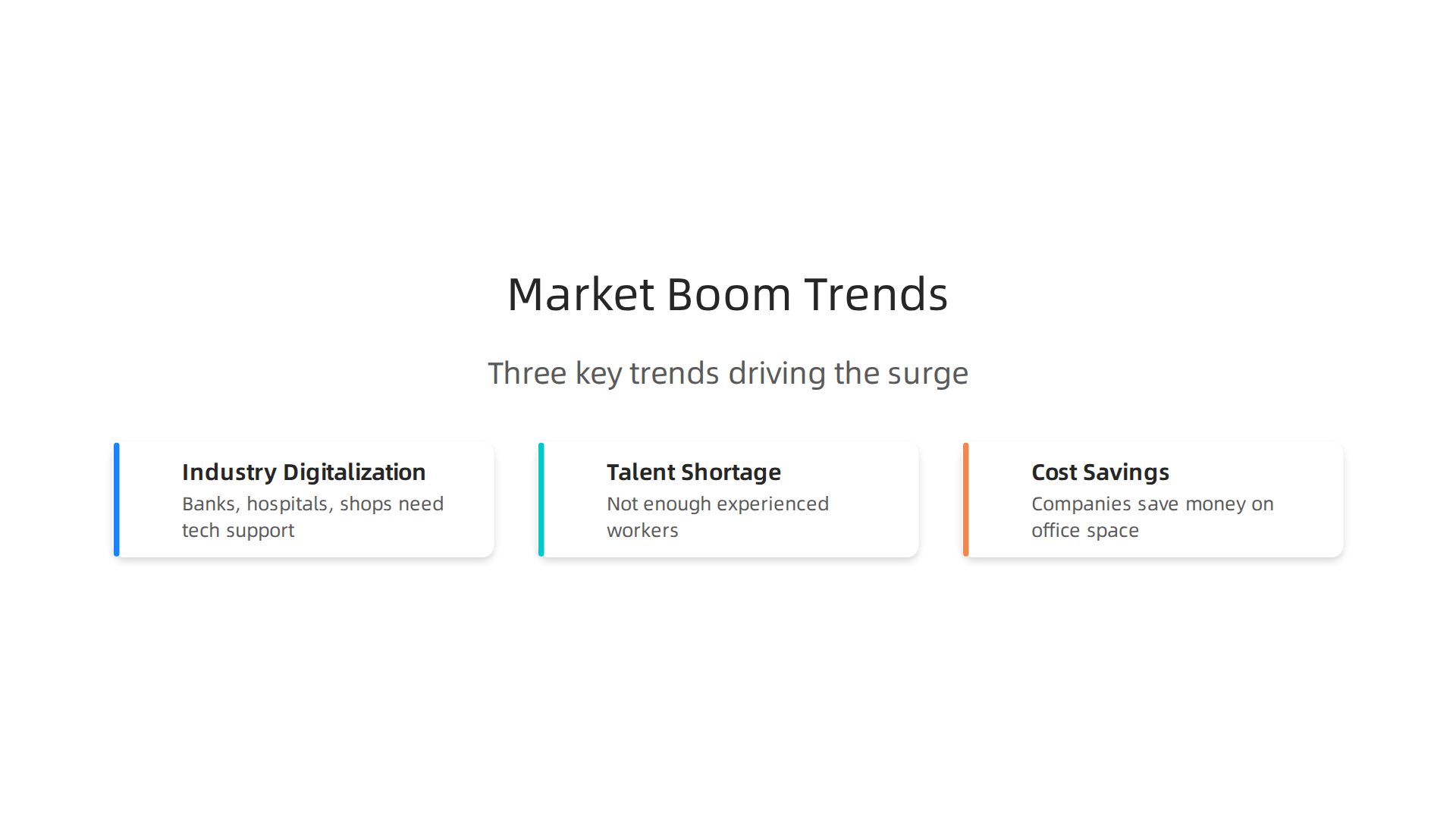
First, every industry is going digital. Banks, hospitals, and local shops all need tech support. Second, there is a real talent shortage. There are not enough experienced workers to fill the demand, so employers are turning to new faces. Third, companies save money on office space by hiring remote staff, making them more willing to take a chance on eager learners.
This shift has created specific hot roles for beginners. According to Coursera, some of the best entry level remote jobs include SOC analyst and web developer. If you are searching for remote entry level IT jobs, knowing these exact titles helps you find better openings. There are also plenty of software developer jobs for juniors who have mastered the fundamentals.
But you still need a plan.
You do not need a degree from a top university. You do need to understand where the industry is headed. For example, knowing a bit about AI leadership can help you stand out in an interview. It shows you care about the future.
Keeping up with these changes is hard. That is why we built AI Startup Funding News Today. We help professionals like you cut through the noise and find the trends that matter. For example, our guide on AI startup funding in 2026 shows exactly where major companies are investing their money. If you struggle with information overload, check out our piece on how YouLearn AI cuts through information overload.
The market is hot. The opportunities are real. Now you just need the right skills to grab one.
Top 5 Remote Entry-Level IT Roles You Can Land Without Experience
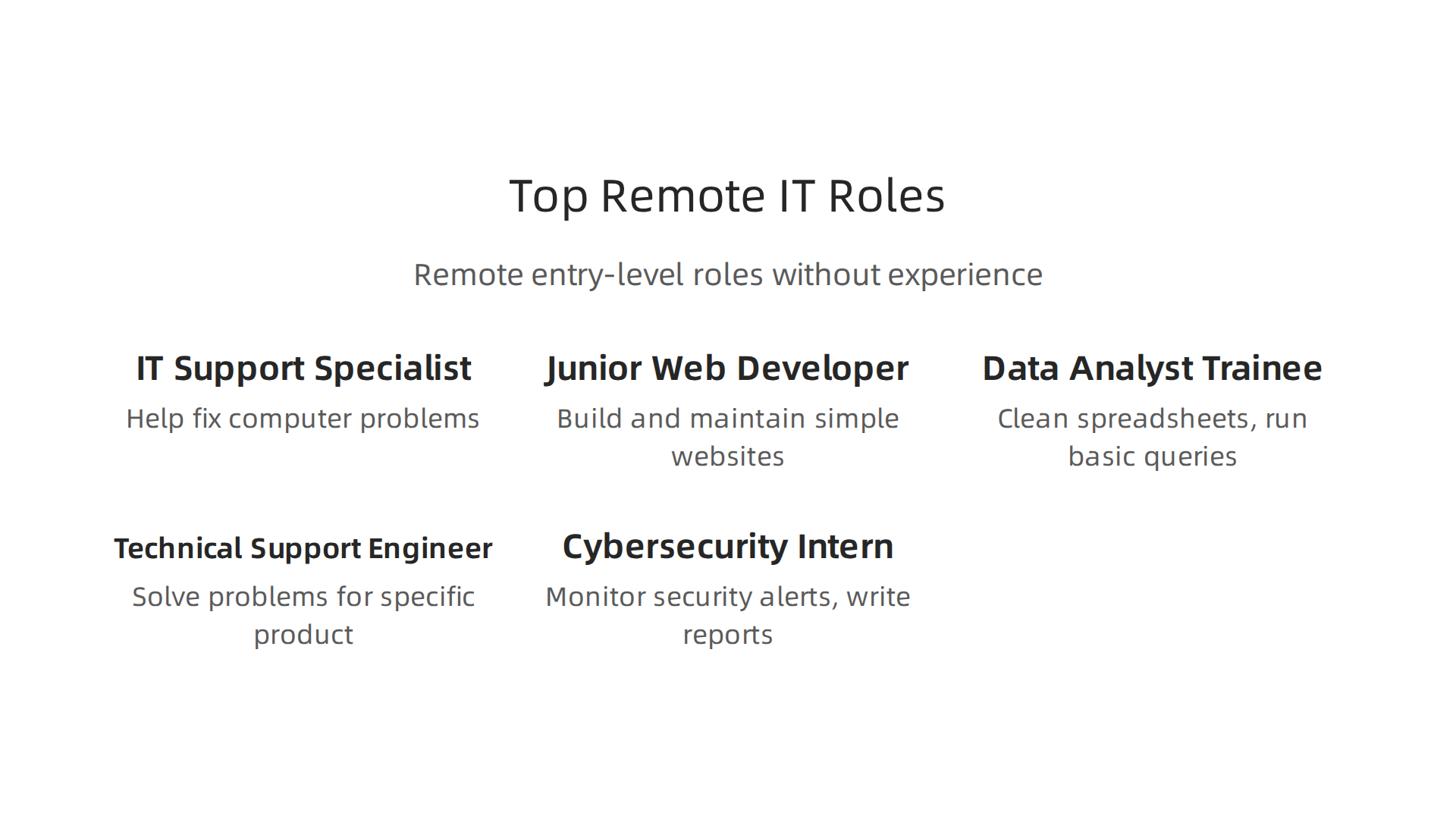
You do not need a computer science degree or years of coding to start your remote career. Many companies in 2026 are hiring beginners for roles that focus on foundational skills, logical thinking, and a willingness to learn. Here are five positions where you can land a remote entry level IT job with zero experience.
1. IT Support Specialist
This is the classic starting point. You help employees fix computer problems, reset passwords, and troubleshoot software. Employers look for patience and basic tech knowledge. You can often learn the rest on the job.
- Salary range: $35,000 to $50,000
- Common employers: Banks, hospitals, and tech startups
2. Junior Web Developer
If you have learned HTML, CSS, and some JavaScript, you qualify. Many companies hire junior developers to build and maintain simple websites. A strong portfolio of personal projects matters more than a degree.
- Salary range: $40,000 to $60,000
- Common employers: Agencies, e-commerce platforms, small businesses
This is one of the most popular software developer jobs for beginners. The demand is still high in 2026.
3. Data Analyst Trainee
Data helps companies decide what to sell and how to market. As a trainee, you will clean spreadsheets, run basic queries, and make charts. Tools like Excel and SQL are all you need to start.
- Salary range: $38,000 to $55,000
- Common employers: Retail chains, logistics firms, marketing agencies
Coursera lists data analyst as one of the top entry-level remote roles, and many trainees move into senior roles within a year.
4. Technical Support Engineer
This role is a step up from IT support. You solve problems for customers who use a specific product or software. You need good communication and basic troubleshooting skills. Most companies provide product training.
- Salary range: $40,000 to $58,000
- Common employers: SaaS companies, cloud platforms, telecom providers
WayUp lists hundreds of these roles for remote candidates.
5. Cybersecurity Analyst Intern
Cybersecurity is a fast-growing field. As an intern, you will monitor security alerts, look for suspicious activity, and write simple reports. Knowing the basics of networks and staying curious is enough.
- Salary range: $35,000 to $50,000 (internships often convert to full-time)
- Common employers: Banks, government agencies, tech firms
Indeed shows thousands of openings in this area, many labeled "entry level" or "intern."
How to stand out for these roles
Showing you care about AI leadership and where technology is heading can set you apart in an interview. Even if you don’t know who invented AI, reading a few articles shows initiative. For instance, our guide on AI startup funding in 2026 gives you real examples of how companies are investing in tech. Understanding these trends makes you look informed and curious.
Your next move
Pick one of these five roles and start learning the basic skills today. Then search for remote entry level IT jobs on platforms like NoDesk where top remote companies post openings. You can also read our article on AI-powered software development in 2026 to see which coding skills are most valuable right now.
The door is open. You just need to walk through it.
Essential Technical Skills for Remote IT Success
Now that you know which roles exist, let’s talk about what you actually need to learn to get hired. Employers who post remote entry level IT jobs care about skills more than degrees. In 2026, you can build all the right skills from your living room. You just need to know what to focus on.
Core technical skills that matter most
Every remote IT role shares a few common skills. Start here.
Troubleshooting and problem solving. This is the number one skill. You will face broken computers, confused users, and software bugs. Employers want to see that you can stay calm and think through a problem step by step.
Networking basics. You need to understand how the internet works. What is an IP address? How does a router move data? The CompTIA Network+ certification is a great way to learn this. TripleTen lists it as one of the best certifications for network support specialists in 2026.
Programming fundamentals. You do not need to be a coding expert. But knowing the basics of HTML, CSS, JavaScript, or Python opens doors. This is especially true if you want software developer jobs. Our guide on AI-powered software development in 2026 shows you which programming languages are most in demand right now.
Cloud platforms. Most companies run their software on AWS, Google Cloud, or Microsoft Azure. Learning the basics of one cloud platform makes your resume stand out.
Soft skills for remote work
Working from home sounds easy until you try it. You need self discipline to start your work without someone watching over you. You need clear communication to explain tech problems to people who are not technical. And you need time management to handle multiple requests without getting overwhelmed. These soft skills help you keep a remote job once you land it.
How to build these skills without a degree
You do not need to go back to school. Here are the fastest ways to learn.
Start with certifications. The CompTIA A+ certification teaches you how to fix computers and handle common IT problems. Coursera lists it as one of the top essential IT certifications for 2026. Google also offers an IT Support certificate that is respected by employers. If you want to specialize in security, the CompTIA Security+ is a strong choice. Erie IT calls it one of the best beginner certifications to start your tech career.
Use free resources. YouTube is full of tutorials. You can learn the basics of Python or SQL in a weekend. If you are not sure where to start, our article on how you learn AI cuts through information overload will help you pick a clear learning path.
Build a home lab. Set up a simple network at home. Use a virtual machine to practice. Break things and fix them. This is how you get real experience without a formal job.
Finally, stay curious about where technology is going. Reading about AI leadership and how companies are funding new ideas shows you are paying attention. You do not need to know who invented AI. But understanding the trends makes you look prepared and interested in the future of tech.
The skills are clear. The resources are free. Now it is time to build them and start applying for remote entry level IT jobs.
The Power of Certifications in Landing a Remote IT Job
Maybe you feel stuck. You want a remote entry level IT job, but every listing asks for years of experience you do not have. Here is the good news. Certifications can fill that gap. They prove to employers that you know your stuff, even if you have never held a formal IT role.
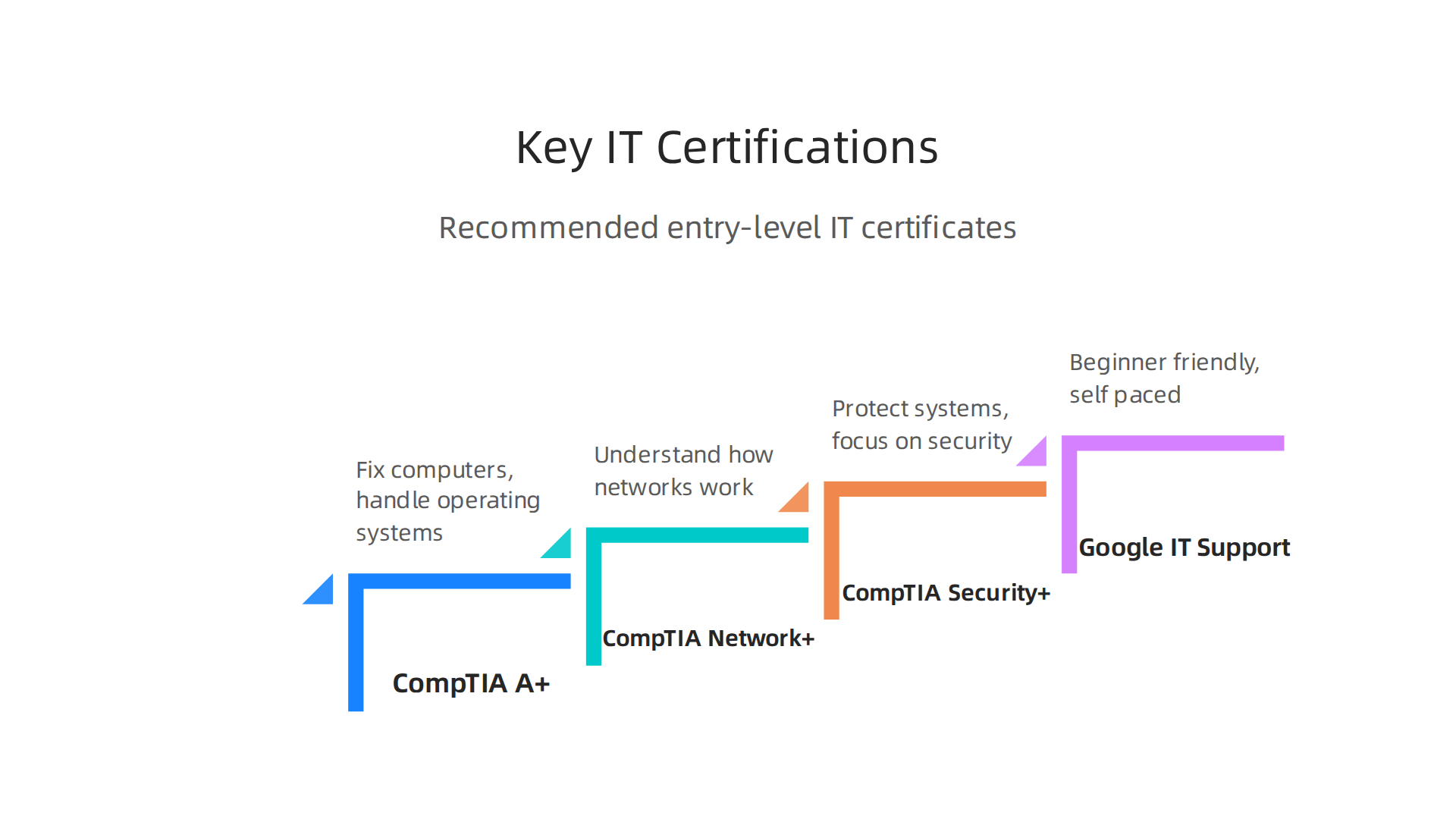
In 2026, many companies list certifications as preferred or even required for remote entry level roles. According to TripleTen, the top certifications for IT Support Specialists and Network Support Specialists are CompTIA A+ and Google IT Support. These are designed specifically for people who are new to the field.
Start with CompTIA A+. This certification teaches you how to fix computers, handle operating systems, and solve common hardware problems. Coursera considers it one of the 10 essential IT certifications for 2026. It is the standard starting point for help desk and support roles.
Add CompTIA Network+. Once you understand basic troubleshooting, you need to understand how networks work. This certification shows employers you can handle routers, switches, and IP addresses. It is a natural next step after A+.
Try CompTIA Security+ for cybersecurity. If you want to protect systems instead of just fixing them, Security+ is your best bet. Teal lists it as an entry level cybersecurity certification that remote employers value highly. This opens doors to remote security roles.
Google IT Support Professional Certificate is another strong choice. It is beginner friendly, self paced, and created by Google. You can complete it in about six months with just a few hours of study each week.
Certifications also help you specialize. With Network+, you can target network support specialist roles. With Security+, you can aim for cybersecurity jobs. And with coding certificates, you can move toward software developer jobs. Each certification increases your earning potential.
Where do you learn? Use the same approach from the previous section. Start with free resources. Use a home lab to practice. And check out our guide on how you learn AI cuts through information overload to build a clear study plan.
One more tip. Hiring managers at remote companies review dozens of resumes. A certification makes yours stand out. It shows you are serious. Erie IT confirms that employers often choose certified candidates over non certified ones, even when both have no prior job experience.
So pick your first certification. Study for it. Pass the exam. Then use it to land one of the many remote entry level IT jobs waiting for you.
Where to Find Legitimate Remote Entry-Level IT Jobs
You have your certification in hand. Now the real question is: where do you even start looking for remote entry level IT jobs? The good news is that there are plenty of places to search. The trick is knowing which ones are worth your time.
Start with remote-only job boards. These sites skip the hybrid and in-office listings entirely. You will only see fully remote roles. According to Remote100K, the best boards for 2026 include We Work Remotely, Remote OK, and NoDesk. NoDesk even has a specific section for remote entry level jobs that is updated daily.
Do not forget LinkedIn. It is more than a social network. You can filter jobs by "remote" and "entry level" easily. Plus, you can follow companies you like and get alerts when they post new openings. Robert Half also recommends FlexJobs for remote tech roles because they vet every listing before it goes live.
Network your way in. This part matters more than you think. Many remote entry level IT jobs never get posted publicly. People fill them through referrals. Connect with IT professionals on LinkedIn. Join virtual tech events and webinars. Ask questions. Share what you are learning. The more people know you are looking, the more leads you get.
Here is a simple repeatable process:
- Bookmark 3 to 5 remote job boards
- Check them once a day
- Apply within 48 hours of a posting
- Follow up after one week
Avoid the scams. This is critical. No legitimate job will ask you for money upfront. If a "recruiter" asks you to pay for training, equipment, or a background check, walk away. Real companies pay you. Not the other way around. Scammers target people who are eager to break in, so stay sharp.
Keep building while you search. As you apply, keep learning. The skills that helped you pass your certification are the same ones that will help you move into software developer jobs or even AI leadership down the line. Our guide on AI-powered software development shows what technologies are in demand right now.
Stick with it. The right remote entry level IT job is out there. You just need to know where to look and how to stay safe while you search.
Crafting a Compelling Resume and Cover Letter for Remote IT Roles
You have found the perfect job listing for remote entry level IT jobs. Now comes the hard part: getting noticed. Hiring managers for remote roles see hundreds of applications. Your resume and cover letter need to stand out fast.

Focus on skills and certifications over experience. You do not need years of on-site work to land a remote IT job. What matters is what you can do. List every certification you have earned, even if it is just one. Mention specific tools, systems, and programming languages you know. Did you build a home lab? Set up a small network for a friend? Included it. Real projects count as experience.
Use numbers to show impact. Quantifiable achievements make your resume stronger. Instead of saying "helped with IT support," say "resolved 30+ help desk tickets per week with a 95% satisfaction rate." Numbers catch the eye of hiring managers and help you pass ATS (Applicant Tracking System) filters.
Tailor every application. Do not send the same resume to every company. Read the job description carefully. Pick out keywords related to remote work, specific software, and required certifications. Sprinkle those keywords naturally into your resume and cover letter. According to Remote100K, tailoring your materials is one of the best ways to stand out in the competitive remote job market. ATS software scans for those exact terms.
Write a cover letter that sells your remote readiness. Many applicants skip the cover letter. Do not be one of them. Keep it short, three paragraphs max. In the first paragraph, say why you are excited about the role and the company. In the second, explain what you bring, focusing on skills that matter for remote entry level IT jobs, like self-motivation, communication, and problem-solving. In the third, mention why you want to work remotely and that you are ready to thrive without hand-holding.
Highlight transferable skills. Even if your only job so far was in retail or customer service, you can pull relevant examples. Did you troubleshoot issues for customers? That is IT support. Did you learn new software quickly? That is adaptability. Frame those experiences in IT terms.
The skills that help you land software developer jobs or move toward AI leadership often start with the same foundation. If you have been learning about AI tools or modern development practices, mention that. Our guide on AI-powered software development in 2026 covers the technologies that are hottest right now. Adding a line about being familiar with those trends can make you look forward-thinking.
Keep it clean and simple. Use a plain resume template with one column. Save as PDF unless the job posting asks for a different format. Name the file something like "YourName_Resume_ITSupport.pdf" instead of "resume_final_v3.pdf."
Your resume and cover letter are your foot in the door. Take the time to craft them for each application. The right remote entry level IT job is worth the effort.
How to Ace a Remote IT Job Interview
You have polished your resume and sent out applications. Now your inbox pings: interview invitation. Good news, but the real test is coming. Remote IT interviews are different from in-person ones. They often include technical assessments, behavioral questions, and scenario-based challenges. Here is how to prepare so you walk in confident and walk out with an offer.
Prep Your Tech and Your Space
First things first. Test your technology before the interview. Do not wait until the last minute.

Check your camera, microphone, and internet connection. A glitchy setup makes you look unprepared. Find a quiet spot with good lighting and no distractions. Background noise or a messy room can cost you the job. According to Pin, 90% of remote employers skip in-person rounds entirely. That means your video presence is everything.
Show You Can Do the Work
Expect technical questions. Hiring managers want to know your troubleshooting process. A common question is "What is your troubleshooting process?" as shared by Coursera. Walk them through a real example. Did you fix a slow computer? Reset a network? Explain step by step. Keep it simple.
You may also face a live technical assessment. Stay calm. Read the problem twice. Talk through your steps as you go. That shows your thinking process even if you get stuck.
Prove You Can Work Remote
Behavioral questions matter a lot. Be ready to answer questions like "How do you collaborate on team projects in a remote work environment?" according to Indeed. Talk about how you stay organized, communicate with teammates, and handle distractions. Mention tools like Slack, Zoom, or project management apps you have used.
Employers also want to know how you stay productive without supervision. Have a story ready. Maybe you set up a home lab. Maybe you taught yourself a new skill. Show them you take initiative.
Mention Your Edge
Here is a tip. If you have been following trends like AI tools or modern development, bring that up. Our guide on AI-powered software development in 2026 covers the skills that are hottest right now. Mentioning that you are familiar with these tools shows you are forward thinking. It can set you apart from other candidates.
Practice Out Loud
Practice common questions before the real thing. You can find entry-level IT interview questions on YouTube. Record yourself answering. Listen for filler words like "um" and "like." Keep your answers short and clear. A strong interview leads to the right remote entry level IT job. You have got this.
Building a Long-Term Career Path from Remote Entry-Level IT
You landed the job. That first remote entry-level IT role is yours. Now what? It is easy to treat this as the finish line. But really, it is the starting line. The smartest move you can make is to see this job as a stepping stone to something bigger. With the right plan, you can move from help desk or junior support into roles that pay more and offer more responsibility.
Where Can You Go from Here?
Entry-level remote IT jobs open doors to some of the hottest positions in tech. Think about roles like DevOps Engineer, Cloud Architect, or Cybersecurity Analyst. These jobs often pay significantly more and give you deeper challenges. According to Robert Half, hiring managers look for strengths like problem solving and continuous learning. Those are exactly the skills you build in an entry-level role.
Keep Learning Every Day
The best way to move up is to keep learning. Do not stop after you finish onboarding.

Set aside time each week to study something new. Work toward certifications like AWS Certified Cloud Practitioner, CompTIA Security+, or Google IT Support. Each certification adds a line to your resume and makes you more valuable.
Also, look for a mentor. Someone who has been in the field for a few years can guide you. They can tell you which skills matter most and help you avoid common mistakes. Mentorship works especially well in remote settings because you can connect with people all over the world.
Leverage Remote Work Advantages
One big plus of working remotely is the flexibility. You can design your day around deep focus time. You also get exposure to global teams. That experience teaches you how to communicate across time zones and cultures. Those soft skills matter when you apply for senior roles later. As Pin notes, 90% of remote employers skip in-person rounds, meaning your ability to work well remotely is a huge asset.
Stay Ahead of the Curve
Technology changes fast. In 2026, AI and automation are reshaping IT roles. Being familiar with these tools gives you an edge. For example, our guide on AI-powered software development in 2026 shows the skills that are hottest right now. If you start learning these early, you will be ready when the next promotion comes.
A Final Thought
Your first remote IT job is just the beginning. Keep your eyes on the long game. Invest in learning, find mentors, and stay curious. Each step you take today builds the career you want tomorrow. You have already proven you can get hired. Now prove you can grow.
Summary
This guide explains how to break into tech through remote entry-level IT jobs in 2026, showing why demand is rising and which roles employers are hiring. It covers market trends, five realistic job options (like IT support, junior web developer, and cybersecurity intern), the essential technical and remote-work soft skills employers want, and the certifications that close experience gaps. The article also shows where to find legitimate remote listings, how to craft resumes and cover letters that pass ATS filters, and how to prepare for remote interviews and technical assessments. Finally, it maps short-term steps you can take—learning paths, free resources, and a repeatable job search process—and how to turn your first remote role into a long-term career with mentorship and continuing certifications.