
Free AI Questions That Build Foundational Knowledge for Investors and Operators
Overview
Why Foundational AI Knowledge Matters for Investors and Operators
You see AI headlines every day. New funding rounds, fresh tools, and big claims about what machines can do. It is easy to feel buried under the noise. The real challenge isn’t finding information. It is knowing what matters and what to ignore.
That is where foundational knowledge steps in. When you understand core concepts like the difference between AI, machine learning, and deep learning, you stop relying on buzzwords. You can spot hype, ask better questions, and make decisions that actually move the needle. A solid grasp of these basics separates smart bets from costly mistakes.

The good news? High quality, free resources are everywhere. But they need careful curation to be useful. You need to know which questions to ask first. That is exactly what we cover here.
In this guide, we walk through the most practical free ai questions you should be asking right now. Whether you are an investor evaluating a startup or an operator building a team, these questions will cut through the clutter.
Let us start with the one question that trips up most professionals: when was AI invented? Understanding the timeline helps you spot real breakthroughs versus recycled ideas.
Get the edge on AI news without the noise. Subscribe to The Deep View Newsletter for daily, curated AI intelligence that saves you hours of scrolling.
Core AI Concepts Every Decision-Maker Should Know
Now that you see why foundational knowledge matters, let us get into the specifics. If you are an investor or operator, you hear terms like "AI," "machine learning," and "deep learning" thrown around constantly. The problem is, most people use them as synonyms. They are not.
Think of it like Russian nesting dolls. The biggest doll is artificial intelligence.
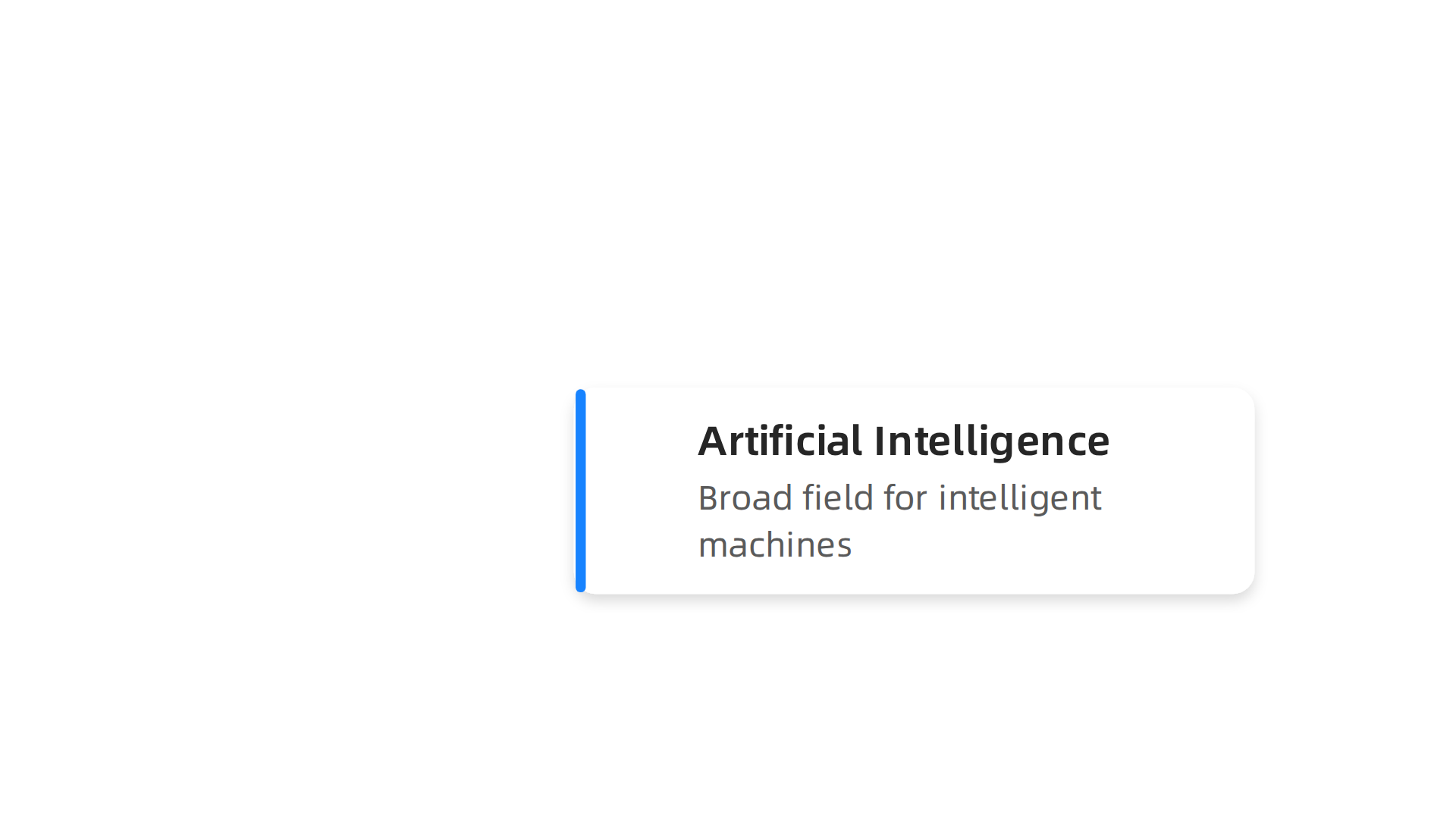
This is the broad field of making machines behave intelligently. Inside that, you have machine learning. These are systems that learn patterns from data without being explicitly programmed for every rule. And inside machine learning sits deep learning, which uses artificial neural networks to handle complex tasks like recognizing faces or understanding speech.
One of the best ways to understand this hierarchy is to look at a clear breakdown from IBM.
They explain that machine learning is a subset of AI, deep learning is a subfield of machine learning, and neural networks are the backbone of deep learning algorithms. This distinction matters because when a startup says "we use AI," they might just be running a simple rules engine. But if they say "we use deep learning on proprietary datasets," that signals a different level of technical depth. You can spot these differences when you know the definitions.
Beyond the hierarchy, you need to recognize three common learning paradigms that power most modern AI tools:
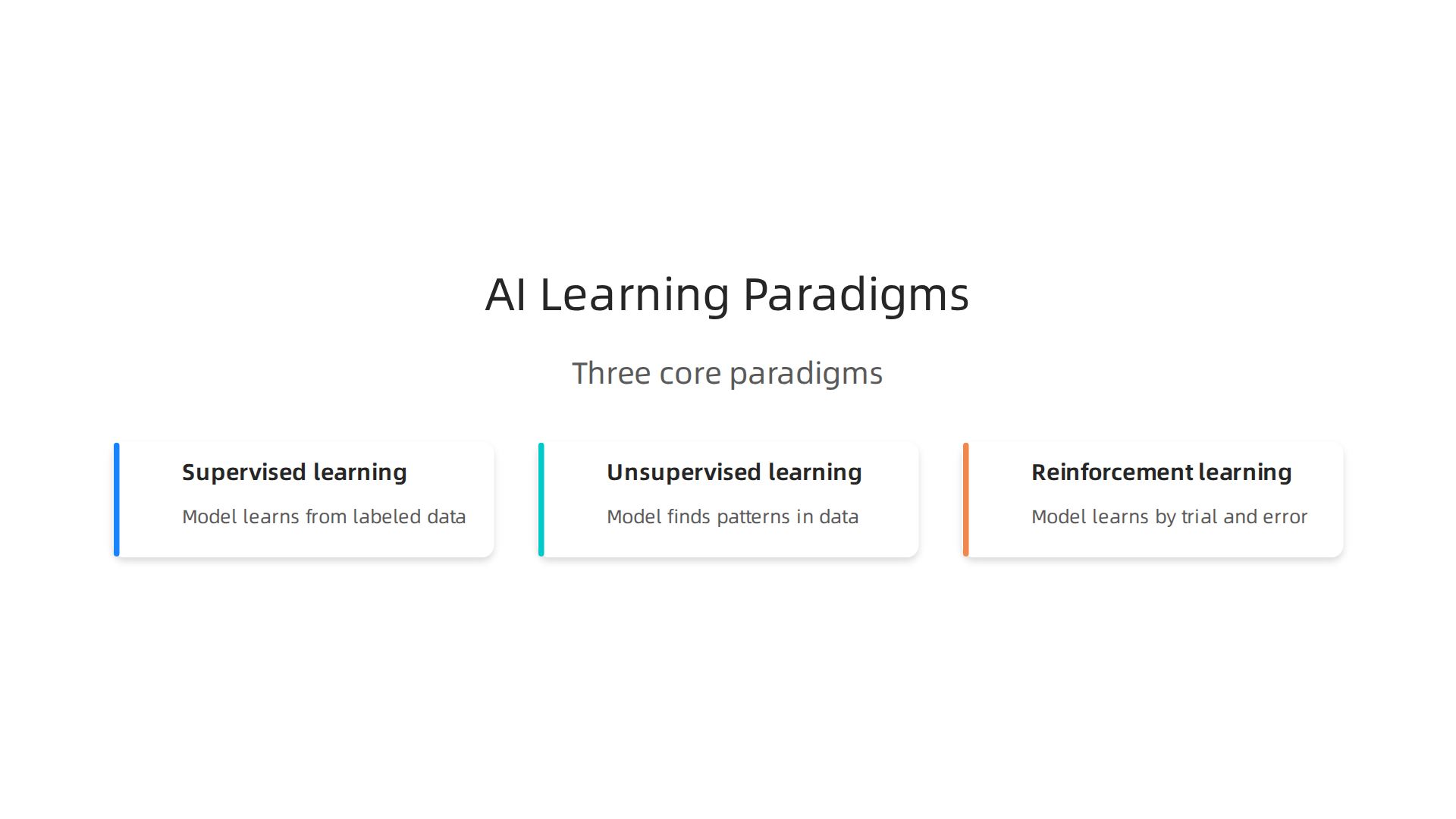
- Supervised learning: The model learns from labeled data. Think of showing it thousands of photos tagged "cat" and "dog" until it can tell them apart. This is the most common approach in commercial applications.
- Unsupervised learning: The model finds patterns in data without labels. It might group customers by buying behavior without anyone telling it what to look for. Great for discovery and segmentation.
- Reinforcement learning: The model learns by trial and error, getting rewards for good actions. This is how AlphaGo learned to beat world champions.
Understanding these paradigms helps you ask the right questions. If a company claims their software can predict employee turnover, ask: "What data did you train on and what method did you use?" A weak answer reveals shallow tech.
Right now, two subfields are attracting the most venture capital: Natural Language Processing (NLP) and computer vision. NLP powers chatbots, document analysis, and translation tools. Computer vision is behind self-driving cars, medical imaging, and quality inspection in factories. When you see a funding announcement, check whether the startup is using NLP or computer vision. That context tells you which market they are targeting and how defensible their tech might be.
If you want to go deeper on how these concepts connect to real investment decisions, check out our guide on how to learn AI in 2026 with a proven six month plan. It turns theory into a practical roadmap.
And if you want to cut through the AI news noise and only get the signal, consider subscribing to The Deep View Newsletter for daily curated intelligence. It saves hours of scrolling and keeps you ready to ask the right questions.
Top Free Platforms to Ask AI Questions and Get Expert Answers
You have read the theory and now you want to dive deeper. But where do you go when you get stuck? Maybe you need to understand a specific algorithm, debug a model, or just find out when was AI invented so you can grasp the big picture. The truth is, most people waste hours scrolling through blogs and social media without finding real answers.

Instead, you can go straight to communities where experts hang out and help for free.
Here are the best platforms to ask free ai questions and get high quality responses in 2026.
Stack Overflow remains the gold standard for technical AI questions.
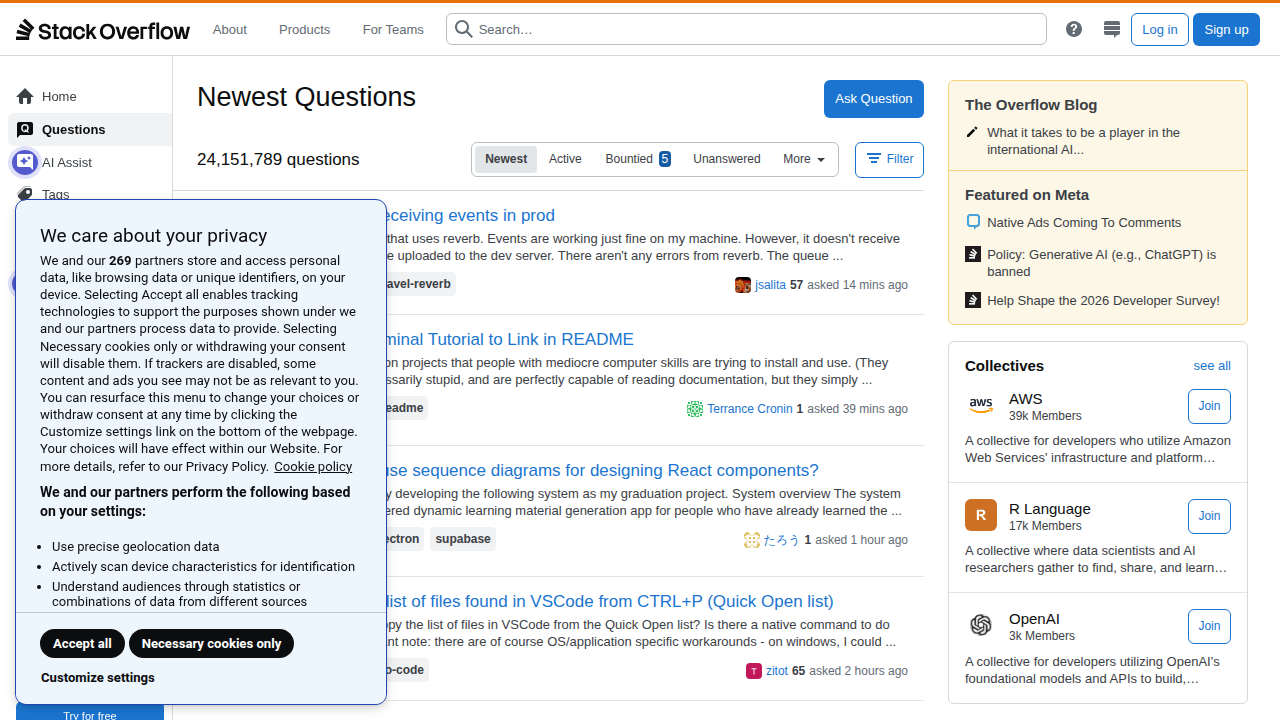
If you have a concrete problem, like an error in your TensorFlow script or a confusion about a PyTorch function, this is your first stop. The key is to ask a specific question with code snippets and what you have tried. Vague questions get ignored. Detailed questions attract detailed answers from engineers who use these tools daily.
Reddit communities like r/MachineLearning offer a more conversational space. You can ask broader questions, like "What is the best AI toolkit for natural language processing in 2026?" or "Which open source AI model should I start with?" The community is active and includes researchers, practitioners, and even founders. Be respectful and search before you ask. If your question shows you have done your homework, you will get amazing responses.
Hugging Face Discord is a must join for anyone working with open source AI models. The community is incredibly supportive. You can ask about deployment, fine tuning, or which model fits your use case. Since Hugging Face hosts thousands of pretrained models, the discussions are practical and hands on. It is like having a direct line to the open source AI community.
AI specific Q&A sites like Artificial Intelligence Stack Exchange and Data Science Stack Exchange are perfect for theoretical or conceptual questions. Want to know the difference between supervised and unsupervised learning with real examples? These sites have detailed answers written by experts. You can also browse past questions to learn from conversations that already happened.
To get the most out of these platforms, learn how to ask effective questions. Always state what you already know, what you have tried, and what exactly you need. A good question gets a good answer. A lazy question gets ignored.
If you want to practice asking questions in a low risk environment, try a free AI chatbot. According to a 2026 comparison of free AI chatbots, tools like ChatGPT, Claude, and Perplexity offer generous free tiers. You can ask them anything and they will respond instantly. Use them to test your understanding or clarify a concept before you take your question to a community. But remember, chatbots can make mistakes. Always verify what they tell you with trusted sources.
For building your AI toolkit, start with Google Cloud’s free AI tools. They offer free usage of products like Translation, Speech to Text, and Natural Language up to monthly limits. This lets you experiment without spending money.
To decide which free AI tool is right for you, check out General Assembly’s guide on choosing the right tool for your workflow. It helps you match your goals to the best platform.
If you are ready to build a structured learning path, our guide on how to learn AI in 2026 with a proven six month plan turns scattered resources into a clear roadmap.
And here is the thing. Even with all these free resources, staying on top of AI news and breakthroughs takes effort. You do not need to read everything. You need the right signal. That is why we recommend The Deep View Newsletter. It delivers curated daily AI intelligence straight to your inbox. Save your time for asking great questions and let the newsletter filter the noise for you. Subscribe today and start cutting through the clutter.
Free AI Tools and Sandboxes to Experiment Hands-On
You can read about AI all day, but nothing beats actually trying it.

The best way to answer your free ai questions is to run a model yourself. The good news? You don’t need a big budget or a computer science degree. In 2026, there are many free platforms that let you test AI in seconds.
Start with the big three: Google Colab, Kaggle Notebooks, and Hugging Face Spaces. These tools give you free access to powerful computing resources. No setup required. You just open a browser and start coding.
- Google Colab gives you free GPU time.
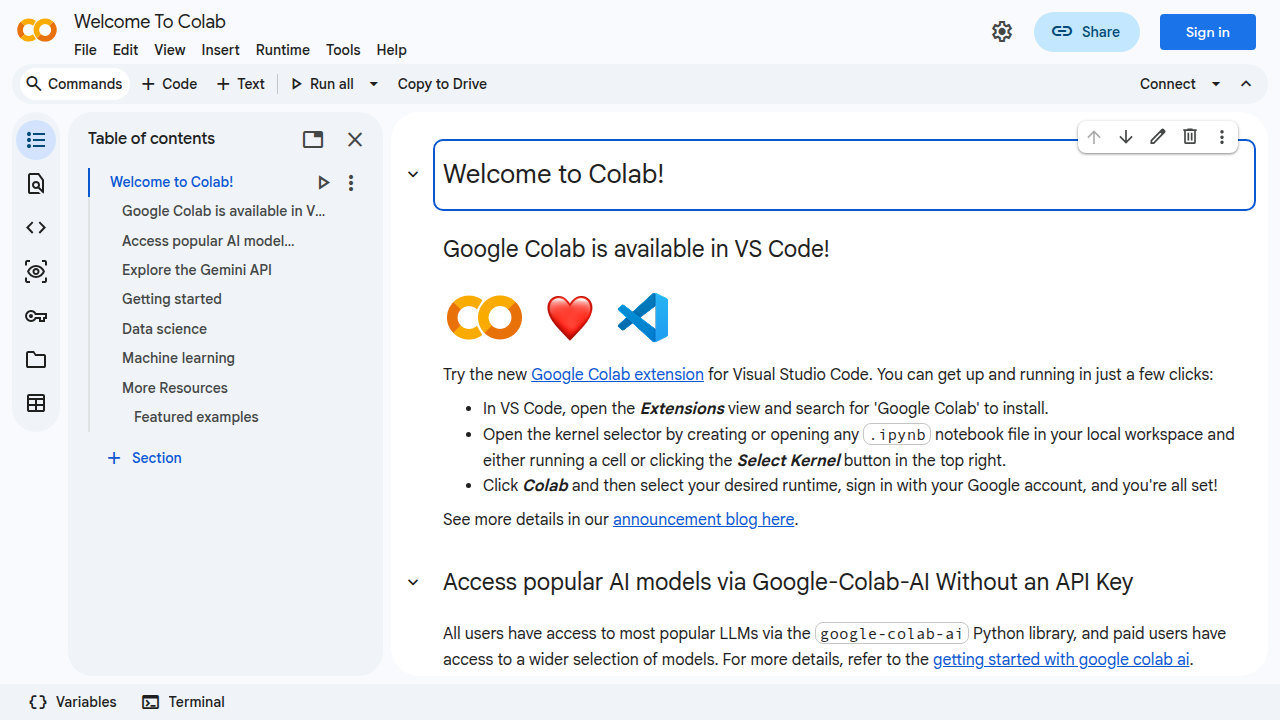
You can run machine learning models directly in your browser. It’s perfect for beginners.
- Kaggle Notebooks also offer free GPUs and TPUs. Plus, you can use thousands of public datasets.
- Hugging Face Spaces lets you deploy and try pre-trained models with a single click.
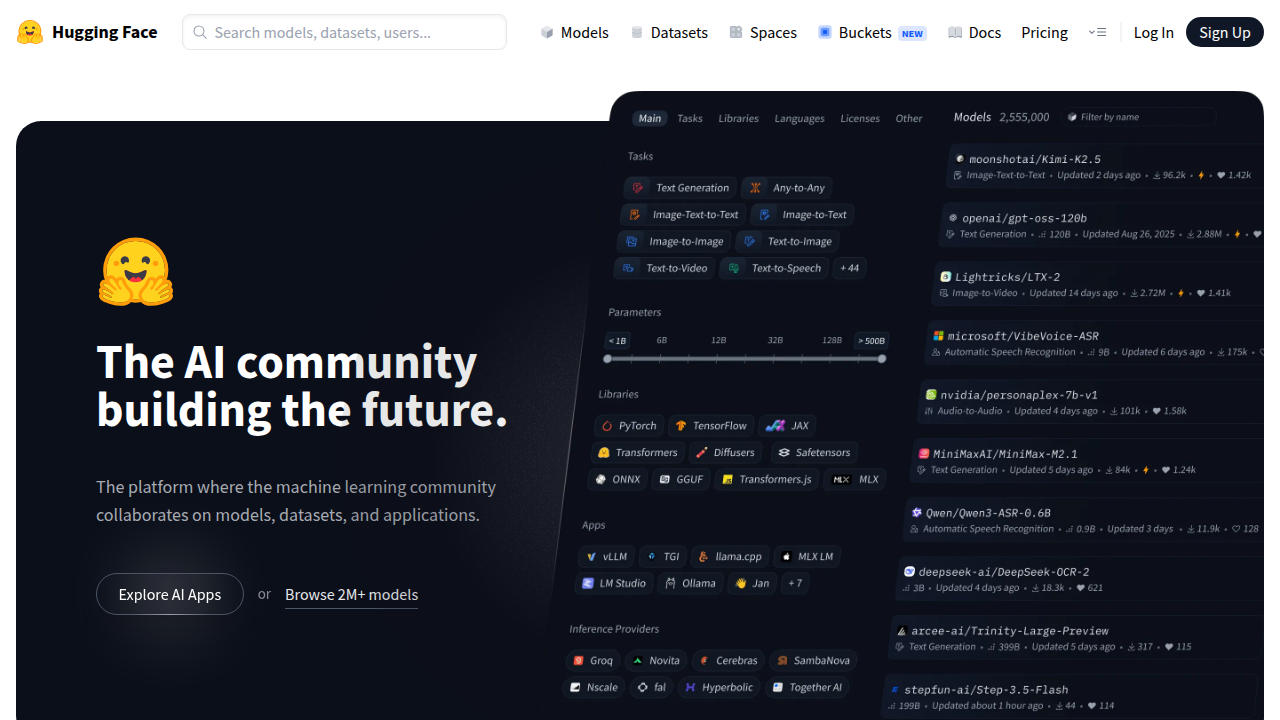
You can test text generation, image recognition, and more.
These platforms lower the barrier to experimentation. You don’t need to understand every detail. You just need to hit "run" and see what happens.
Sandbox environments add a layer of safety. Platforms like the Harvard AI Sandbox provide a secure space to explore generative AI without risking your personal data or cloud credentials. You can test up to 10 models at once and compare results. This is a great way to get hands-on experience even if you’re not a developer.
Another option is Koyeb’s sandbox, which offers a free tier with fast startup times. You can build secure, isolated code execution environments for your AI experiments.
Pre-trained models and APIs make testing even easier. You don’t need to train a model from scratch. Many open source AI models are available for free through APIs or directly on these platforms. Just call the model and ask your questions. This is a fantastic way to answer your free ai questions about how different models behave.
For example, you can ask a language model "when was ai invented?" and see how it explains the history. Or you can use an image model to generate pictures. Each test builds your intuition.
Hands-on experience is the fastest way to internalize concepts. Reading about AI is useful, but running it yourself is where the real learning happens. You start to understand what models can and cannot do. You see the errors, make adjustments, and improve your results. That practical knowledge sticks with you.
If you want a structured path, check out this proven six-month plan to learn AI in 2026. It includes tips on using free tools like the ones we just covered.
Want to stay updated on the latest AI tools and trends? The AI world moves fast. Even with free tools, you need to know what’s new. That’s where a good newsletter helps. Subscribe to The Deep View Newsletter for clear daily AI updates. It cuts through the noise and delivers what matters. Get it here.
How to Filter AI News for Actionable Insights
You just learned how to test AI models with free tools. Now comes another challenge. How do you separate real breakthroughs from hype? In 2026, AI news comes at you fast. Startup funding records keep getting shattered. In Q1 2026 alone, AI companies captured $242 billion of global venture funding, according to Crunchbase. That is 80% of all venture money. But not every funding announcement means a real breakthrough.
Here is the thing. Big checks do not always equal big results. You need a filter. Otherwise, your free ai questions turn into noise.
Start with a simple credibility check. Ask yourself three questions before taking any AI news seriously.
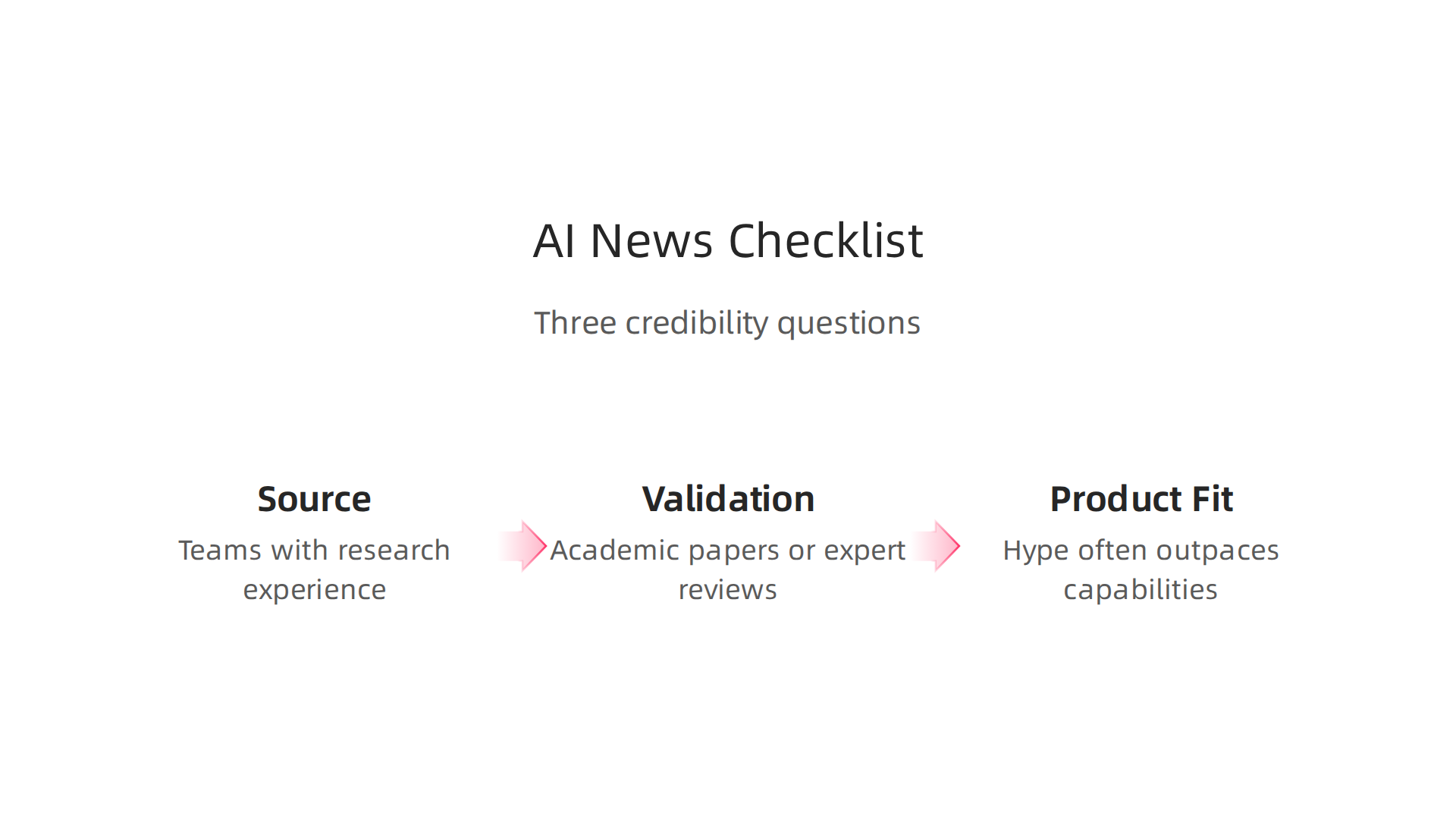
| Question | Why it matters |
|---|---|
| Who is behind the technology? | Teams with real research experience are more credible. |
| Is there independent validation? | Academic papers and expert reviews add weight. |
| Does the claim match the product? | Hype often outpaces actual capabilities. |
These filters help you spot the difference between solid open source ai projects and vaporware. The Stanford HAI 2026 AI Index Report confirms that U.S. private AI investment hit $285.9 billion in 2025. That is a lot of money chasing a lot of promises. You need to know which ones matter.
Curated databases save massive time. Instead of scanning dozens of sites every day, use focused tools. Crunchbase offers an AI filter that highlights verified funding rounds. This cuts through the noise fast. You can also check the Founder Institute’s AI tools spreadsheet for vetted resources organized by task. These databases do the heavy lifting for you.
Another strong source is The Information. Their coverage digs into how businesses actually use AI, not just the press releases. This adds real context.
Cross-reference with academic work and expert commentary. A press release might say a model is revolutionary. But a paper from a respected lab shows you the actual benchmarks. Look for sources like the IBM breakdown of AI vs. machine learning vs. deep learning vs. neural networks. These give you the technical foundation to judge claims.
If you hear about a new ai toolkit called hive ai or something similar, search for third-party evaluations. Check GitHub stars. Look at community discussions. Real tools have real adoption.
Here is a practical tip. When you see a funding announcement, ask "when was ai invented?" as a mental check. No, not literally. But ask yourself how long the core technology has been around. Many breakthroughs are incremental improvements, not brand new inventions. That context helps you stay grounded.
Apply these filters to your own learning. The same skepticism that protects you from hype also deepens your understanding. Every time you evaluate a claim, you build a stronger mental model of how AI actually works. That practical knowledge is exactly what you need to answer your free ai questions with confidence.
If you want to invest in AI companies, read our guide on how to evaluate top AI stocks and avoid the hype in 2026. It gives you a structured framework for separating solid companies from flashy ones.
The bottom line? Filtering AI news is a skill you can learn. Start with credibility checks, use curated databases, and always cross-reference with experts. Within a few weeks, you will spot the signal amid the noise.
Want a shortcut to stay informed without the overwhelm? The AI world moves fast, and missing a key development can cost you. The Deep View Newsletter delivers clear daily AI updates straight to your inbox. It cuts through the hype so you get what actually matters. Subscribe here.
Creating a Sustainable AI Learning and Intelligence Routine
You now know how to filter AI news. But knowing what is real is only half the battle. The other half is building real knowledge. And here is the truth. You do not need to study for hours every day. You just need a sustainable routine.
Consistency beats intensity every time. A McKinsey article from early 2026 says it well. You can build adaptability by spending just 15 minutes each week learning one new AI capability. No pressure to master everything at once. That small habit compounds fast.
Think about it. If you learn one new concept every week, that is 52 new ideas in a year. You do not need to understand transformer architecture on day one. You just need to understand one thing. Then another. Then another. Before long, your free ai questions start answering themselves.
Mix your resource types for the best results. Do not rely on just one source. Combine these four categories for a complete learning diet.
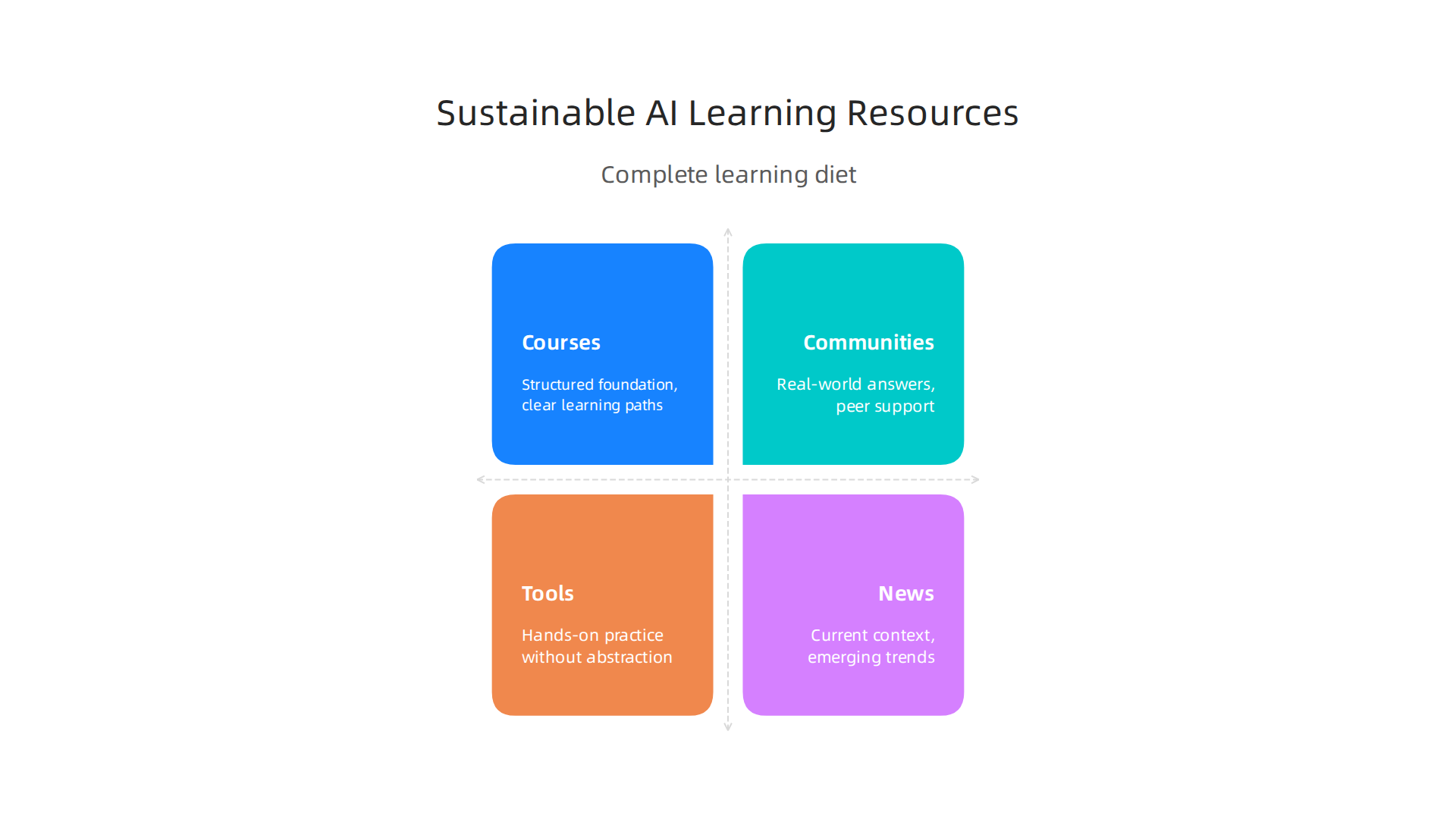
| Resource type | What it gives you |
|---|---|
| Courses | Structured foundation and clear learning paths |
| Communities | Real-world answers and peer support |
| Tools | Hands-on practice without abstraction |
| News | Current context and emerging trends |
For courses, you can start with free options. Platforms like Coursera offer top artificial intelligence courses from IBM and DeepLearning.AI. The Infobip list of 30 free AI courses is another great starting point.
For tools, use the free tiers. Best Free AI Chatbots in 2026 from Admix shows you GPT-5.4, Claude, Gemini, and DeepSeek without paying. This is where you answer your free ai questions by actually testing models. You can also explore Google Cloud free AI tools for hands-on practice with translation, speech-to-text, and more.
Set a specific weekly goal. Vague goals like "learn AI" will not stick. Specific goals work. Try this. Each week, pick one concept or tool to explore. For example, one week you investigate open source ai models. The next week you test an ai toolkit like hive ai to see what it does. The Syracuse University guide on how to learn AI in 2026 explains the two paths: the Power User path (no code, results in days) and the Builder path (technical, career-focused). Pick one path and set your weekly goal around it.
Here is a simple weekly structure. Monday read one article. Wednesday try one free tool. Friday discuss what you learned with a community. That is it. Fifteen minutes a day.
Use your own "when was ai invented" check. Each time you see a news claim, ask yourself how old the core technology really is. This keeps you grounded and helps you avoid hype. It also deepens your understanding of how AI actually evolves.
Turn filtered news into learning opportunities. When you read about a new open source ai model, do not just skim. Download it. Test it. Ask it your free ai questions. That hands-on practice is what turns news into lasting knowledge.
If you want a proven roadmap, read our guide on how to learn AI in 2026 with a proven six-month plan. It gives you a week-by-week structure so you never wonder what to study next.
The bottom line? Build a small, consistent routine. Combine courses, communities, tools, and news. Set one specific goal each week. That is all it takes to go from overwhelmed to confident.
Want a shortcut to stay informed without the overwhelm? The AI world moves fast, and missing a key development can cost you. The Deep View Newsletter delivers clear daily AI updates straight to your inbox. It cuts through the hype so you get what actually matters. Subscribe here.
Summary
This article explains why a foundational understanding of AI matters for investors and operators and gives practical ways to get that knowledge without paying for courses. It defines core concepts—AI, machine learning, deep learning—and the main learning paradigms so you can spot meaningful technical depth versus marketing buzz. The guide lists the best free places to ask questions (Stack Overflow, Reddit, Hugging Face, specialized Q&A sites), free experimentation platforms (Colab, Kaggle, Hugging Face Spaces) and sandboxes to try models safely. It also shows how to filter fast-moving AI news with credibility checks, curated databases, and academic validation, and it recommends a small, consistent learning routine you can sustain. After reading, you will know where to ask the right questions, how to run quick experiments, what signals indicate real breakthroughs, and how to keep learning without getting overwhelmed.