
General Partnerships Navigating Risks and Benefits for Founders and Investors
Overview
Why founders and investors still ask about general partnerships
Even in 2026, with so many new business types around, founders and investors still talk about general partnerships. But what are they, and why do they matter, especially for a startup focused on AI? Let’s break it down in simple terms.
A general partnership is a business owned by two or more people. It’s one of the easiest ways to start a business with someone else. You don’t always need to file a lot of paperwork to create one. Sometimes, just by working together to make money, you might already have formed one without even knowing it [^1]. This makes it a popular choice for very early-stage teams because it’s simple and quick to get going.
So, who does this kind of setup help? It’s great for friends or small teams who want to build a business together quickly without much hassle. It’s often chosen by those in the first start up stages who are focused on their idea, not on complex legal steps.
However, there are important trade-offs. One big thing to know about general partnerships is that all partners share everything. This means they share the good things, like profits, but also the bad things, like debts or legal problems. Each partner is fully responsible for what the business owes, even if another partner caused the problem. This is called "unlimited personal liability." It means your personal savings or house could be at risk if the business runs into big trouble.
For AI startups in 2026, general partnerships can seem appealing at first. They let teams move fast and start developing their AI solutions without delays. This speed can be key when you’re trying to get ahead in a fast-moving field like artificial intelligence. Many investors for a startup might look at your business structure, though. While simple formation is an advantage, the unlimited personal risk can make some investors nervous later on, especially when the company grows and needs more money. That’s why understanding these general partnerships advantages and disadvantages is crucial from day one.
Keeping up with the latest in AI and tech is vital for any founder or investor. You can get clear, daily AI updates by subscribing to The AI Newsletter Worth Reading.
[^1]: What Are General Partnerships and Should I Form One?
What is a general partnership? A quick legal and practical primer
That’s why understanding these general partnerships advantages and disadvantages is crucial from day one. So, let’s look closer at what a general partnership really means, both on paper and in real life.
At its core, a general partnership is a business where two or more people agree to work together to run a company and make money. Each person, called a partner, puts something valuable into the business. This could be money, property, hard work, or special skills Partnerships | Internal Revenue Service. They all agree to share in the business’s profits and losses.
When it comes to how the business is run, all partners usually have a say in major decisions. Unless they agree otherwise, each partner has equal power in running the company How to start a partnership business. They also share the profits and losses, often in equal parts, unless they put a different plan in writing. This shared control and profit-sharing are key parts of how a general partnership works.
One of the biggest general partnerships advantages for founders is how simple it is to get started. You often do not need to file special papers with the state government to officially create a general partnership General Partnerships Under the Law. Actually, sometimes just by two or more people working together and planning to make a profit, a general partnership can form without any written document at all Starting a Business in DC:. This "informal" way of starting up can be very appealing for teams who want to move quickly.
However, even though formal paperwork to create the partnership isn’t always needed, it’s truly smart to have a detailed written partnership agreement. This document acts as a clear roadmap. It spells out important things like:
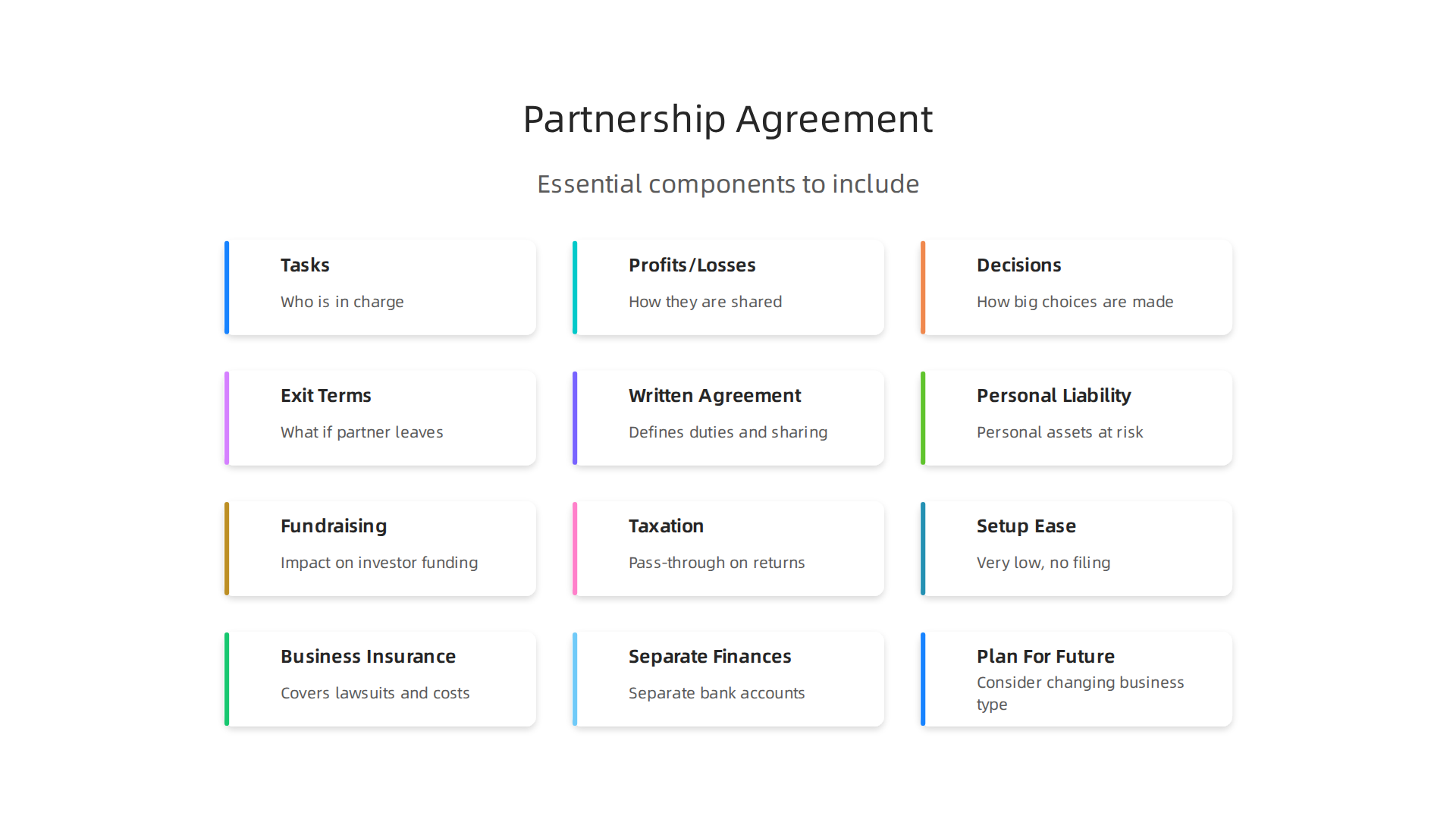
- Who is in charge of what tasks
- How profits and losses are truly shared
- How big decisions are made
- What happens if a partner wants to leave or if the business ends
Having this written plan helps build AI strong foundations for your business and can prevent big problems and disagreements later on. While you might not need to file papers to form the partnership itself, you might still need to register your business’s name (like a "doing business as" or DBA) with your state or local government. For example, if you run your business under a different name than your own, you would need to file that name in Utah CORP Considerations in Forming a General Partnership. This makes sure your business name is legally recognized.
Key advantages of general partnerships for startups
Moving from what a general partnership is, let’s explore why it can be a really good choice for new companies, especially in their early start up stages. The main "general partnerships advantages" often revolve around how easy and quick they are to set up, and how much control founders keep.
One of the biggest pluses is how simple it is to get started. Unlike other business types that need lots of forms and fees, you can often form a general partnership with very little paperwork or cost Advantages and Disadvantages of General Partnerships in Houston. This means you and your partners can focus more on building your product or service and less on legal hurdles. It’s a faster way to get your business going, which is super important for startups that need to move fast. Many experts agree that general partnerships are known for their easy setup and running General Partnership Explained: Benefits, Risks, and Setup Essentials. This simplicity can save new businesses time and money right from the beginning.
Another great benefit is the flexibility in how you run things and share profits. In a general partnership, you and your partners get to decide how profits and losses are split. You can make it equal, or you can make it based on how much each person brings to the table, like their money, time, or special skills The Essential Guide to Business Partnership 2026 – LLC Attorney. This ability to customize how you share can make sure everyone feels like they are treated fairly and are motivated to work hard. This also means founders keep a lot of control over their company. They can make decisions together without a lot of outside rules, which is often very appealing to new investors for a startup who want to see clear leadership.
This close teamwork and shared vision are especially helpful in the fast-changing world of technology. Imagine an AI startup where two founders are working closely together. The ability to quickly agree on plans and share rewards can really help them grow. This flexibility is a core strength for new businesses Why LLCs and General Partnerships Offer Flexible Planning Op. It lets them change and adapt as needed, which is a common part of the AI Market Landscape 2026 Global Investment and Future Trends.
Staying on top of what’s happening in AI and how it affects startups is key for success in 2026. For founders and investors navigating this space, having reliable information is a huge advantage.
Get clear daily AI updates from The AI Newsletter Worth Reading.
While general partnerships offer many benefits for new companies, especially in their early startup stages, they can present some challenges when it comes to attracting outside money and building relationships with investors. Understanding these points is crucial for founders looking to grow their business in 2026.
Investor Perceptions of Personal Liability, Governance, and Exit Mechanisms
One big concern for investors when looking at general partnerships is personal liability. In a general partnership, all partners are fully responsible for the business’s debts and legal problems.

This means their personal savings, homes, and other assets could be at risk if the business fails or faces a big lawsuit. Investors usually prefer business structures that protect them from this unlimited personal risk, like Limited Liability Companies (LLCs) or corporations. This concern about personal liability is a core part of what investors consider during their due diligence Beyond the Pitch Deck: A Legal Guide to Investor-Side Due Diligence.
Next, investors closely look at how the business is run, which is called governance. In a general partnership, decisions are often made informally or based on a simple agreement between partners. However, outside investors want clear rules on how decisions are made, how disputes are handled, and how their investment will be protected. A strong partnership agreement can help, outlining things like management authority and profit sharing How to Write a Business Partnership Agreement. Without clear governance, investors may feel uncertain about their control and influence, especially for fast-growing companies using AI in HR or other advanced fields.
Finally, investors always think about how they will eventually get their money back, which is known as an exit mechanism. This could mean selling the company, going public, or having other partners buy them out. In a general partnership, planning for an exit can be complex. Investors need to see a clear path for their investment to grow and then be sold at a profit. They will want to know how the company will be valued when it’s time to sell, especially for a startup in its crucial early phases When Do Startups Need a Valuation? 6 Common Triggers.
Structures Investors Commonly Request
Because of these concerns, investors, especially venture capitalists (VCs) and private equity (PE) firms, often ask for a different business structure. They typically prefer:
- C-Corporations: This is the most common structure for startups seeking significant outside investment. C-Corps offer limited liability to investors, and they have a clear structure for ownership through shares and a board of directors, which makes governance and exit plans easier to understand.
- Limited Liability Companies (LLCs): While LLCs offer limited liability like C-Corps, their operating agreements can be very flexible. Investors might accept an LLC, but they will want a detailed operating agreement that mirrors the clear governance rules of a C-Corp, especially if they are major investors for a startup.
If your startup is currently a general partnership, you might need to convert it into an LLC or a C-Corporation to attract serious investors. This conversion process can involve legal costs and tax considerations, so it’s important to plan ahead The Entity Conversion That Costs More Than You Think. For startups aiming to maximize AI startup funding, understanding these structural preferences is key to success. Having a clear legal setup helps investors feel safer about putting their money into your company. To explore how different types of capital partners operate, you can learn about how to select the best AI capital partners for startup funding in 2026. This step can open doors to more significant investment opportunities.
To make smart choices for your startup, it helps to know how different business types work. Let’s compare general partnerships, LLCs, and C-Corporations. Each one has its own good and bad points, especially when you think about money, rules, and getting investors.
A general partnership is the simplest way to start a business with someone else. It’s cheap and easy to set up, often with little paperwork, making it a popular choice for new businesses in their first start up stages. The profits are taxed only once, as part of the owners’ personal income, which is one of the big advantages of general partnerships. However, all partners are fully responsible for the business’s debts. This means their personal money is at risk, which is a big concern for outside investors.
An LLC, or Limited Liability Company, gives owners an important safety net. Your personal money is usually safe if the business has debts or lawsuits. LLCs are also flexible with taxes, often letting profits pass through to owners’ personal taxes, like a general partnership. They are more formal to set up than a general partnership, needing an official document called an operating agreement.
A C-Corporation is often the best choice if you plan to raise a lot of money from big investors, like venture capitalists. C-Corps protect owners’ personal assets, just like an LLC. They also make it easy to sell ownership shares to many investors. But C-Corps have more rules to follow and a special tax system called "double taxation." This means the company pays taxes on its profits, and then shareholders pay taxes again when they get money from the company.
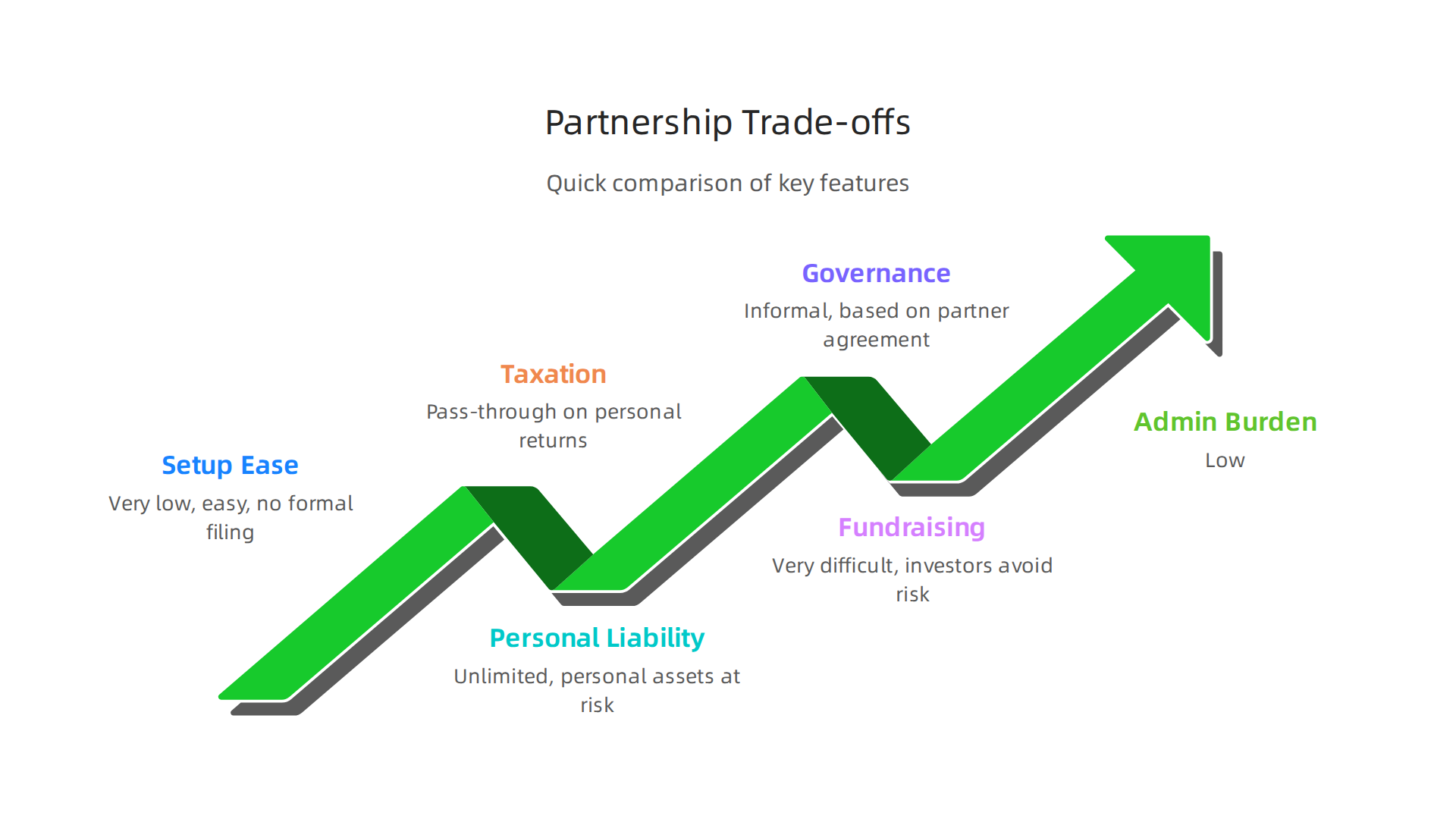
Here is a quick look at the main differences:
| Feature | General Partnership | LLC (Limited Liability Company) | C-Corporation |
|---|---|---|---|
| Setup Cost & Ease | Very low, easy (often no formal filing) | Moderate (state filing, operating agreement) | High (state filing, bylaws, board setup) |
| Personal Liability | Unlimited (personal assets at risk) | Limited (personal assets protected) | Limited (personal assets protected) |
| Taxation | Pass-through (profits taxed on personal returns) | Flexible (can choose pass-through or corporate) | Double taxation (company pays, then shareholders pay) |
| Fundraising | Very difficult (investors avoid personal risk) | Better than GP, but investors want formal agreements | Best for outside investors (clear ownership via shares) |
| Governance | Informal (based on partner agreement) | Flexible (detailed operating agreement recommended) | Formal (board of directors, strict rules) |
| Admin Burden | Low | Medium | High |
When to Choose Which Type of Business
Deciding on the best business type depends on your startup’s plans. A general partnership works well as a first step. It is easy to start, costs little, and helps you test your ideas with a trusted partner. This is one of the clear advantages of a general partnership in the beginning. However, if you want to grow fast, bring in outside investors for a startup, or build a large team (perhaps even using AI work 2026 global trends shaping investment and talent), you will likely need to change to an LLC or a C-Corp. These structures offer the legal protection and clear rules that investors want. Making this choice carefully helps you get ready for growth and secure the funding you need.
Stay on top of the latest news and trends that shape the AI startup funding world. Get clear daily AI updates from The AI Newsletter Worth Reading.
Tax and personal liability implications for founders in a general partnership
When you choose a general partnership for your startup, it’s important to understand how taxes work and what it means for your personal money. These are key things to know, especially as your business moves through its early stages.
How Taxes Work
One of the big features of a general partnership is its "pass-through" tax system. This means the business itself does not pay income taxes directly. Instead, any money the partnership makes or loses "passes through" to the owners, or partners. Each partner then reports their share of the business’s profits or losses on their own personal tax return. So, the government sees the business income as your personal income. The IRS provides more details on how partnerships are taxed.
Because partners are owners and not employees, they also need to pay "self-employment taxes." This covers Social Security and Medicare taxes. In 2026, general partners usually have to pay this tax on their share of the business profits. It’s a bit like paying both the employee and employer parts of these taxes. You can learn more about the Partnership Self-Employment Tax Guide if you are a general partner.
Your Personal Money Is at Risk
Here’s the most important point about personal liability in a general partnership: you and your partners are fully responsible for all business debts and legal problems. This is called "unlimited personal liability." It means if the business owes money it can’t pay, or if someone sues the business, your personal savings, home, and other assets could be used to cover those costs.

This is a significant risk that founders need to consider, as explained in a guide on What Is a General Partnership? Pros and Cons.
This risk is why getting outside investors can be tough for general partnerships. Most investors for a startup want to see that their money is safe, and they don’t want their investments linked to the personal fortunes of the founders.
How to Protect Yourself
Even with these risks, there are smart steps founders can take:
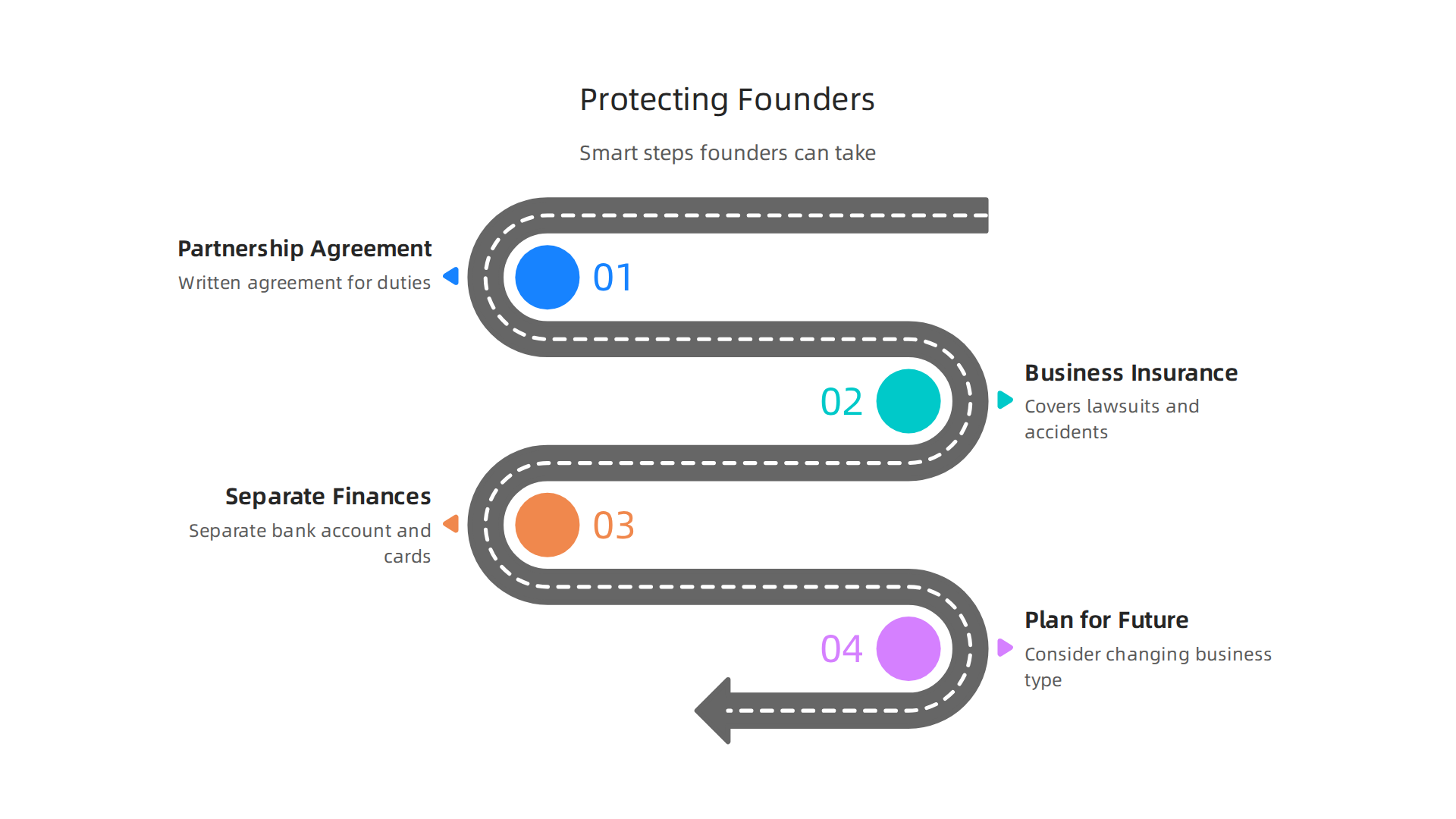
- Get a Strong Partnership Agreement: While general partnerships can be formed with just a handshake, it’s much safer to have a written agreement. This document spells out everyone’s duties, how profits and losses are shared, and what happens if a partner leaves. It’s your rulebook and helps avoid fights later. Many states, like Utah, emphasize these considerations in forming a general partnership.
- Business Insurance: Look into getting good business insurance. This can help cover costs from lawsuits, accidents, or other unexpected problems, protecting your business and, indirectly, your personal assets.
- Keep Business and Personal Money Separate: Always use a separate bank account and credit cards for your business. This makes it easier to track money and shows a clear line between your business and personal finances.
- Plan for the Future: Think about when it might be smart to change your business type. As your startup grows and you want to bring in more money or hire many people, switching to an LLC or a C-Corp can offer better protection and make it easier to secure capital. Learning about Mastering AI Startup Funding to Identify and Secure Capital in 2026 can guide you through different funding stages that might require a structure change.
Understanding the taxes and risks of general partnerships helps you make smart choices for your startup.
After looking at how taxes work and the risks of your personal money in a general partnership, let’s talk about how to set up your business so it runs smoothly and attracts good support. This means focusing on good rules and smart checks for both founders and investors for a startup.
Setting Clear Rules with a Partnership Agreement
Even though general partnerships are easy to start, having a clear written agreement is super important. Think of this agreement as the rulebook for your business. It explains:
- Who does what job.
- How big decisions are made.
- How money and losses are shared.
- What happens if a partner wants to leave or if new partners join.
This kind of detailed agreement helps recreate some of the protections you’d find in other business types. It helps prevent misunderstandings later on and shows potential investors for a startup that your business is well-thought-out. For help in setting up this important document, you can learn How to Write a Business Partnership Agreement. Each partner should also get their own legal advice on the agreement before signing, just to make sure their individual interests are protected.
A well-made partnership agreement can actually highlight the general partnerships advantages of flexibility and shared control while adding structure where it’s needed most.
Important Checks: Due Diligence
"Due diligence" is a fancy way of saying "doing your homework." It means carefully checking everything about a business before you make a big decision, like investing or joining. This is crucial for both sides in a general partnership.
For Investors
If you are an investor looking at a general partnership, you need to be extra careful because of the unlimited personal liability. Here’s what you should check:
- The Partnership Agreement: Read it very closely. Does it make sense? Are the rules clear? Does it protect your investment as much as possible?
- The Partners: Get to know the founders well. What are their skills? What is their experience? Do they have a good plan for the
start up stages? - The Money: Look at the business’s finances very carefully. How much money do they have? How do they plan to make more? What are their debts?
- Business Plans: Understand their product or service, who their customers are, and how they plan to grow.
Checking these things helps investors feel more secure. A legal guide to investor-side due diligence can help you ask the right questions.
For Founders
Founders in a general partnership also need to do their own due diligence on any potential investors or new partners. You want to make sure they share your vision and will be good to work with. Think about their past actions and how they treat other businesses. For tips on attracting the right kind of financial backing, explore how to find private investors for small business AI startups in 2026.
By setting up clear rules and doing thorough checks, general partnerships can become more stable and attractive, helping your startup grow.
Get clear daily AI updates from The Deep View Newsletter. The AI Newsletter Worth Reading
When your business starts to grow, the simple structure of a general partnership might need to change. What works well in the early days, with its many general partnerships advantages, may not be the best fit for bigger plans. Knowing when to switch to a different business type is key for keeping your business safe and attracting more serious funding.
Signals for Reaching the Next Stage
Think of your business growing like a child. What’s perfect for a baby isn’t perfect for a teenager. In the same way, as your startup moves through different start up stages, you might see signs that it’s time to change from a general partnership.

One big signal is when you want to bring in outside investors for a startup. Most investors, especially venture capitalists, don’t like the idea of unlimited personal liability that comes with a general partnership. They prefer business structures that protect their money better. Another sign is when your business starts dealing with more money, more employees, or bigger projects. The risks increase, and so does the need for stronger legal protection. For example, if you’re building a new AI product, the liability could be huge, and a different structure would be needed.
Also, if you’re thinking about selling your business or merging with another company down the road, a general partnership can make things harder. Planning for an exit strategy early can help avoid problems later, as protecting your business before disputes happen is vital.
Paths for Reorganization and What They Mean
When it’s time to move on from a general partnership, you usually have a few main options:
- Becoming an LLC (Limited Liability Company): This is a popular choice. It gives you some of the simplicity of a partnership but adds a shield that protects your personal money from business debts. This can make your business much more attractive to investors for a startup, as it limits their risk too.
- Becoming a C-Corporation: If you plan to raise a lot of money from many investors or eventually want to take your company public, a C-Corp is often the way to go. It offers the strongest personal liability protection and makes it easier to issue shares and attract large investments. However, converting to a C-Corp can sometimes come with extra legal costs and tax considerations, so it’s smart to know what you are getting into. For more details, you can look into the costs of Tech Startup Formation: Should You Choose an LLC or C-Corp.
Changing your business structure, also known as re-incorporating, has important effects. It can impact how much your business is worth and how much investors might get back. For example, some investors might offer better terms to an LLC or a C-Corp because they see less risk.
Understanding when and how to reorganize ensures your business is set up for long-term success, attracting the right kind of support and protecting everyone involved. Knowing When Do Startups Need a Valuation is a key part of this process, helping you understand the financial health and future potential of your evolving business.
Summary
This article explains why founders and investors still discuss general partnerships in 2026, what they are, and how they matter for AI startups. It defines a general partnership as a simple, often informal business owned by two or more people, highlights its advantages—low cost, speed, and operational flexibility—and lays out the major trade-offs, especially unlimited personal liability and tax treatment. The piece covers how investors view partnerships (concerns about liability, governance, and exit options), contrasts partnerships with LLCs and C-Corps, and explains tax and self-employment implications. It also outlines practical protections—written partnership agreements, insurance, and separate finances—and shows the signs and steps for converting to an LLC or C-Corp to attract larger capital. Readers will learn how to weigh ease and speed against legal risk, what investors look for, and when to reorganize to support growth and funding.