

General Capital Groups AI Investment: Uncover Strategies & Track Signals
Overview
Why understanding general capital groups matters for AI investors
In 2026, the world of Artificial Intelligence (AI) is moving incredibly fast. This means lots of new ideas and big changes in how businesses work. For people who want to put money into AI companies or start their own AI ventures, it can feel like a lot to keep up with. Think about firms like greenbridge capital. It’s hard to know what they are doing in the AI space because there is so much information out there.
Many investors and founders face a big problem: too much information and not enough clear answers. It’s tough to track what important capital groups are doing.

You might hear about firms like paramount capital group, domain capital group, hunter point capital, or pritzker group venture capital, but how do you know what their real plans are for AI? This overload of news and funding details makes it hard to see the big picture and make smart choices. In fact, AI investment activity is set to go past $650 billion each year, showing just how much is happening in this field AI Investment Activity to Surpass $650 Billion Annually as Enterprise Adoption Accelerates Toward 2026.
This article will help you understand how general capital groups work. We will look at their common investing plans, what signals to watch for, and easy ways to keep track of their activities. This way, AI founders and investors like you can gain valuable insights to help make better decisions. To learn more about getting money for your AI startup, check out our guide on mastering AI startup funding.
Are you tired of sifting through endless news to find what really matters in AI?
Get clear daily AI updates from The AI Newsletter Worth Reading.
General capital groups play a big part in how AI companies get money to grow. They do a few key things.
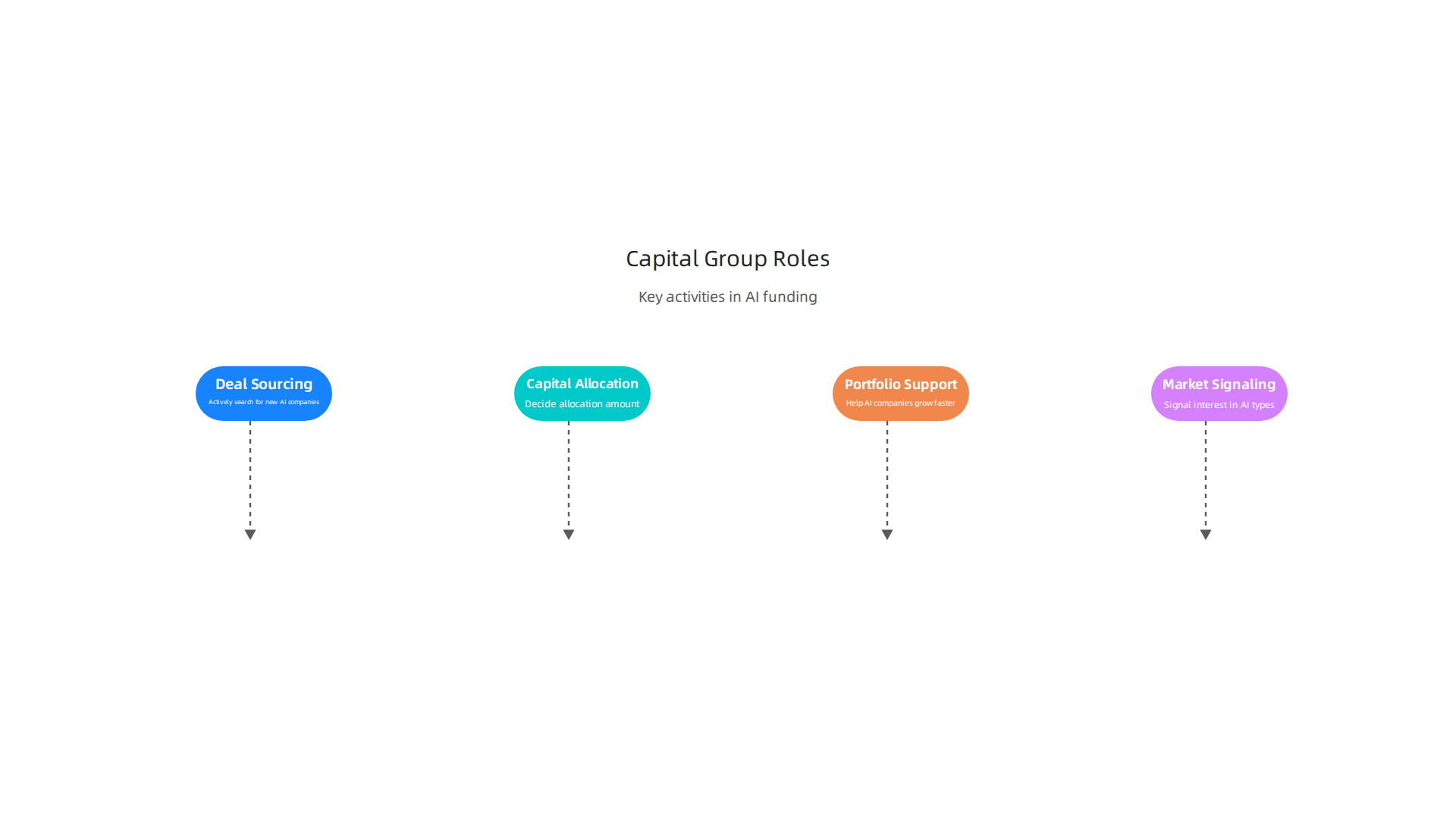
They are not just sitting around waiting for good ideas to come to them. Instead, they actively search for new AI companies that show promise. This is called deal sourcing. In 2026, many investment firms use special AI tools to find these companies. These tools help them look through lots of information and spot early signs of success in startups 2026 InvestOps Report.
Once a good company is found, these groups decide how much money to put in. This is known as capital allocation. For example, firms like greenbridge capital or paramount capital group might choose to invest heavily in AI tools that help people with their jobs, like smart assistants, instead of fully automatic AI systems. This shows a careful way of picking what to fund Q2 2026 Investment Artificial Intelligence Trends.
After investing, these groups don’t just walk away. They offer portfolio support. This means they help the AI companies they’ve put money into. They might help these companies grow faster, lower their costs, or become better at what they do. Using AI within their own investment firms also helps them create more value for the companies they support AI for Private Equity: 2026 Data, Costs and Playbook.
Finally, their actions act as market signaling. When a major capital group like domain capital group or hunter point capital invests in a certain type of AI, it sends a message to other investors. It tells them that this area might be worth looking into.
General capital groups matter a lot in the AI world for two main reasons. First, they can change how much AI companies are thought to be worth. Companies that use AI well are often doing better than others, which can make their value go up AI’s Transformative Impact on Investment Strategies and Market …. Second, their investments can make whole areas of AI grow much faster. When groups like pritzker group venture capital put more money into certain AI ideas, it can lead to more funding from others and create a strong network of support. This helps new AI technologies get off the ground and become widely used.
Understanding these roles is key for anyone involved in AI investing. To learn more about how big players pick their investments, check out our guide on selecting top AI PE VC firms for strategic growth capital. It helps you see how they choose which companies to fund and how their choices shape the future of AI.
Common Investment Strategies: Stage Focus, Sector-Agnostic vs. Thematic, and Allocation Tactics
Building on how capital groups find and support AI companies, it’s helpful to look at the different ways they actually invest. These are called investment strategies, and they guide where and how money is put into new AI businesses.
Investment Stages: Early Start to Fast Growth
One main way investors pick companies is by looking at their stage of growth.
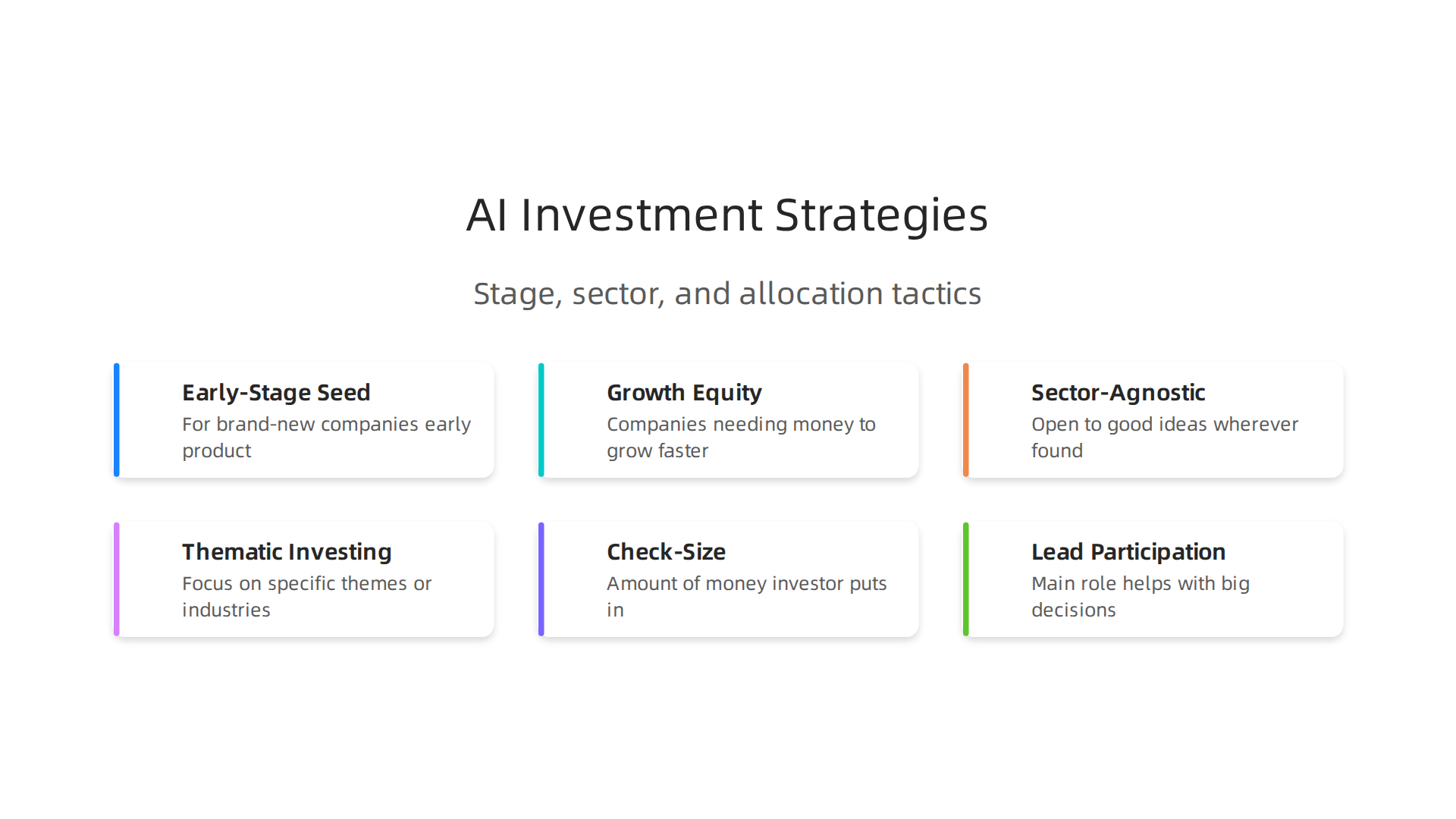
- Early-Stage Seed Funding: This is for brand-new companies, often just starting with an idea or a very early product. Investors at this stage, sometimes called "seed investors," put in smaller amounts of money to help the company get off the ground. They take bigger risks because the company is so new, but they hope for big rewards if it succeeds. Firms like
greenbridge capitalmight look for a strong team and a fresh idea even before the company has many customers. Actually, AI startups at the seed stage often get higher valuations than non-AI startups, showing how much belief there is in their future AI Startup Valuations in 2026. - Growth Equity: This is for companies that are already working well and need more money to grow even faster. These companies have proven their product or service and are making money. Investors in growth equity, such as
paramount capital group, provide larger amounts to help expand into new markets, hire more people, or build new features.

Picking Sectors: Broad or Focused
Another choice investors make is whether to invest broadly or focus on one area.
- Sector-Agnostic: Some capital groups don’t stick to just one industry. They might invest in an AI company making tools for healthcare one day, and another making smart software for cars the next. They are open to good ideas wherever they find them.
- Thematic Investing: Other groups like to focus on specific themes or industries. For example,
pritzker group venture capitalmight only invest in AI companies that deal with healthcare technology, or those focused on making factories smarter. This lets them become experts in one area.
How Much to Invest and What Role to Play
Investment groups also decide on the size of their investment and how involved they want to be.
- Check-Size Strategies: This simply means how much money an investor typically puts into a company. Some firms only make very large investments, while others focus on smaller checks across many companies. For example,
domain capital groupmight be known for its large investments, while another firm focuses on many smaller ones. - Lead vs. Passive Participation: When a firm leads an investment round, it often means they put in the most money and take a main role in helping the company. This usually involves a seat on the company’s board, helping with big decisions, and offering advice. A passive investor, on the other hand, puts in money but lets others take the lead. They might have less say in how the company is run. Firms like
hunter point capitaloften act as lead investors, giving them more influence.
These choices directly affect what investors expect. For a lead investor, there’s more due diligence or checking into the company before investing. They also usually have more say in board involvement, guiding the company’s path. And their presence can make it easier for companies to get follow-on capital in the future, as other investors trust their lead. All in all, AI technology investment is accelerating across many industries in 2026, driving strategic deployment in many different areas AI Technology Investment Accelerates Across Industries as Strategic Deployment Defines Q2 2026.
Understanding these different ways of investing helps everyone know what to expect. To learn more about how venture capital firms think, read our guide on AI Venture Capital 2026 Trends And Strategies For Investors In Businesses. It breaks down the trends and strategies these investors use to pick their next big winners.
Different investment groups are set up in various ways. These structures affect how they make decisions, how fast they move, and what kinds of deals they prefer.
Let’s look at the common setups for groups that invest in AI companies.
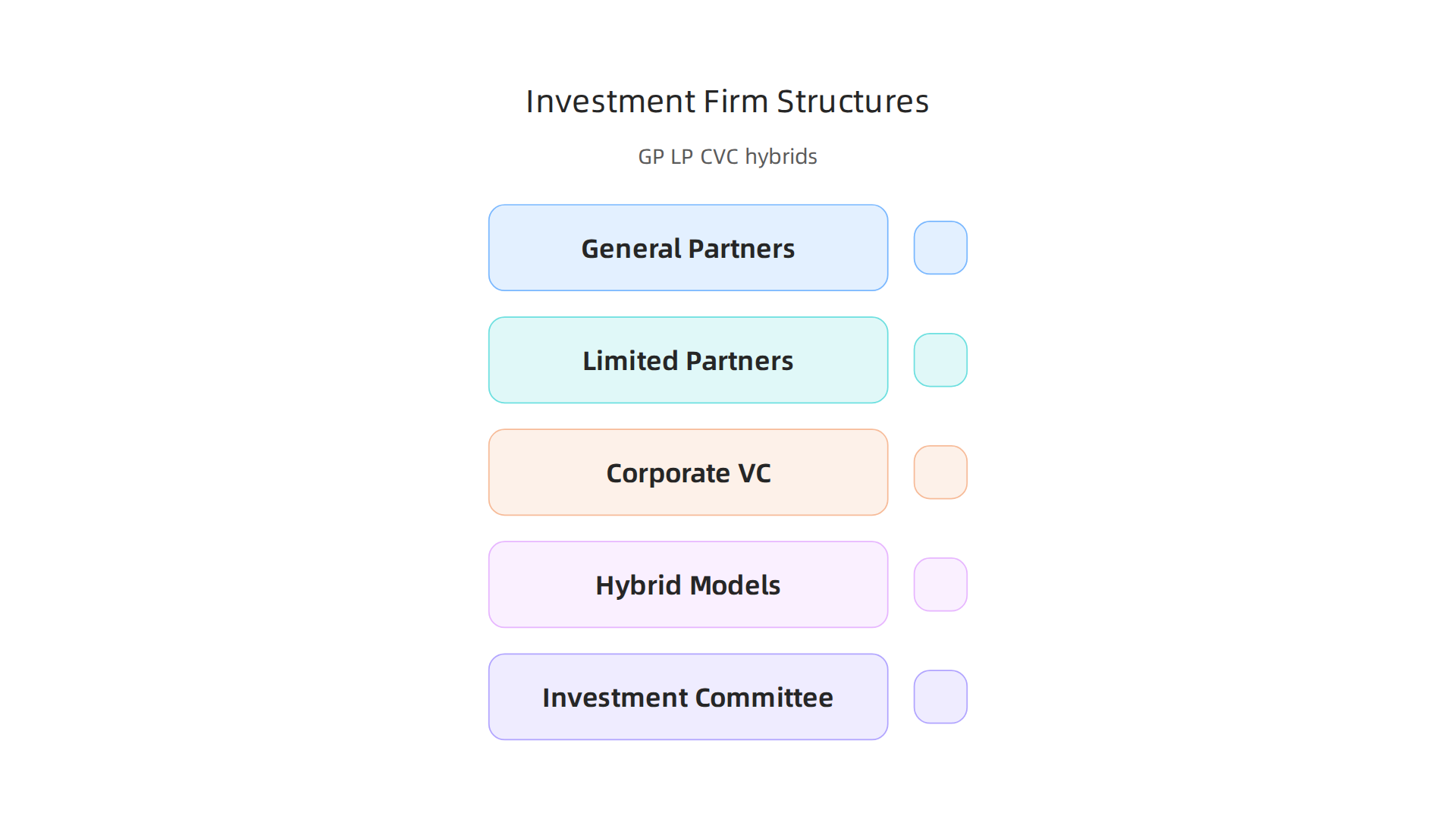
General Partners (GP) and Limited Partners (LP)
Most venture capital funds use a structure called General Partner (GP) and Limited Partner (LP). Think of it like this:
- General Partners (GPs): These are the people who run the fund. They find the AI companies to invest in, make the decisions, and manage the money day-to-day. They also share more of the risk. A firm like
greenbridge capitalwould have general partners making the key investment choices. GPs typically charge a yearly fee for managing the fund Venture Capital Guide 2026. You can learn more about this structure in our guide on General Partnerships Navigating Risks and Benefits for Founders and Investors. - Limited Partners (LPs): These are the investors who put most of the money into the fund. They could be big banks, pension funds, or wealthy individuals. LPs are "limited" because they usually don’t get involved in daily decisions. Their role is more passive, and their risk is limited to the money they put in. The fund itself is often set up as a limited partnership Venture Capital Fund Structures: GP Commits and Carry. Sometimes, LPs have an advisory committee that provides oversight without taking on responsibility for fund decisions LP Advisory Committee in Fund Governance.
This structure helps define who does what and how money flows. The agreement that sets this up, known as an LPA, spells out the fund’s goals and how long it will last, often around ten years LPA Template for VC: Key Clauses & 2026 Playbook.
Corporate Venture Capital (CVC)
Some large companies also invest in startups. This is called Corporate Venture Capital, or CVC. For example, a big tech company might have its own investment arm to put money into promising AI startups that could help its main business. Their goal might be less about making a lot of money directly and more about getting access to new technology or talent. paramount capital group or domain capital group might have this kind of setup. In a CVC, the corporate investor might have a seat on the fund’s investment committee, but the fund manager still controls most decisions Structuring CVC-Backed Funds: A Governance, Economics and ….
Hybrid Models
Some investment setups mix and match different parts. These are called hybrid models. For instance, a big company might partner with a traditional venture capital firm to create a fund. This can help both sides: the company gets access to the VC firm’s investing knowledge, and the VC firm gets the company’s industry expertise and money. These structures can help manage different pools of money without causing problems between investors Avoiding conflicts between fund investors and co-investors. Firms like hunter point capital might get involved in such complex setups.
How Decisions Are Made (Governance)
No matter the structure, every investment group has rules for making decisions. This is called governance.
- Investment Committees (IC): Most funds have an investment committee. These are groups of people who review and approve potential deals. For
pritzker group venture capital, this committee would ensure that every investment fits their strategy and rules. These committees help make sure that big choices are thought through carefully Governance Structures and Checks and Balances in Private …. - Partner Allocation: How much power each partner has can also affect how fast decisions are made. If one partner has more say, decisions might be quicker. If many partners need to agree, it might take longer.
These structures and rules help investors manage their money, control risks, and report back to their own investors. Understanding these inner workings is key to seeing how capital flows in the AI world. If you’re an AI founder or investor, knowing how these firms operate helps you better engage with them. Find out more in our guide to PE and VC Firms Your Strategic Guide to AI Funding Success.
After investors understand how different firms like greenbridge capital are set up and make decisions, the next big step is looking closely at the AI company itself. This close look is called "due diligence." It helps investors check if an AI startup is really worth putting money into. They want to know the company is strong, its product works, and it’s built in a good way.
Here are the main things investment groups look into when checking an AI company:
Technical Checks for AI Solutions
First, investors look at the technology itself. They want to make sure the AI actually does what it says it does.
- How good is the AI? They check if the AI works well and is better than other options. Does it make too many mistakes?
- Is it new and special? They look for unique ideas or special technology that others can’t easily copy. This is often about patents and clever coding.
- Can it grow big? The AI needs to be able to handle many users or lots of data without breaking down.
- Where does the data come from? Investors ask about the data used to "teach" the AI. Is it good quality? Does the company have the right to use it? An AI M&A Due Diligence Checklist for Acquirers (2026) highlights the need to review how training data was acquired.
Commercial Checks: Does Anyone Want This?
Next, they see if people actually want or need the AI product. This is called "product-market fit."
- Who are the customers? Does the company know who its customers are and why they will pay for this AI?
- How big is the market? Is there a large group of potential customers, or is it a small niche?
- Can it make money? Investors look at how the company plans to earn money and if that plan makes sense. Firms like
paramount capital groupoften focus on market size and potential returns.
Team Assessment: Who is Behind the AI?
The people building and running the company are very important. Even the best idea needs a great team to make it work.
- Experience: Does the team have the right skills and experience in AI and business?
- Teamwork: Can the team work well together to solve problems and grow the company?
- Leadership: Do the leaders have a clear vision for the company’s future? For example, the investment committee at
pritzker group venture capitalwould likely pay close attention to the leadership team’s ability to execute.
Responsible AI Checks: Playing Fair and Safe
This part is becoming more and more important. Investors want to make sure the AI is built in a responsible way. This means thinking about ethical concerns and safety.
- Bias and Fairness: Does the AI treat everyone fairly, or does it have hidden biases? Investors want to know how the company checks for and fixes these problems. You can learn more about this in an AI Due Diligence Checklist 2026: How to Avoid Failures.
- Privacy: How does the AI handle private information? Does it protect users’ data?
- Safety and Trust: Is the AI safe to use? Can people trust it to do what it’s supposed to do without causing harm? Many investors now follow guidelines like the OECD Due Diligence Guidance for Responsible AI to check these points.
- Clear Rules: Does the company have clear rules for how its employees should use AI? An 18-Item VC AI Governance Due Diligence Checklist shows how important proper AI policies are.
Practical Checklist for Investors
Here’s a quick look at signals that many general investors, like those at domain capital group or hunter point capital, often check for in AI startups:
- Proof of Concept: Has the AI been tested and shown to work in a real-world setting?
- Customer Feedback: Do current customers like the product and say good things about it?
- Growth Numbers: Is the company growing fast in terms of users or revenue?
- Clear AI System Records: Does the company keep good records of all its AI tools in use, showing who owns them and how they perform? An AI Due Diligence Checklist for Investors points to this as a key factor.
- Defensible Position: Does the company have something that makes it hard for others to compete, like special data or a unique algorithm?
Looking at these different areas helps investors get a full picture of an AI startup. It’s not just about the cool technology, but also about the business, the people, and how the AI is used responsibly. For a deeper dive into the larger AI landscape, consider checking out our guide on AI market landscape 2026.
Staying on top of these trends and checks is vital for anyone in the AI world.
Get clear daily AI updates from The AI Newsletter Worth Reading.
After understanding the deep checks investors do on AI companies, the next important step is to learn how to "read" the investors themselves. This means looking at how they put money into companies.
It’s like finding clues that show how much an investor truly believes in an AI startup. Firms like greenbridge capital often have clear ways of investing that can tell you a lot.
Reading Investor Signals: Rounds, Co-Investors, Syndicates, and Lead Behavior
When a startup gets money, it’s called a "funding round." How these rounds are set up, and who joins in, can send strong signals to others. Smart founders and other investors watch these signals closely in 2026.
The Role of the Lead Investor
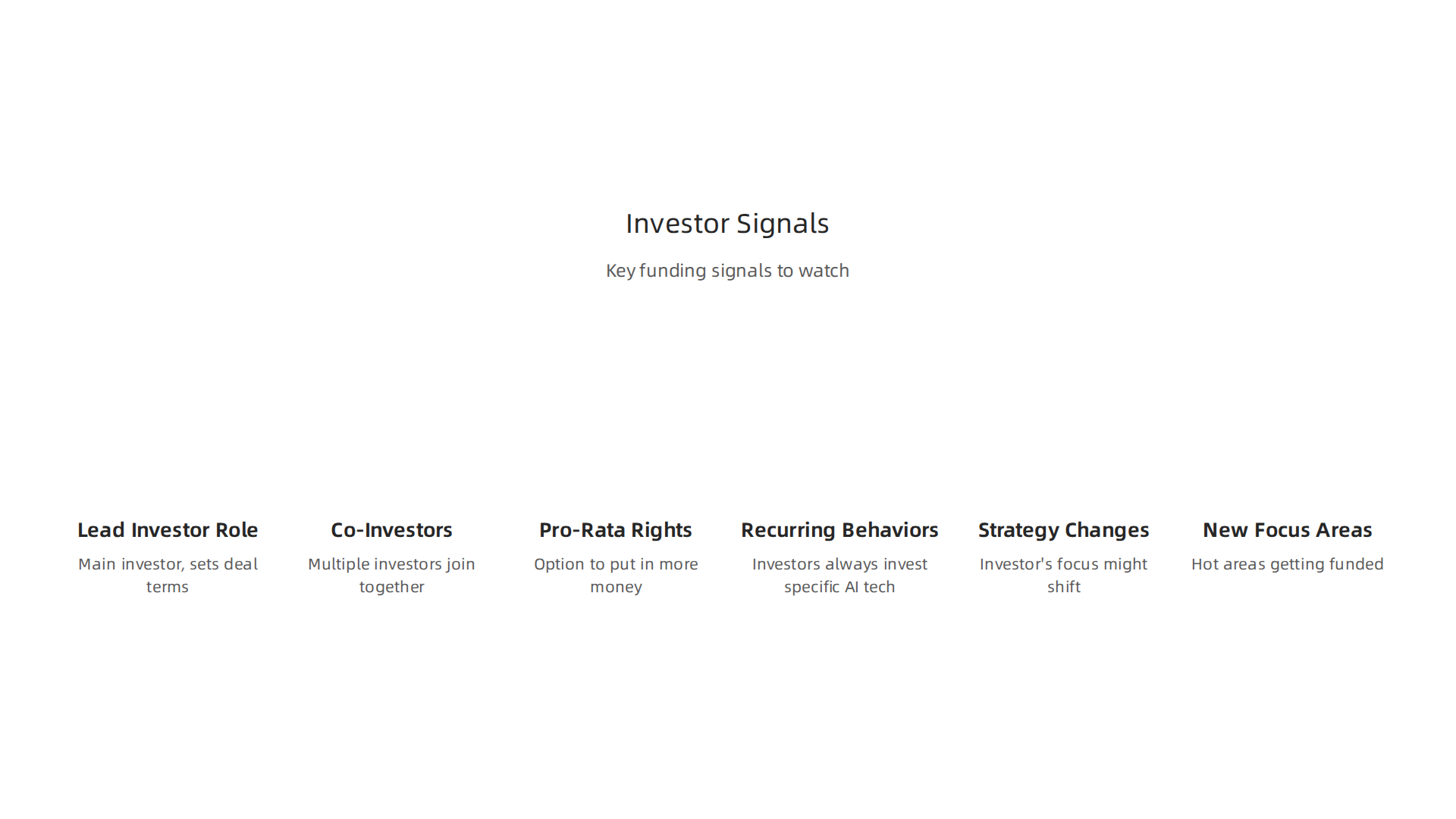
The "lead investor" is the main investor in a funding round. They usually put in the most money and often set the terms of the deal. When a well-known firm like pritzker group venture capital acts as a lead investor, it’s a big vote of confidence. It tells everyone else that this startup is likely a good bet. The size of the check they write also matters. A larger investment from a lead investor shows they have high "conviction" or belief in the company’s future. For example, some firms focus on being early investors, providing checks from $1 million to $25 million because they have strong conviction in a startup’s potential, as explained in the Conviction – Investment Thesis & Preferences guide.
Co-Investors and Syndicates
Sometimes, many investors join together in a "syndicate." This is when several firms or individuals all invest in the same round, often led by one main investor. When many good investors, maybe even firms like paramount capital group, team up, it shows shared excitement about the AI startup. It spreads the risk but also spreads the belief, making the startup look more attractive. This group effort strengthens the signal that the company is on a good path.
What Are Pro-Rata Rights?
"Pro-rata rights" are a special privilege for investors. It means they have the option to put in more money in future funding rounds to keep their ownership percentage the same. If an investor, especially a lead one, asks for or uses their pro-rata rights, it’s a very strong signal. It means they want to stay invested and believe the company will keep growing and needing more money. This shows long-term commitment.
Finding Patterns in Investor Behavior
Watching how investors act over time can help you predict where they might invest next. This is called "pattern recognition."
- Recurring Behaviors: Do certain investors, like those at
domain capital grouporhunter point capital, always invest in a specific type of AI technology, like health AI or AI for farming? Or do they only invest in companies that are already making a lot of money? Understanding these habits helps you see what they value. - Strategy Changes: Sometimes, an investor’s focus might shift. Maybe they were interested in big data AI last year, but now they are looking at small, specialized AI tools. You can spot these changes by tracking their new investments. Tools that track "breakout signals" like strong developer activity on GitHub can even predict future funding rounds. For instance, GitDealFlow Research & Data shows how much teams are coding and growing, which can be an early sign of a company’s health.
- New Focus Areas: By noticing which kinds of AI companies are getting funded by top investors, you can learn about new hot areas in the market. Tools that help predict investor behavior can track how many funds are investing and what their data shows about decision-making patterns, as highlighted in the Top 5 AI Tools for Predicting Investor Behavior in 2026. You can learn more about how to find top firms and their strategies in our guide on PE and VC Firms Your Strategic Guide to AI Funding Success.
By carefully looking at these investor signals, founders can better understand what makes an AI startup attractive, and other investors can spot good opportunities. For those keen to understand the deeper strategies of investment, diving into Decoding Leading AI Investment Firms for 2026 AI Investment Success can provide more clarity.
Understanding how investors think and what signals they send is just one part of the puzzle. The next big step is learning how they manage their money. This means looking at how they balance risks and rewards, how they decide what a company is worth, and how they plan to get their money back.
Balancing Risk and Return: Valuation Trends, Exit Pathways, and Portfolio Construction
Investors, including firms like greenbridge capital, always want to make money, but they also need to be careful about losing it. This is called balancing risk and return. They think about a company’s "valuation," which is how much it is worth, and "exit pathways," which are the ways they sell their shares later. They also build a "portfolio," which is their collection of investments.
What AI Companies are Worth: Valuation Trends
In 2026, AI companies are seen as very valuable. They often get higher "valuations" than other types of companies. For example, AI startups raising early money (like seed rounds) often have a valuation about 42% higher than similar non-AI companies. This shows how excited investors are about AI. When a firm like pritzker group venture capital invests in an AI startup, they are betting on this high growth potential. Reports in 2026 show that the value of AI startups, especially those with new "foundation models," has jumped a lot.
How Investors Get Their Money Back: Exit Pathways
Investors don’t just put money into companies. They also need a way to sell their shares and get their money back, often with a profit. These are called "exit pathways." The main ways this happens in the AI world are:
- Mergers and Acquisitions (M&A): This is when a bigger company buys a smaller AI startup. This is the most common way investors exit their investments in 2026. Data from early 2026 shows that M&A exits were very active.
- Initial Public Offerings (IPOs): This is when a company sells its shares to the public for the first time on a stock exchange. IPOs are happening, but M&A is more active.
Knowing these pathways helps investors decide if a company is a good fit. For example, a firm like paramount capital group might look for companies that could easily be bought by a larger tech company. You can find more strategies for investors in our guide on AI venture capital 2026 trends and strategies for investors in businesses.
Building an Investment Collection: Portfolio Construction
Investors build a "portfolio" of companies. They decide if they want to put a lot of money into a few companies ("concentration") or a little money into many companies ("diversification").
- Concentration: This means picking a few companies that you think will do very well and putting a lot of money into them. If those companies succeed, the returns can be huge. But if they fail, the losses are also big.
- Diversification: This means investing in many different companies across various AI sectors. This spreads out the risk. If one company doesn’t do well, others in the portfolio might still succeed. Funds managed by groups like
domain capital grouporhunter point capitaloften have rules about how many companies they can invest in.
The people who manage the fund, called General Partners (GPs), make investment decisions and are responsible for how the fund performs. They aim to achieve good returns for their investors, known as Limited Partners (LPs). Understanding the structure of these funds is key for both sides. For more helpful information on investing in AI, check out Smart Strategies to Invest in AI Stocks 2026.
Once you understand how investment funds work, the next step is to watch them closely. This helps you spot new chances or see problems before they get too big. Both founders looking for money and other investors need good ways to keep track of what big firms like greenbridge capital are doing.

This is called practical monitoring. It means using tools and also talking to people.
Smart Tools to Watch Investors
In 2026, there are many smart computer programs that help you keep an eye on investor behavior. These are like your personal detectives for the finance world. They can tell you about:
- Dealflow alerts: These tools send you a message when a firm like
pritzker group venture capitalmakes a new investment. This helps you see who is investing in what and where. Some AI tools are very good at predicting investor behavior, tracking many funds and their decisions directly, not just general market news, as explained in a report on Top 5 AI Tools for Predicting Investor Behavior in 2026. - Data sets: These are big collections of information about companies and investors. You can use them to find patterns, like which types of AI companies are getting funded the most.
- Sentiment trackers: These tools look at social media and news to figure out how people feel about certain companies or the market. This helps you understand the general mood. Other AI tools track how much money big groups of investors are putting into different areas, helping you spot big trends in the market. You can learn more about these tools for tracking institutional capital flows.
- Portfolio monitoring: If you already have investments, special AI tools can watch them for you. They read financial news and company reports to give you updates. If you want to dive deeper into tools for understanding investor actions, you can explore resources on Deep Search AI Unlocks Funding Intelligence With Free Tools.
Human Ways to Keep Tabs
Besides computers, talking to people and staying informed in other ways is also important.
- Curated newsletters: These are like special newspapers that only tell you the most important news about AI startups and investors. They save you time by giving you only what you need to know.
- Network checks: This means talking to other founders, investors, and people in the industry. They might share insights that tools can’t find. Knowing what people at firms like
paramount capital group,domain capital group, orhunter point capitalare discussing can be very valuable. - Expert insights: Reading what experts say about the market can give you a better understanding of what might happen next.
Your Simple Monitoring Checklist
To stay on top of things, here’s a simple checklist you can use every day or week:
- Daily:
- Quickly check your favorite AI news headlines and newsletters.
- Look for any major funding announcements or big company buys.
- Scan for news about companies similar to yours or those in your portfolio.
- Weekly:
- Review detailed reports from your tracking tools.
- Check for changes in investor sentiment or market trends.
- Spend some time talking to people in your network or attending online events.
- Think about how new information might change your plans or investments.
Staying informed with both smart tools and human connections helps you make better choices in the fast-moving AI world.
Want to get clear, daily updates on AI and technology? Get The AI Newsletter Worth Reading.
Summary
This article explains why understanding general capital groups matters for AI investors and founders in 2026, when AI funding is accelerating and information overload makes smart decisions harder. It walks through how these groups source deals, allocate capital, support portfolio companies and send market signals that shape entire AI sectors. The guide breaks down common investment strategies—stage focus, thematic versus sector-agnostic approaches, check sizes and lead roles—as well as typical fund structures like GP/LP, CVC and hybrid models. It describes the AI-specific due diligence investors perform (technology, commercial fit, team and responsible AI checks), how to read investor signals in funding rounds, and how funds balance risk with valuation and exit plans. Finally, it gives practical monitoring tools and a simple checklist founders and investors can use to spot opportunities and engage the right partners, so readers can better target, evaluate, and track capital in the fast-moving AI market.