
US Stock Market Open Time 2026 Regular Extended and Holiday Hours
Overview
Quick overview: When the US stock market opens and why it matters
Have you ever wondered about the best time to check your investments or make a trade? Knowing the us stock market open time is super important for anyone who buys or sells stocks. In 2026, the main US stock markets, like the New York Stock Exchange (NYSE) and Nasdaq, follow a set schedule.
Most people think of the stock market as running during certain hours. This is called "regular trading hours." For the US market, this means the market opens at 9:30 a.m. Eastern Time (ET) and closes at 4:00 p.m. ET, Monday through Friday. This is when most of the trading happens and when you see the biggest price changes for stocks.
Knowing these times helps traders and investors a lot.

If you’re planning to buy or sell stocks, you’ll want to be aware of when the market is most active. For people in different time zones, like those on the West Coast or in other countries, it’s key to convert ET to their local time to avoid missing out. It’s like knowing when a store opens before you go shopping.
Beyond Regular Hours: Extended Trading
But here’s a little secret: the stock market doesn’t just stop at 4:00 p.m. ET. There are also "extended trading hours." These include:
- Pre-market trading: This happens before the regular market opens, usually from 4:00 a.m. ET to 9:30 a.m. ET.
- After-hours trading: This takes place after the regular market closes, typically from 4:00 p.m. ET to 8:00 p.m. ET.
During these extended times, traders can still buy and sell stocks, but there are usually fewer buyers and sellers. This means prices can change more quickly, and it might be harder to buy or sell a stock at the exact price you want. While the main us stock market open time for regular trading is fixed, these extended sessions offer extra chances for trading, especially if news breaks outside of normal hours. You can learn more about how these different sessions work in our detailed guide to master US stock market hours 2026 regular extended and holiday trading.
This guide will walk you through everything you need to know about the US stock market schedule in 2026. We’ll cover regular hours, extended sessions, and even what happens on holidays. We’ll also explain how understanding these times helps you make smarter choices, especially if you’re dealing with global markets or relying on timely financial updates. Keeping up with market trends, just like staying informed about the latest in technology, can give you an edge. Get clear daily AI updates from The AI Newsletter Worth Reading.
When we talk about the us stock market open time for regular trading, we’re usually thinking about the New York Stock Exchange (NYSE) and Nasdaq. These are the two biggest stock markets in the United States. In 2026, both of these major exchanges follow the same clear schedule for their main trading hours.
The regular stock market day starts bright and early at 9:30 a.m. Eastern Time (ET). It then stays open until 4:00 p.m. ET on weekdays. This is when most buyers and sellers are active, and you’ll see the most movement in stock prices. Think of it as the busiest time for trading, almost like a big store during its busiest hours. Both the NYSE and Nasdaq stick to these times. For example, the NYSE lists its core trading session from 9:30 a.m. to 4:00 p.m. ET, and Nasdaq does too, as explained in many guides about U.S. Stock Market Hours.
Finding Official Schedules and Avoiding Confusion
It’s important to remember that this regular schedule is for Monday through Friday. The stock market takes breaks on weekends and certain holidays. These holidays are not always on the same date each year. So, if you’re planning your trades or just want to keep up with cnbc business live news during market hours, it’s a good idea to check the official calendars.
Both the NYSE and Nasdaq offer calendars on their websites. These calendars clearly show when the market will be closed for holidays or if there are any special early closing times. For instance, the Holidays & Trading Hours page on the NYSE website tells you all the market holidays for 2026. This helps you avoid any surprises and ensures you know exactly when the market is open. Sometimes, people might think the market is open every single weekday, but holidays like New Year’s Day or Memorial Day mean the market is closed.
Time Zone Helper for the US Stock Market Open Time
Since the US stock market operates on Eastern Time (ET), it can be a bit tricky for people in other time zones to keep track. Here’s a quick guide to convert the us stock market open time and close time to other major US time zones:
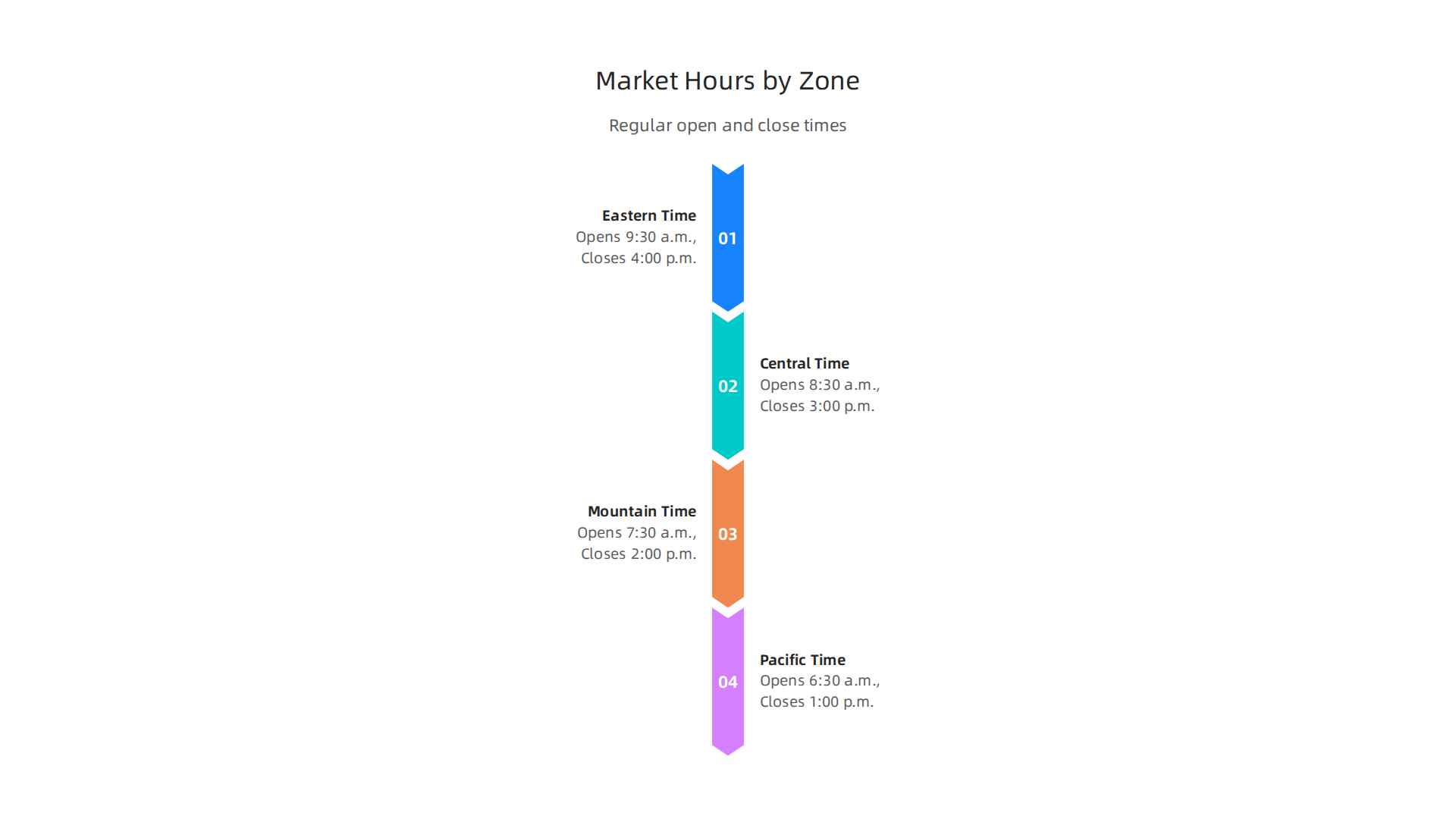
- Eastern Time (ET): Opens 9:30 a.m., Closes 4:00 p.m.
- Central Time (CT): Opens 8:30 a.m., Closes 3:00 p.m.
- Mountain Time (MT): Opens 7:30 a.m., Closes 2:00 p.m.
- Pacific Time (PT): Opens 6:30 a.m., Closes 1:00 p.m.
So, if you live on the West Coast, your trading day begins when the clock strikes 6:30 a.m. Knowing these conversions helps you stay on top of the market without missing out on important trading moments or crucial financial updates from sources like Stock Market Hours: What Time Does the Market Open & Close.
Understanding these regular hours is a basic but very important step for anyone interested in stocks. It lays the groundwork for knowing when to act and when to just watch the market. If you are also interested in how new technologies like AI are changing business, you might want to learn about AI investments 2026 to explore strategies for maximum returns.
While the regular trading hours for the US stock market are from 9:30 a.m. to 4:00 p.m. Eastern Time, that’s not the whole story. Many people also trade stocks outside of these main hours during what are called "pre-market" and "after-hours" sessions. These extended trading times let investors react to news or make trades when the regular market is closed. Knowing about these sessions gives you a fuller picture of the us stock market open time and how it truly works.
Understanding Pre-Market Trading
Pre-market trading happens before the official us stock market open time of 9:30 a.m. ET. For many years, these sessions have allowed traders to get a head start on the day. For Nasdaq, pre-market trading usually starts very early, at 4:00 a.m. ET and runs until 9:30 a.m. ET, right when the regular market begins. Other exchanges, like the NYSE, have their own early trading sessions, sometimes starting around 6:30 a.m. ET or 7:00 a.m. ET, queuing orders before the main open at 9:30 a.m. ET, as detailed on pages about NYSE Trading Information. This means that even before the sun is up for many people, trading activity is already happening.
What About After-Hours Trading?
After-hours trading picks up right after the regular market closes at 4:00 p.m. ET. These sessions typically run until 8:00 p.m. ET on weekdays for Nasdaq, according to sources like the US Stock Market Holiday Schedule. Just like pre-market trading, after-hours sessions give traders a chance to act on important company news or global events that happen outside of standard hours. If a big company announces its earnings results right after 4:00 p.m., traders can respond immediately instead of waiting until the next morning.
How Extended Hours Are Different
Trading in pre-market and after-hours sessions is not quite the same as trading during regular hours. Here’s why:
- Less Activity: Fewer buyers and sellers are active during extended hours. This means there’s less "liquidity," or fewer shares available to buy or sell easily.
- Wider Price Spreads: Because there’s less activity, the gap between the highest price a buyer is willing to pay and the lowest price a seller is willing to accept (called the spread) can be wider. This might mean you pay a little more or sell for a little less than you would during regular hours.
- Price Discovery: Price discovery, or finding the true value of a stock, can be less clear. Prices can jump around more quickly on smaller amounts of trades because there are not as many people to balance out the buying and selling.
- Order Types: Not all types of trading orders work the same way during extended hours. You might need to use "limit orders," which let you set a specific price you want to buy or sell at, instead of "market orders," which just buy or sell at whatever the current price is.
Even with these differences, extended hours can be very useful. Traders might use them to react quickly to breaking news, company announcements, or to adjust their positions based on global market movements. Keeping an eye on financial news channels like cnbc business live news can be especially helpful during these times to stay updated on sudden market shifts.
If you want to dive deeper into all the different times the market is open and closed, you can find a lot more information on Master US Stock Market Hours 2026. Understanding these extended hours adds another layer to your knowledge of the stock market.
To get daily updates and deeper insights into the world of AI and technology, consider subscribing.
The AI Newsletter Worth Reading
Thinking about the US stock market isn’t just about what happens during its main hours. It also means looking at how time zones and Daylight Saving Time (DST) changes affect traders around the world. For people outside the US, knowing these shifts is key to understanding when the market really opens and closes for them.
Time Zone Conversions for Global Traders
The US stock market mainly runs on Eastern Time (ET). This can be Eastern Standard Time (EST) in winter or Eastern Daylight Time (EDT) in summer. The regular trading hours are 9:30 a.m. to 4:00 p.m. ET. But what does that mean for someone in London, Tokyo, or Mumbai?
Let’s look at some common time zone conversions for the us stock market open time during standard (winter) hours (EST) and daylight saving (summer) hours (EDT) in 2026:
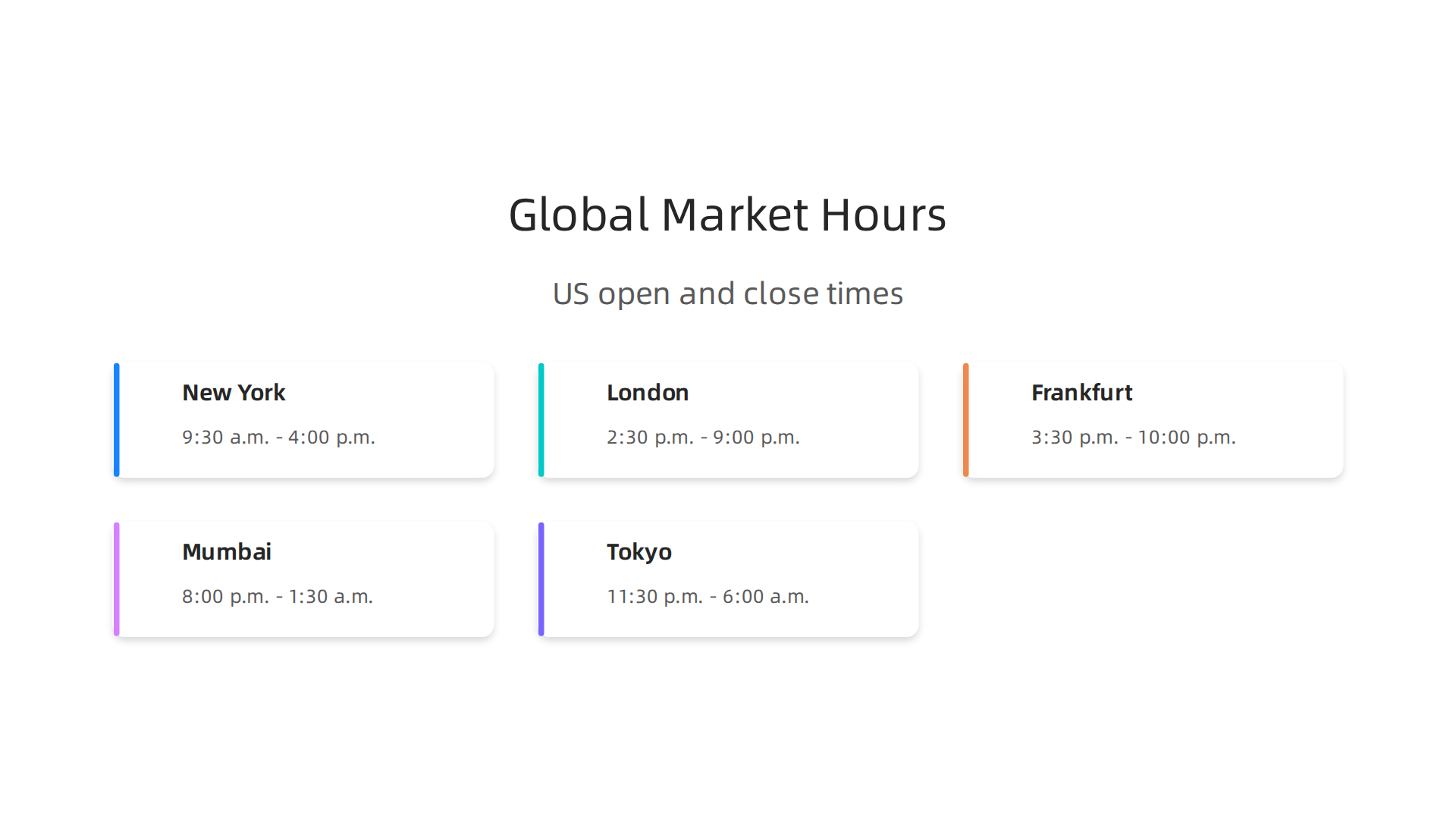
| City / Region | US EST (UTC-5) | US EDT (UTC-4) | Market Opens (Local Time) | Market Closes (Local Time) |
|---|---|---|---|---|
| New York (ET) | 9:30 a.m. EST | 9:30 a.m. EDT | 9:30 a.m. | 4:00 p.m. |
| London (GMT) | UTC+0 | UTC+1 | 2:30 p.m. GMT / 2:30 p.m. BST | 9:00 p.m. GMT / 9:00 p.m. BST |
| Frankfurt (CET) | UTC+1 | UTC+2 | 3:30 p.m. CET / 3:30 p.m. CEST | 10:00 p.m. CET / 10:00 p.m. CEST |
| Mumbai (IST) | UTC+5:30 | UTC+5:30 | 8:00 p.m. IST | 1:30 a.m. IST (next day) |
| Tokyo (JST) | UTC+9 | UTC+9 | 11:30 p.m. JST | 6:00 a.m. JST (next day) |
| Sydney (AEST) | UTC+10 | UTC+10 | 12:30 a.m. AEST (next day) | 7:00 a.m. AEST (next day) |
Note: The local times for London, Frankfurt, and Sydney in the table above assume those regions are also observing their local daylight saving times.
Daylight Saving Time Mismatches Can Be Tricky
Here’s where things get a bit messy. The US changes its clocks for Daylight Saving Time on different dates than many other countries, especially in Europe. In 2026, the US moves its clocks forward by one hour on Sunday, March 8. Europe usually changes later in March. This means there’s a period, often about two to three weeks, when the time difference between the US and Europe shrinks by an hour. For example, the usual 6-hour difference between New York and London might become 5 hours.
This "DST mismatch window" can cause a lot of confusion for global traders. During this time, the US market might open and close an hour earlier for European traders than they expect. This temporary change can affect trading routines, how economic news is released, and even the best times for different markets to overlap, according to experts discussing how Daylight Saving Time Affects Forex Trading. It also means that for a few weeks, your trading setup might need to be adjusted by one hour to match the new schedule, as noted in "Adjusting for Daylight Saving Time" (Linnsoft).
Scheduling Tips for Global Teams
For global teams and traders coordinating around the US market, these time changes require careful planning:

- Always Confirm the Current Time Difference: Don’t just rely on memory. Before key trading periods, especially around March and November, check the exact time difference. Websites and apps that show world clocks are very helpful.
- Use UTC as a Universal Reference: When communicating across different time zones, using Coordinated Universal Time (UTC) can avoid mix-ups. Everyone can convert UTC to their local time easily.
- Set Alerts for DST Changes: Mark your calendar for both the US and local DST changes. Many financial news outlets and trading platforms will also send out warnings about these shifts. For a detailed schedule, you might check resources like the "Beginning of Daylight Saving Times (DST) 2026" on FXGlobe.
- Plan Meetings Carefully: If your team has members in different regions, double-check meeting times after any DST change. What was a convenient 3:00 p.m. for everyone might suddenly become a tough 2:00 p.m. or 4:00 p.m. for some.
- Stay Updated on Market News: Changes in market hours due to DST can impact trading strategies. Keeping an eye on financial news can help you understand any immediate effects. Sometimes, markets tend to perform differently the day after a time change, which you can learn more about in Here’s what happens the day after the clocks change.
Understanding how these time differences and Daylight Saving Time shifts play out is a big part of mastering global trading. It helps you keep track of the us stock market open time no matter where you are. To further deepen your understanding of various market hours, including extended and global markets, you might want to read our guide on Master AI Stock Trading Hours for Premarket After Hours and Global Markets.
Understanding the broad global schedule is just one piece of the puzzle. Within the regular US trading day itself, from the moment the us stock market open time hits at 9:30 a.m. ET until the 4:00 p.m. ET close, there are distinct periods that traders watch closely. These times show different levels of activity and price changes.
Best times to trade: the open, the close, and the ‘quiet’ middle of the day
The US stock market follows a predictable pattern of activity each day. Think of it like a U-shape: lots of action at the start, a calmer period in the middle, and then another burst of activity at the end. This is often called an "intraday volume pattern" or "intraday volatility pattern."
High Volatility and Volume at the Open and Close
When the market first opens, say for the first 30 to 60 minutes after the us stock market open time at 9:30 a.m. ET, things are usually very busy and fast. A lot of trading volume happens then. This is because all the news, earnings reports, and economic updates that came out overnight get reacted to all at once. People rush to place orders based on what happened while the market was closed. This rush of activity makes prices move quickly and sometimes unpredictably. This high activity and fast price changes are called high volatility, and they are usually seen at the market’s start and finish. Experts note that volatility is much higher at the market open and close compared to the middle of the day, with peaks coinciding with major market openings and closings.
This means if you’re buying or selling right at the open, you might get a price that changes quickly. For traders who like to make quick profits from small price moves (called scalping), this can be a good time. But it also means higher risk, as prices can go against you just as fast.
Similarly, the last hour before the market closes at 4:00 p.m. ET also sees a big spike in activity. Traders are trying to close out positions, make last-minute adjustments, or react to late-day news. This can lead to increased volatility and volume again.
The Midday ‘Quiet’ Period
After the busy opening hour, the market often settles into a "quiet" period, usually from late morning until early afternoon. During this time, trading volume tends to drop, and prices move less wildly. This "midday lull" accounts for a good chunk of daily volume. Think of it as a break where many institutional traders might be at lunch or planning their next moves.
For some traders, this calmer period is actually an advantage. If you’re looking for clearer trends and less sudden price swings, the middle of the day can be ideal. It’s often a better time for placing limit orders, which let you buy or sell a stock only at a specific price or better. Swing traders, who hold stocks for a few days or weeks, might also prefer this time to enter or exit positions because there’s less noise. However, the downside is that there might not be enough movement to make quick profits, and prices might not move enough to hit your desired targets.
Tactical Guidance for Different Trading Styles
Understanding these patterns can help you pick the best times for your trading style:

- Scalping (Quick Trades): The open and close periods are best for you due to high volatility and volume, but remember the risks are also higher. Prices can move fast, so you need to be quick.
- Swing Trading (Holding Longer): The midday calm might suit you better. You can look for clearer trends and use limit orders to get good prices without the wild swings of the open or close.
- Long-term Investors: For buy-and-hold investors, these intraday patterns might not matter as much. What’s important is the overall company health and future outlook.
No matter your strategy, it’s wise to stay updated with financial reporting on channels like cnbc business live news to understand what might drive market movements. Being aware of these different trading windows and how they affect the us stock market open time and close can help you make smarter decisions and better manage your trades.
For those eager to stay on top of the financial world, particularly as AI continues to reshape various industries, an informed edge is crucial. Get clear daily AI updates from The AI Newsletter Worth Reading.
While the regular US stock market hours have their own rhythms, trading outside these times, also known as extended hours or off-hours trading, comes with its own set of unique risks. This includes both pre-market trading, which happens before the us stock market open time, and after-hours trading, which occurs after the 4:00 p.m. ET close. If you choose to trade during these times, it’s very important to understand these added challenges.

Risks during off-hours: liquidity, volatility, and order types
Extended hours trading gives you more time to react to news or make trades. But this flexibility also brings bigger risks. These risks mostly come from lower liquidity and higher price changes.
Lower Liquidity and Price Impact
Think of liquidity as how easy it is to buy or sell a stock without changing its price much. During normal market hours, there are many buyers and sellers, so it’s usually easy to trade. But outside these hours, fewer people are trading. This means there’s less liquidity. Experts note that liquidity in extended hours is much lower than during regular hours, making it harder for investors to buy or sell quickly at a good price. This lower activity can lead to a few problems:
- Wider Bid-Ask Spreads: The "bid" is the highest price a buyer is willing to pay, and the "ask" is the lowest price a seller is willing to accept. During regular hours, this gap (the spread) is usually small. In off-hours, because there are fewer traders, this gap can become much wider. This means you might buy for more or sell for less than you would during regular hours.
- Uncertain Prices: With fewer trades happening, even a small order can cause a stock’s price to jump or fall suddenly. This is called higher price impact, and it means the price you see might not be the price you get when your order goes through. Research shows that trading outside regular hours is linked to much wider spreads and higher price impact, especially when fewer retail traders are active in a market with low liquidity.
- Difficulty Filling Orders: It might be harder to find someone to buy or sell your stock at the price you want. Your order might only be partly filled, or not filled at all. The Financial Industry Regulatory Authority (FINRA) warns that extended-hours trading is less liquid, leading to these challenges.
Higher Volatility
Because there are fewer traders and less liquidity, extended hours often see higher volatility. Volatility means how much a stock’s price moves up and down. A study found that extended-hours trading often leads to greater price changes and higher volatility compared to regular hours. This means prices can change very quickly and without warning.
This higher risk means that prices can move against you fast, especially if big news breaks and there aren’t enough buyers or sellers to keep prices steady. It can feel like walking on thin ice, as prices can be less predictable and trade on lighter volumes. For those interested in understanding advanced strategies that account for such market conditions, learning about quantitative trading for AI investors can offer valuable insights.
Order Types and Broker Handling
The type of order you place matters a lot during extended hours.
- Market Orders: These orders tell your broker to buy or sell a stock at the best available price right away. During regular hours, this usually works fine. But in extended hours, with wider spreads and higher volatility, a market order could mean you buy at a much higher price or sell at a much lower price than you expected. This is a big risk.
- Limit Orders: These orders tell your broker to buy or sell a stock only at a specific price or better. For example, you might say, "Buy this stock only if the price is $50 or less." Limit orders are much safer for extended hours trading because they protect you from unexpected price changes. If the stock doesn’t hit your price, your order simply won’t go through. Most brokers will only accept limit orders for extended-hours trading to help manage these risks.
It’s important to know that brokers often have special rules for extended-hours orders. For example, they might only allow certain order types or have different times when these orders can be placed.
Regulatory and Venue-Specific Restrictions
Another thing to remember is that the rules that protect you during regular hours might not apply in extended hours. For instance, the "National Best Bid and Offer" (NBBO) rule, which helps you get the best price, usually does not apply to extended-hours trading. This means that "trade-throughs," where your order is filled at a worse price even if a better one was available, can happen. Because of this, trading in off-hours can be riskier and requires you to be extra careful. Always check your broker’s specific rules for extended-hours trading before you begin.
Beyond the daily hours, the US stock market also has certain days when it is closed all day or closes early. Knowing these special times is key, especially when planning your trades or watching cnbc business live news for updates. In 2026, just like every year, a number of holidays will change the usual us stock market open time.
Holidays and Early Closures in 2026
The main US stock exchanges, like the NYSE and Nasdaq, follow a set calendar for holidays. On these days, the markets are fully closed, meaning no trading happens at all. It’s not just a change to the us stock market open time; it’s a full stop.
Here are the main stock market holidays for 2026:
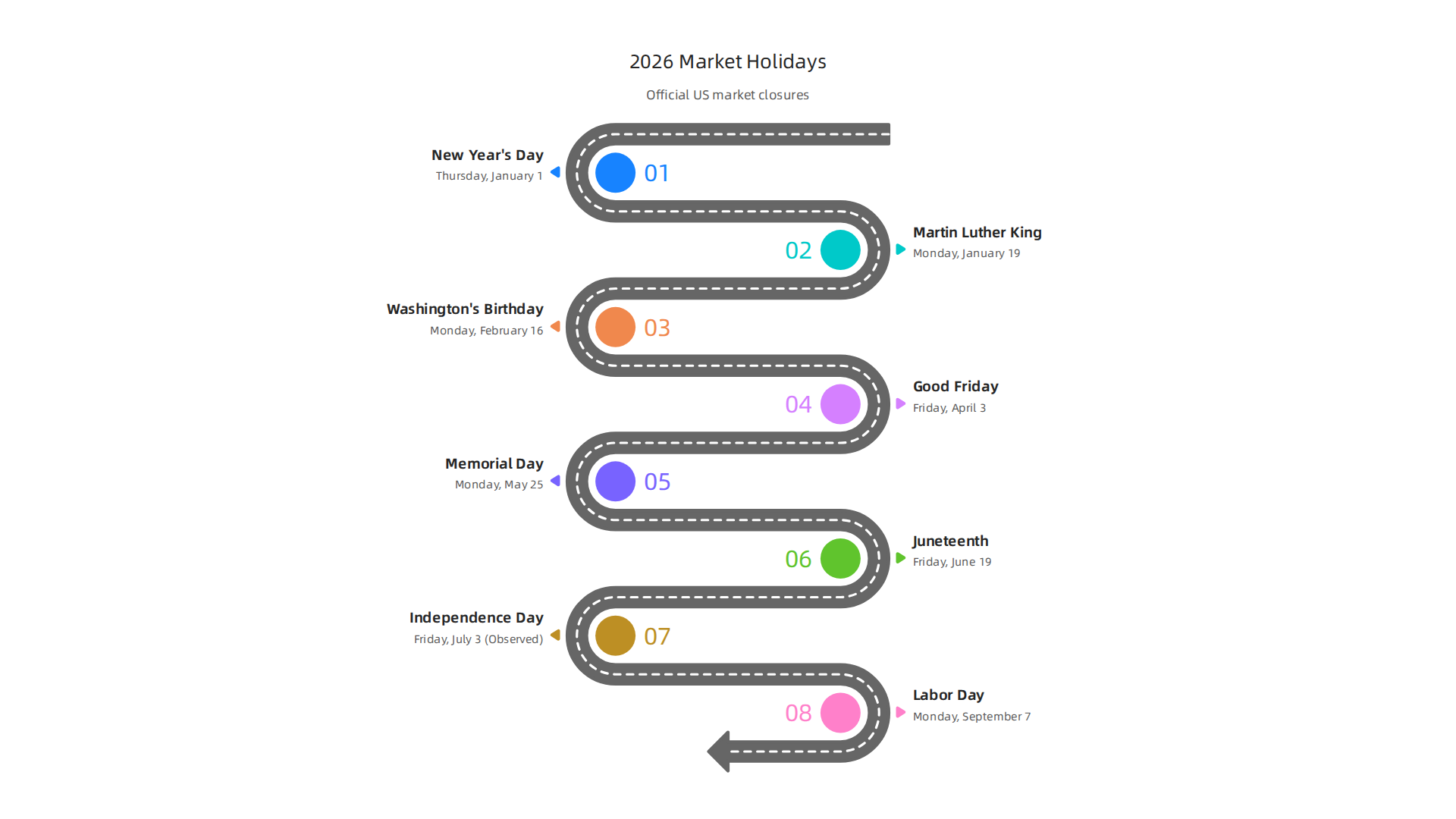
- New Year’s Day: Thursday, January 1
- Martin Luther King, Jr. Day: Monday, January 19
- Washington’s Birthday (Presidents’ Day): Monday, February 16
- Good Friday: Friday, April 3
- Memorial Day: Monday, May 25
- Juneteenth National Independence Day: Friday, June 19
- Independence Day (Observed): Friday, July 3 (since July 4 falls on a Saturday)
- Labor Day: Monday, September 7
- Thanksgiving Day: Thursday, November 26
- Christmas Day: Friday, December 25
These dates mean the market is completely shut down. If a holiday falls on a weekend, it’s usually observed on the closest weekday, either the Friday before or the Monday after, leading to a market closure. For example, in 2026, Independence Day is observed on Friday, July 3rd, because July 4th is a Saturday, as noted by sources like Stock market holidays 2026. You can find full lists of these closures on the official exchange calendars, such as the Holidays & Trading Hours from NYSE or the US Equity and Options Markets Holiday Schedule 2026 from Nasdaq.
Besides full closures, there are also days when the market closes early. For example, the stock market often closes at 1:00 p.m. ET on the day before some major holidays, like Christmas Eve or the day after Thanksgiving. These early closures are important to note because they still change your trading window.
How Holidays Affect Settlement and Reporting
When you buy or sell a stock, the actual transfer of money and ownership doesn’t happen right away. This process is called settlement, and for most stock trades, it takes two business days. This is often called "T+2," meaning Trade date plus two business days.
When there’s a holiday closure, it adds an extra day to this timeline. For example, if you sell a stock on a Wednesday and the next Friday is a market holiday, your trade won’t settle until the following Monday. This can affect when you get your money or when a new stock officially becomes yours.
It also changes reporting timelines for companies. Financial reports or other important announcements might be timed around these holidays, so it’s good to keep track of them.
Checklist for Planning Around Holiday Schedules
To make sure you’re ready for market holidays and early closures, here’s a simple checklist:
- Check the Calendar Early: Always look up the official market holiday calendar for 2026 at the start of the year. Websites like Stock Market Holidays 2026 can be helpful resources.
- Know Your Settlement Dates: If you’re trading close to a holiday, especially if you need the funds by a certain time, remember that settlement will take longer.
- Adjust Your Orders: If you have active orders, especially limit orders, be aware that they might not be filled if the market is closed or trading is thin on early close days.
- Stay Informed: Keep an eye on the news, like
cnbc business news livebroadcasts, for any last-minute changes to market hours or important announcements that might happen during a holiday break. - Plan Ahead: If you need to make specific trades or financial moves around a holiday, try to do them a few days in advance to avoid any surprises.
Understanding these changes to the us stock market open time and closing schedules is a basic but important part of smart trading. For more in-depth knowledge about all aspects of market timing, consider exploring our comprehensive guide on master US stock market hours 2026.
Keeping up with the fast-changing world of finance and technology can feel like a full-time job. To make it easier, you can get clear daily AI updates that cut through the noise.
The AI Newsletter Worth Reading: Get clear daily AI updates from The Deep View Newsletter.
Summary
This article explains the US stock market open time in 2026 and why knowing market hours matters for investors and traders. It covers regular trading hours (9:30 a.m.–4:00 p.m. ET for NYSE and Nasdaq), extended sessions (pre-market and after-hours), intraday activity patterns, and practical time-zone conversions so global traders don’t miss important windows. You’ll learn how volatility and liquidity differ at the open, midday, and close, why extended-hours trading carries wider spreads and higher risk, and which order types and tactics reduce surprises. The guide also walks through Daylight Saving Time mismatches, the 2026 holiday and early-close schedule, settlement impacts around closures, and simple planning tips to coordinate trades and reporting. After reading, you’ll be able to pick the best trading windows for your strategy, avoid common timing mistakes, and find the official calendars and tools to stay synchronized with US market hours.