

Unlocking Brand AI for Strategic Growth and Customer Trust
Overview
Why ‘brand ai’ matters now: framing the problem and the promise
Imagine trying to steer a ship through a huge, exciting storm. That is a bit like what businesses face today with artificial intelligence, or AI.

Everyone is talking about AI, and it feels like new tools pop up every single day. In 2026, we see a big shift: AI use in marketing has almost doubled in just two years, going from 13.1% to 24.2% of marketing tasks. Many companies, about 81% of marketers, now use AI in their plans and work. This shows how quickly things are changing, but it also brings a big challenge The CMO Survey Highlights and Insights Report 2026, The State of AI Adoption in Marketing Teams: Year 2.
The problem is that there are so many different AI tools out there. It’s like a huge puzzle with pieces that don’t always fit together easily. You might hear about things like artisan ai ads or perplexity ai ads, but figuring out which ones truly help your brand can be tough. There’s a lot of noise and conflicting advice, which makes it hard to make smart choices for your brand. How do you find the most accurate ai detector when there are so many? Or how do you pick the best ai powered crm platform for your needs? This mix of tools and confusing signals makes it harder to know what is actually working for your brand.
This is where understanding "brand ai" becomes very important. It’s not just about using any AI tool; it’s about using the right AI tools in smart ways to make your brand stronger. Many leaders are looking for help to use AI well. They want to make sure their brand stays true to itself, even with all these new technologies. They also want to get good results and show that their AI efforts are worth the money and time.
This article is here to help you cut through all that noise. We will give you a clear, simple plan to look at AI tools for advertising. You will learn how to figure out if an AI tool is good for your brand, how to measure if it is truly making a difference, and how to fit these tools into your daily brand work. Our goal is to make sure you can use AI to make your brand shine, without getting lost in the confusion. It’s about building a strong evaluate, integrate, and measure AI brand strategy for maximum impact that helps your business grow.
If you are looking for even more clear, daily updates on the world of AI, there’s a great resource that can keep you informed. It’s important to stay current in this fast-moving field. The AI Newsletter Worth Reading delivers fresh insights right to your inbox.
Finding the right AI tools means looking at where AI can really help your brand shine. Not every new AI trick will make a big difference for your business. In 2026, smart companies are focusing on a few key areas where AI actually helps them get better results and make more money. This is how they build a strong brand ai strategy.
Here are the main ways AI moves the needle for brands:
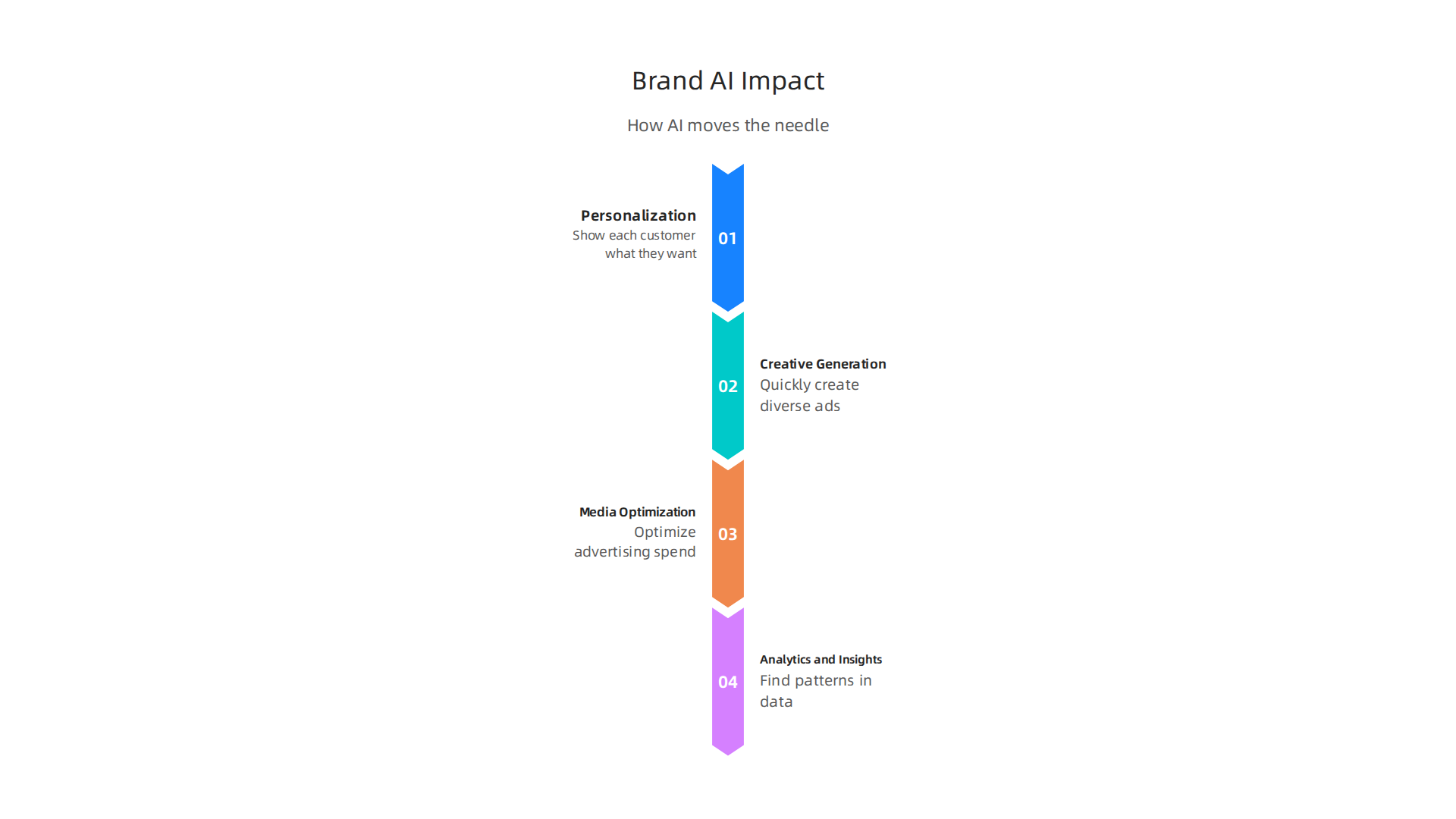
Personalization
Imagine showing each customer exactly what they want to see, without even asking them. That’s what AI can do with personalization. AI tools look at what people have liked before, what they click on, and what they buy. Then, they use this information to create special messages, offers, or ads just for that person. This makes customers feel special and makes them more likely to buy. It’s about knowing your customer so well that you can meet their needs almost before they know them.
Creative Generation
Making ads, pictures, videos, and written words takes a lot of time and effort. AI can help here a lot. Tools for creative generation can quickly make many different ads or pieces of content. For example, some AI tools can help design artisan ai ads that look unique and fit your brand’s style. Other tools, like perplexity ai ads, can help create and manage ad campaigns by finding the best words and images to use. This means brands can try out many more ideas and see what works best, much faster than before. However, a human touch is still very important to make sure the content truly matches the brand’s voice and values THE GENERATIVE ARTIFICIAL INTELLIGENCE IN BRANDING. If you’re looking for solutions that help you create unique visual content for your brand, you can learn more about generative AI solutions for business.
Media Optimization
This is about making sure your advertising money is spent in the best way possible. AI can help figure out where and when to show your ads so that the right people see them. It can even change your ad spending in real time to get the most out of your budget. This helps brands save money and get more customers. It’s like having a super smart helper always watching your ad campaigns to make them work better. To really understand how well your AI efforts are doing, you need to track how people see your brand in places like AI search results and measure things like how often your brand is mentioned How to Measure AI Brand Performance: Marketer’s Guide.
Analytics and Insights
AI is very good at looking at huge amounts of data and finding patterns that people might miss. It can tell you what customers like, what they don’t like, and what they might do next. This helps brands make smarter choices about their products, services, and marketing. For example, an ai powered crm platform can gather all your customer information and use AI to show you important trends. This helps you choose AI customer management platforms that give you a real edge. Also, using a most accurate ai detector can help you understand how your AI-generated content is performing and if it is truly helping your brand.
How Pilot Projects Succeed or Fail
Many brands start with small tests, called pilot projects, to see if an AI tool is a good fit. These tests often succeed when brands are very clear about what they want to achieve from the start AI Use Cases 2026: A Framework for Impact & Scale. They pick one small task, set a clear goal, and decide exactly how they will measure if it worked. For example, Coca-Cola is using AI to improve productivity and decision-making by piloting new AI services 12 Ways Coca-Cola Is Using AI [Case Study][2026].
On the other hand, pilot projects often fail when:
- Goals are fuzzy: Nobody is quite sure what "success" looks like.
- Too much is tried at once: Trying to change everything at once with AI is usually too hard.
- No clear way to measure: If you don’t track results carefully, you won’t know if the AI helped or not. Having a clear way to measure helps you know if your AI project is truly making a difference Marketing Measurement Architecture For AI.
- Lack of human oversight: Even with AI, people need to guide it and check its work. Combining human creativity with AI is key International Journal of Science, Architecture, Technology, and Environment.
The key is to start small, measure well, and grow from there. This careful approach helps brands move from simple tests to using AI widely in their business From AI pilots to AI at scale: A framework for real business impact. By focusing on these clear use cases and smart testing, businesses can truly leverage brand ai to achieve their goals and stand out. If you want to dive deeper into selecting the best tools for your business needs, consider exploring how to find the best AI tools for businesses.
Choosing the Right ‘Brand AI’ Tools: Vendor Landscape and Evaluation Checklist
Once you know how AI can help your brand, the next big step is picking the right tools. This means looking at different companies and what they offer. Not all AI tools are created equal, and choosing wisely is key to making your brand ai efforts truly pay off. In 2026, many different types of providers offer AI solutions, from big companies to small startups.
To make a smart choice, you need to look at a few main things:
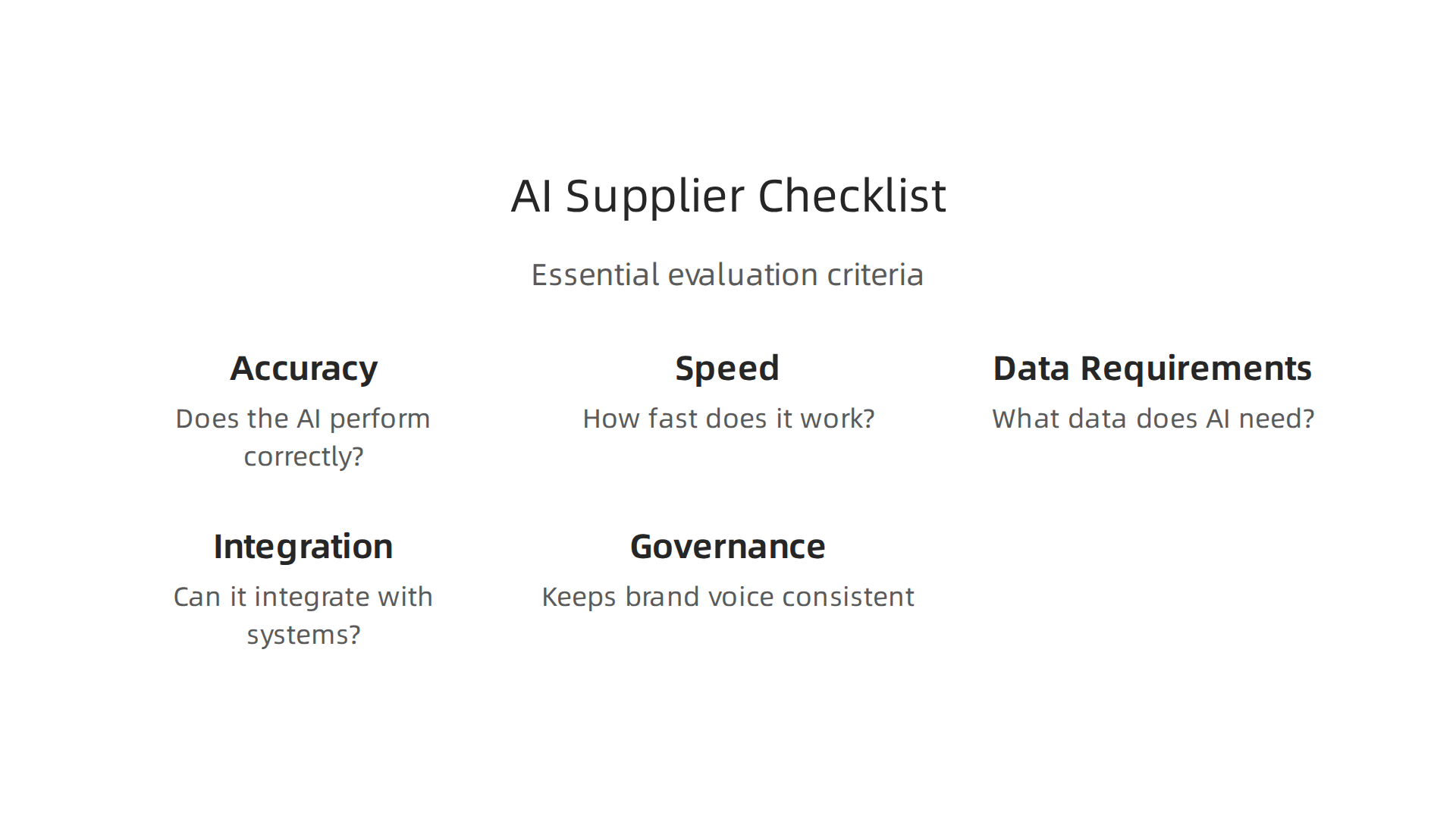
How to Evaluate AI Suppliers
- Accuracy: Does the AI do what it’s supposed to, and does it do it well? For example, if it’s creating content, is that content always on brand and correct? For tools like a
most accurate ai detector, you want to be sure it can tell the difference between human-made and AI-made content reliably. Some AI tools excel at personalization, learning customer behaviors to offer the right suggestions, which can be seen in platforms focused on AI Personalization Engines: 12 Ranked (2026). - Speed: How fast can the AI work? If you need many
artisan ai adsor quick changes to your website, the tool needs to keep up. Fast creative automation tools can turn one design into thousands of brand-consistent ads quickly, as highlighted in a guide to creative automation software. - Data Requirements: What kind of information does the AI need to work? Does it need a lot of your customer data, or just a little? Understanding the "three elements" of AI: data, algorithms, and compute, can help you see what each tool needs to run well.
- Integration: Can the AI tool talk to your other business systems? For instance, if you use an
ai powered crm platform, can the new AI marketing tool easily connect with it? Many AI tools are designed to work smoothly with other systems, like those found in the Top AI Tool Compared for B2B Marketers. It’s crucial that your chosen AI solution fits into your existing workflow without causing headaches. - Governance: This is about control and consistency. Does the AI tool help you keep your brand’s voice and look the same across everything it creates? This is very important for
brand aito stay strong. Tools like those for AI brand management help ensure everything created by AI follows your brand’s rules. A good AI brand management platform can centralize all your brand’s important details, from visual style to messaging, to make sure content stays consistent. You can read more about this in a buyer’s guide to AI brand management platforms.
Checklist of Procurement Questions
When you’re ready to choose an AI tool, here are some questions to ask potential suppliers:

- For Agencies, Platform Providers, and Startups:
- How accurate is your AI for tasks like content creation or data analysis? Can you show us examples?
- How quickly can your tool generate
perplexity ai adsor personalized content once it has our data? - What kind of data does your AI need from us to work best, and how do you keep it safe?
- How easy is it to connect your AI tool with our current CRM, marketing automation, or design software? Is there an extra cost for integrations?
- What controls do you have in place to make sure the AI always follows our brand guidelines and tone of voice?
- How do you measure the success of your AI tools? What reports and insights can we expect?
- What kind of support do you offer if we run into problems or need help?
- Can your AI scale with our business as we grow?
- What’s your pricing model? Are there hidden costs?
Asking these questions helps you understand not just what the AI tool does, but how it will fit into your business and support your brand ai strategy. Making the right choice means finding a partner that understands your needs and helps you reach your goals.
For more strategic insights on the fast-moving AI landscape, make sure you’re staying informed. Get clear daily AI updates from The AI Newsletter Worth Reading.
After picking the right AI tools for your brand, the next important step is to try them out in a small way first. This is called a "pilot." It helps you see how the brand ai tool works in real life before you use it for everything. You also need a clear plan to measure if the AI is actually helping your brand and your business goals.
Designing Smart AI Pilots
A good pilot program isn’t just about turning on a new AI tool and hoping for the best. It’s about careful testing to learn what works and what doesn’t.
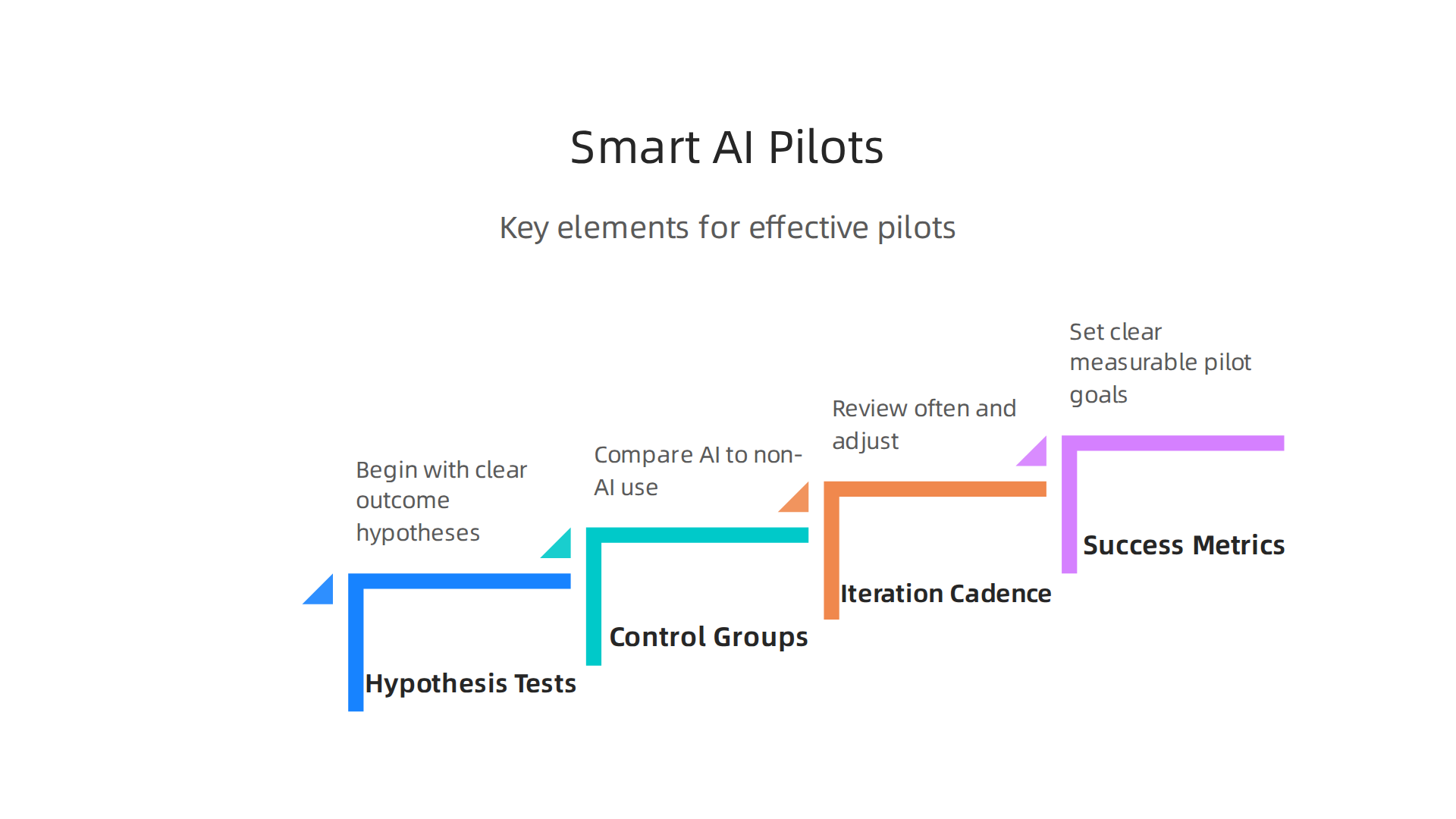
- Hypothesis-Driven Tests: Start with a clear idea of what you expect the AI to do. For example, "We believe using
brand aifor customer service will lower response times by 15%." This gives you something specific to test. - Control Groups: To truly know if the AI is making a difference, you need to compare it to something else. This means having a "control group" that doesn’t use the AI, or uses the old way of doing things. For example, one group of customers gets AI-powered support, while another gets human support. This helps you see if the AI is better, worse, or the same.
- Iteration Cadence: AI pilots should be set up to learn and change quickly. Don’t wait too long to review results. Look at the data often and make small adjustments. This helps you improve the AI’s use over time.
- Realistic Success Metrics: What does success really look like for your brand? Is it saving money, making more sales, or improving customer happiness? For a pilot, pick a few clear goals that you can easily measure. It’s important to know that while many companies are using AI, only about 41% of marketers can actually show the return on investment (ROI) from their AI efforts in 2026. This shows how important clear measurement is from the start Marketing ROI Statistics 2026.
Measuring AI’s Impact on Your Brand and Business
Measuring the success of your brand ai tools goes beyond simple numbers. It needs you to connect what the AI does to your bigger brand goals and how much money your business makes.
- Mapping AI to Brand Metrics: How does the AI change how people see your brand?
- Brand Awareness: Does
artisan ai adsorperplexity ai adshelp more people know about your brand? - Brand Loyalty: Does an
ai powered crm platformmake customers happier and more likely to stick with you? - Customer Trust: This is a big one. While AI can make things more personal, people worry about their privacy. Too much personalization can actually make customers trust you less The Impact of AI-Driven Personalization on Consumer …. Being open about how AI uses data and giving customers control can help build trust Privacy and Trust in AI Personalization Strategy: A Systematic Literature ….
- Brand Awareness: Does
- Mapping AI to Financial Outcomes: What financial gains are you seeing?
- Cost Savings: Is the AI making your team more efficient?
- Revenue Growth: Is it helping you sell more products or services?
- Return on Investment (ROI): Businesses that focus on ROI from their AI investments see much better results, sometimes 3.2 times better, with content creation showing even higher returns State of AI Marketing 2026 – ai-cmo.net.
- New Ways to Measure: Old ways of measuring marketing might not work for AI anymore. For example, simply looking at how many times someone clicks on an ad (CTR) isn’t enough when AI is running complex campaigns AI Campaign Measurement: 2026 Ultimate Guide. You need to look at how AI affects the whole customer journey.
Developing a clear strategy to evaluate, integrate, and measure AI brand strategy for maximum impact is vital. It’s about making sure your AI efforts don’t just look good, but also bring real, measurable value to your business. This involves creating a solid practical AI roadmap template for business leaders 2026 to guide your steps.
After setting up pilot programs and measuring the first effects of AI on your brand, it’s time to think about how AI can help with daily creative work. This means using AI to make new content and ads without losing your brand’s special touch. It’s all about humans and AI working together.
Creative at Scale: Workflows for AI-Assisted Content and Ads
Imagine making lots of content and ads very quickly. That’s what AI can help you do. But it’s not just about speed. It’s about keeping your brand’s voice and making sure everything looks and sounds like your brand.
Here’s how to blend human creativity with brand ai tools:
- Humans Lead, AI Helps: Humans should always be in charge of the big creative ideas. You decide the message and the look. Then, AI tools can help make many different versions of that idea. For example, a person might design the main
artisan ai adsconcept, and then AI can quickly create hundreds of small variations for different places online. Or if you’re usingperplexity ai ads, a human sets the goal and AI helps craft the text and images. - AI for Ideas and Drafts: Sometimes, it’s hard to start. AI can be great for brainstorming new ideas or writing a first draft. It can give you a starting point for blog posts, social media updates, or ad copy. You then take what the AI makes and add your own creative flair to it, making it truly unique to your brand.
- Smart Editing and Tweaking: AI can also help you make small changes to content that already exists. It can reword sentences, check for grammar mistakes, or even suggest ways to make your message clearer. This saves time and helps your team focus on the bigger creative tasks. Using the top AI content creation tools for 2026 that deliver real business results can really boost your efforts.
Keeping Your Brand Safe with AI
When using brand ai to create content, you need clear rules. This helps make sure that everything AI makes still sounds like your brand and follows all the important guidelines.
- Set Clear Brand Rules: Before AI starts creating, give it a guide. This guide should include:
- Tone of Voice: Is your brand fun, serious, helpful, or bold? The AI needs to know this.
- Keywords and Phrases: What words should always be used, and which ones should be avoided?
- Visual Style: If AI is making images, what colors, fonts, or styles should it use?
- Review and Approve: Never let AI-generated content go out without a human looking at it first. Have a clear approval process where team members check for mistakes, weird phrases, or anything that doesn’t fit your brand. You might even use a tool like the [most accurate ai detector] to check content quality and originality, though these tools mainly help verify content isn’t fully machine-made.
- Check for Facts and Bias: AI can sometimes make up facts or show unfair views. Always double-check what AI creates, especially for important information. This helps keep your brand trustworthy.
- Think About Trust: People like it when things are personalized, but too much AI personalization can sometimes make customers feel uneasy, making them trust your brand less if not handled correctly. Studies show that how AI-driven personalization impacts consumer trust can be complex, influenced by how transparent you are about data use and the perceived usefulness of the personalization itself. Being open about how you use AI and giving customers control over their data can help build that trust Artificial Intelligence in Personalization and Its Impact on ….
- Learn and Adapt: Your AI workflows should not be set in stone. As you use AI more, you’ll learn what works best for your brand. Be ready to change your rules and how you use the tools.
Using AI in your creative process can save a lot of time and help you reach more people. It lets your human team focus on the really creative parts, while AI handles the repeated tasks.
To stay on top of all the new AI tools and ideas, make sure you’re getting the best information.
Get clear daily AI updates from The AI Newsletter Worth Reading.
While making great content with AI is exciting, it’s also very important to think about how to use AI fairly and keep your customers’ trust. In 2026, people care a lot about their personal information.
Privacy, ethics, and brand trust: risk management for AI-driven presence
When your brand uses AI to talk to customers or show them special offers, it often uses their personal information. This is called data usage. We need to make sure this is done carefully so customers trust your brand. This means following privacy rules and thinking about what’s right.
How Privacy Rules and Ethics Affect AI Use
Privacy rules are like a set of guidelines that tell businesses how they can collect, store, and use people’s data. When you use brand ai for things like showing personalized ads or suggesting products, you are using customer data. This is where privacy becomes very important.
- Mind Your Data: AI systems need data to learn and work. But giving AI too much access to private customer information, or using it without telling people, can break trust. It can even lead to problems with the law. One report in 2026 showed that privacy worries can deeply hurt how much people trust AI systems that try to personalize things for them Personalization vs Privacy: Examining the Paradox in AI-Driven ….
- Fairness in AI: AI should treat everyone fairly. Sometimes, AI can accidentally learn unfair ideas from the data it’s given. This can lead to your
brand aishowing different things to different groups of people in a way that is not fair. It’s important to check that your AI isn’t doing this. If people feel like AI isn’t treating them right, it can make them lose faith in your brand. To avoid these issues, businesses need strategies for overcoming public distrust in AI. - Thinking About What’s Right: Beyond just rules, there’s a question of what is truly right or wrong. Should AI track every click a person makes? How much information is too much? These are ethical questions that your brand needs to answer clearly.
Talking to Customers About AI and Building Trust
Trust is like a bridge between your brand and your customers. If that bridge breaks, it’s hard to get it back.

When using AI, it’s key to talk openly with your customers about it.
- Be Open and Clear: Don’t hide that you’re using AI. Tell your customers how AI helps you serve them better. For example, if an
ai powered crm platformis helping suggest products, you can say, "Our smart system helps us find things you might love." Being clear helps customers feel more comfortable. Studies show that being open about how AI works, especially about how data is kept safe and why recommendations are made, can boost trust by a lot Privacy and Trust in AI Personalization Strategy. - Give Control to Customers: Let customers choose how much they want AI to personalize things for them. Maybe they want fewer personalized ads, or they want to see what data AI is using. Giving them control helps them feel safe and trusted. Being able to choose and having clear information are big parts of building trust when AI is used for personalization Navigating trust and the personalization-privacy paradox in AI ….
- Show the Benefits: Explain how AI actually makes their experience better. Does it save them time? Does it help them find exactly what they need? When customers see the good parts, they are more likely to accept and trust your
brand aiefforts.
By being thoughtful about privacy, sticking to ethical ways of working, and talking clearly with your customers, your brand can use AI to grow stronger relationships, not break them.
After talking about how important privacy and trust are when using AI, the next big step is making sure your business is set up to actually build and use this technology well. It’s about having the right people, the right plan, and putting money where it counts. Building a strong foundation means thinking about your team and how you invest in AI tools.
Organization, teams, and investment: building capability for brand AI
To truly make brand ai work for you, you need more than just smart tools. You need smart people and a clear plan.
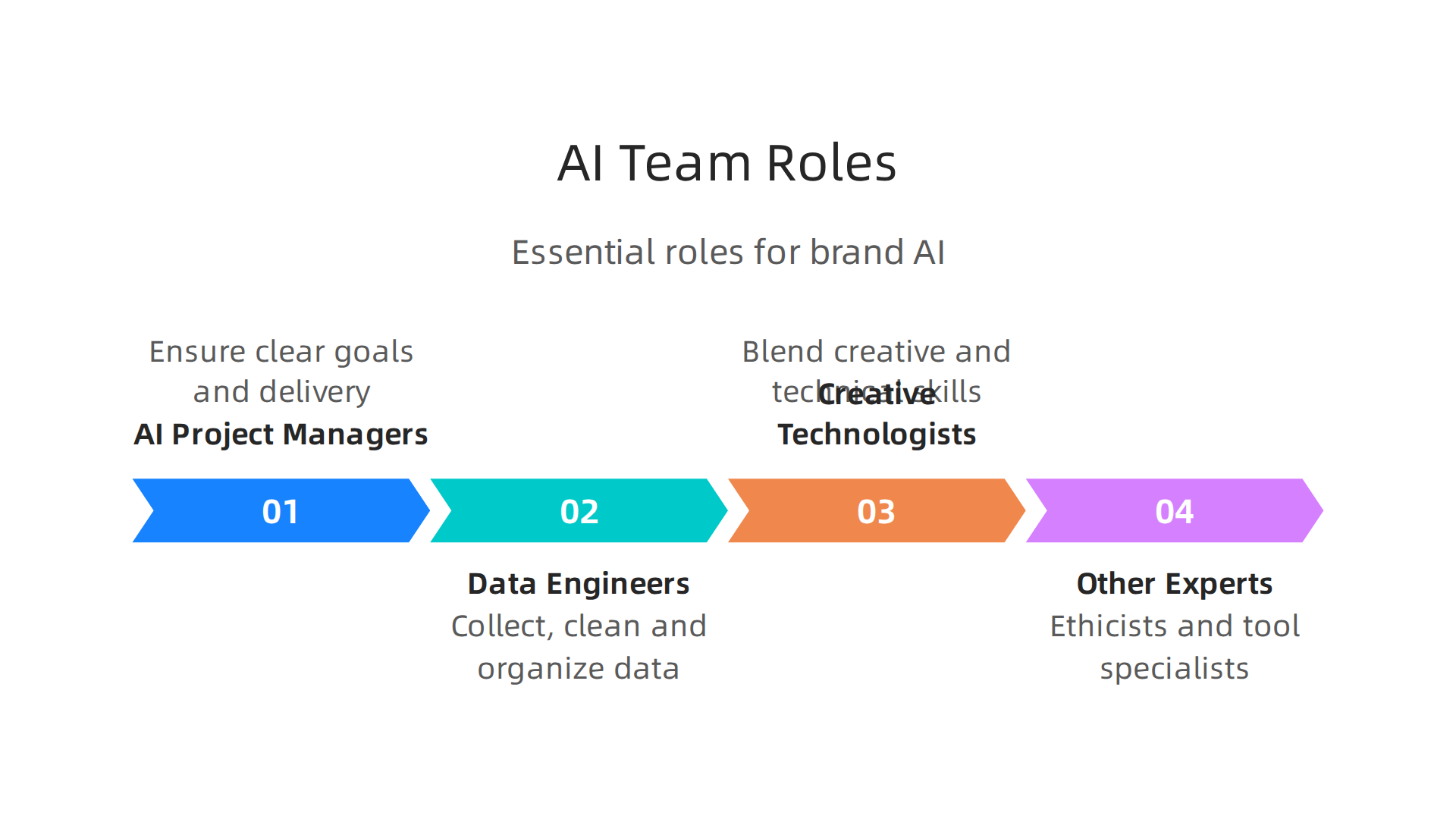
This means figuring out who does what and where to focus your efforts.
The Right People for Your AI Team
Bringing AI into your business is a team effort. You’ll need people with special skills to make sure your brand ai is helpful, fair, and successful.
- AI Project Managers: These folks are like the captains of your AI projects. They make sure everyone is working together, that goals are clear, and that projects stay on track. They help turn big ideas into real working AI systems.
- Data Engineers: AI needs good data to learn. Data engineers are the ones who collect, clean, and organize all the information your AI will use. They make sure the data is ready for your AI to understand and learn from.
- Creative Technologists: These are the people who help bring your
brand aito life in creative ways. They might work on designing newartisan ai adsor figuring out how AI can create engaging content that fits your brand’s style. They blend art and tech to make AI outputs look and feel right. - Other Experts: You might also need people who understand how AI makes decisions (AI ethicists) or experts in specific AI tools. Finding the right skills is key. If you’re looking to build out your team, there are many opportunities for skilled workers, and you can explore different remote AI jobs in 2026 to discover top roles.
Having these roles, or at least understanding these needs, helps your company adopt AI more smoothly.
Investing Smartly in AI and Building Your Roadmap
Thinking about how to spend your money on AI is super important. You want to see results, but also build for the future.
- Balancing Quick Wins and Big Projects: It’s good to start with some "quick wins." These are smaller AI projects that can show results fast, like using an
ai powered crm platformto help with customer service. This builds excitement and shows the value of AI. But don’t forget about bigger, long-term goals. These are like building a strong platform that all your future AI efforts can stand on. Having a practical AI roadmap template for business leaders in 2026 can help you plan this balance. - Choosing the Right Tools: There are so many AI tools out there in 2026. For example, some tools help with making creative content, like those listed among the top 7 creative automation tools for consumer brands in 2026. Others focus on personalizing experiences, like the AI personalization engines ranked for 2026. You’ll need to look at what your business needs most. Do you want to create
perplexity ai adseasily, or do you need a tool like themost accurate ai detectorto check content quality? Different tools serve different purposes, and picking wisely saves time and money. - Continuous Learning: The world of AI changes fast. So, it’s not just about one-time investments. It’s about always learning, testing new tools, and being ready to change your plans.
By building a strong team and making smart choices about your AI investments, your brand can truly make the most of AI in 2026 and beyond.

This approach ensures you’re not just using AI, but mastering it.
Staying on top of the latest AI trends and investment news is crucial for any business leader.
Get clear daily AI updates from The AI Newsletter Worth Reading.
Summary
This article explains why building a focused "brand AI" strategy matters now and shows marketers how to evaluate, integrate, and measure AI tools without losing brand control. It outlines the highest-impact AI use cases—personalization, creative generation, media optimization, and analytics—and explains why starting with clear pilots and measurable goals is critical. You’ll get a vendor-evaluation checklist covering accuracy, speed, data needs, integration, and governance, plus practical guidance for designing hypothesis-driven pilots, using control groups, and tracking realistic success metrics. The piece also covers creative workflows that pair human leadership with AI automation, brand-safety rules for approvals and fact‑checking, and the privacy and ethics steps needed to maintain customer trust. Finally, it maps the team roles and investment priorities needed to scale from pilot to enterprise adoption so your AI work delivers real brand and financial outcomes.