

Transformation Capital Drives Deep Change for Firms in 2026 AI Era
Overview
Why transformation capital matters for growth-focused firms in 2026
In today’s fast-changing business world, especially with all the new AI tools popping up, companies need more than just money to grow. They need something called transformation capital. This is not just about putting cash into a business. It’s about a deeper kind of help that makes big changes happen. In 2026, companies that want to truly lead the way are looking for this special kind of support to not just keep up, but to get ahead.

What is transformation capital?
Think of regular money, like venture capital or growth capital, as gas for a car. It helps the car run and go faster. This is great for businesses that already know what they’re doing and just need more fuel to go further. Firms like Reef Capital Partners, Sun Capital Partners, and Altamont Capital Partners often help businesses grow in clear ways.
But transformation capital is different. It’s like rebuilding the car into a rocket ship. It’s for businesses that need to change how they work from the ground up to handle new challenges, like the huge impact of AI. This type of capital brings not just money, but also smart people, new ideas, and the tools to make big, lasting changes.

It helps a company completely rethink its products, services, and even its basic operations. This often means embracing new technologies and ways of thinking, as seen in global capital trends for 2026 which show a shift towards deeper, more impactful investments Global Capital Trends 2026: An Emerging Markets Outlook.
Challenges in AI-focused markets
For firms that want to use transformation capital in AI markets, there are special hurdles:
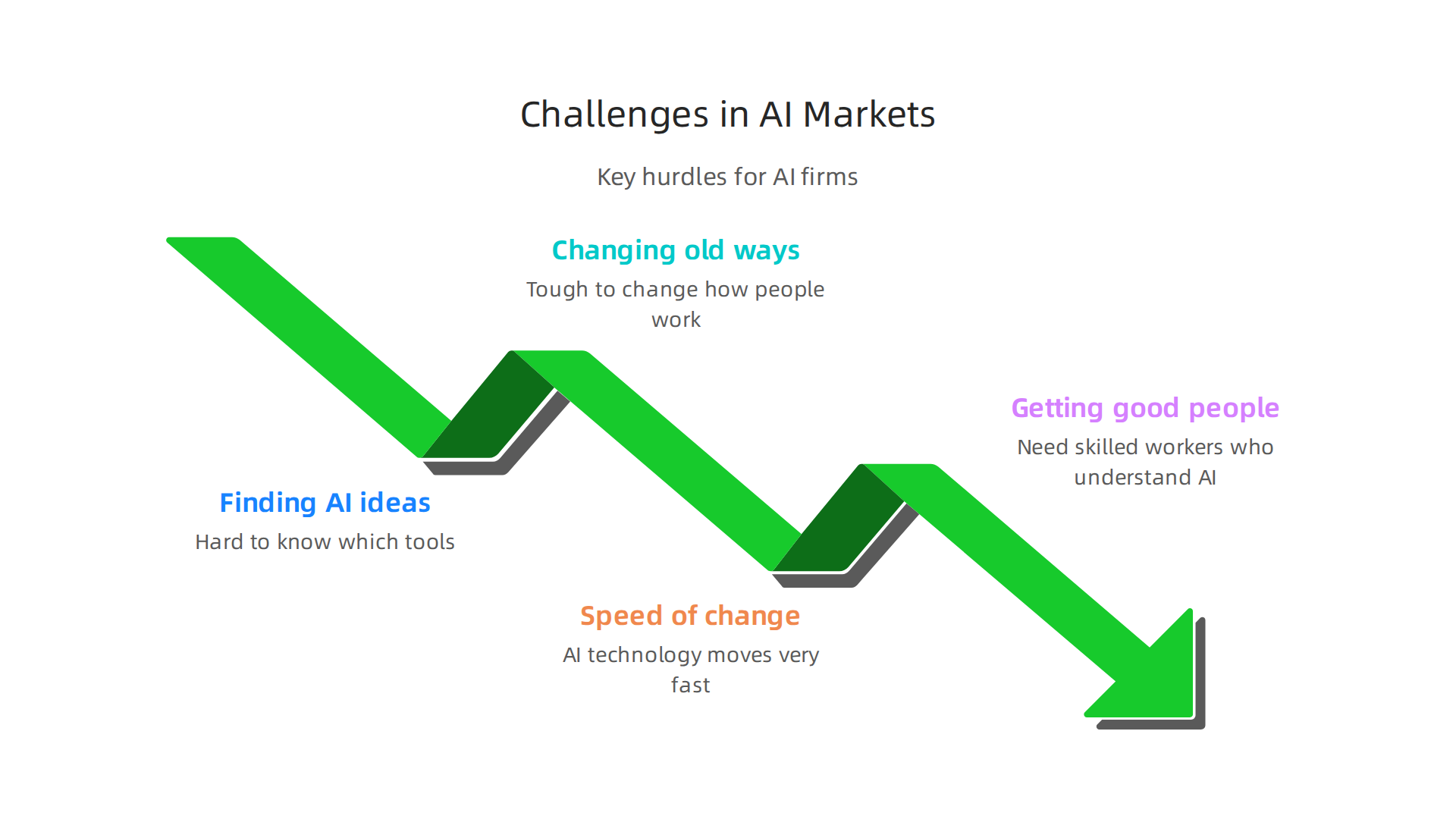
- Finding the right AI ideas: It’s hard to know which AI tools will truly help a business and which are just passing fads. Investment teams need to be very smart about where they put their money.
- Changing old ways: Many companies have been doing things the same way for a long time. It can be tough to completely change how people work, even if AI offers better ways. This requires a strong plan and careful steps to move forward.
- The speed of change: AI technology moves super fast. What’s new and exciting today might be old news tomorrow. This means companies need to be quick and flexible, always ready to learn and adapt.
- Getting good people: You need skilled workers who understand AI to make big changes happen. Finding these people can be a challenge.
These challenges mean that simply throwing money at a problem won’t work. Investment and operating teams need to work closely together. They must understand the AI market deeply and be ready to guide companies through complex changes. This is where the true power of transformation capital shines, helping firms navigate the AI market landscape in 2026 and beyond.
Staying updated with the latest in AI and investment trends is key for anyone involved in this dynamic field.
The AI Newsletter Worth Reading delivers clear daily AI updates to help you cut through the noise.
Market trends shaping transformation capital in the AI era
As we move deeper into 2026, the way money moves in the business world is changing a lot, especially for companies dealing with AI. This is good news for transformation capital, which is all about helping businesses make big, important changes. It’s not just about getting money, but also getting the right ideas and people to grow.
How money is flowing for big changes
In 2026, we see some clear trends in how money is being invested. Many investors are now looking past just fast growth. They want to put their money into companies that are truly changing how they work from the inside out. This means they are interested in businesses that are ready to use new technologies like AI to become much better.
For example, global venture capital investments were very strong in the second quarter of 2026. A lot of this money went to software businesses that are using new ideas to make big shifts.
This shows that there is a lot of belief in the power of new tech to change things for the better Venture Pulse Q2 2026. This focus on "change" is exactly where transformation capital shines. It helps make sure these big investments actually lead to real, useful changes inside a company.
How technology helps companies grow fast
New technologies, especially AI, can help companies grow much faster than before. But just having a new tool isn’t enough.

Companies need to know how to use it well. This is where transformation capital helps. It speeds up how quickly a company can adopt and use new technology.
Think of it like this: A new AI tool comes out that can make a business much more efficient. Without transformation capital, a company might take a long time to learn about this tool, buy it, train its workers, and figure out how to use it across the whole business. But with transformation capital, the company gets experts and resources that help them do all these steps much faster. This quicker adoption means the company can start seeing big benefits and grow its business much sooner.
This kind of capital helps businesses not just keep up, but truly lead in their fields by getting new tech working for them quickly and correctly. Understanding how these trends shape what’s possible can greatly impact a company’s success. To learn more about getting the most out of your investments, explore different AI investments 2026 proven strategies.
Value-creation models: How transformation capital drives operational change
After securing investment, the real work of transformation capital begins: making deep changes inside a company. This is different from simply growing a business quickly. When the goal is transformation, the money and guidance are used to build lasting value by fixing core parts of the business. It is about making a company stronger and better from the ground up, not just bigger.
For example, successful transformation needs clear leadership and plans to make sure changes stick. Without these, even well-thought-out plans can fail Losing from day one: Why even successful transformations fall short.
Common ways transformation capital helps
Transformation capital helps businesses improve in a few key areas:
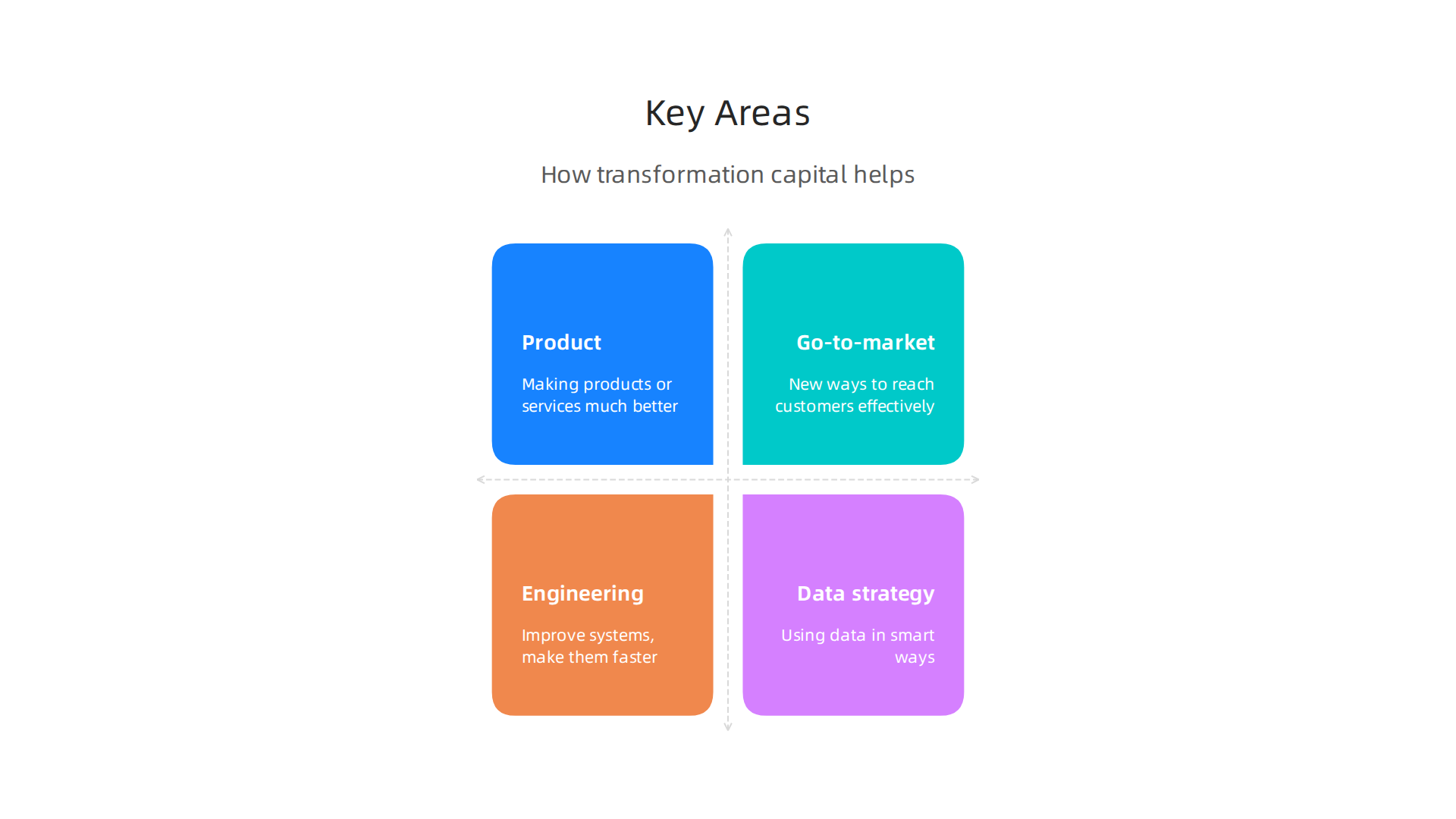
- Product: This means making products or services much better or creating new ones that customers really want. It might involve using AI to build smarter features or streamline how products are made.
- Go-to-market: This focuses on how a company sells its products. Transformation capital can help create new ways to reach customers, make marketing more effective, and improve sales processes.
- Engineering: This is about how the technology behind the products works. Experts help improve systems, make them faster, and use new tech like advanced AI tools.
- Data strategy: This involves collecting and using data in smart ways. Companies learn to understand their customers better and make smarter decisions based on what the data tells them.
These changes are not just small tweaks. They are big shifts designed to create a lot of value over time.
Transformation capital vs. pure growth funding
The way money is used for transformation is different from money used for "pure growth."
- Pure growth funding often aims for quick expansion, like opening new stores, hiring more sales staff, or increasing advertising. The goal is to grow revenue fast. Many investors like Altamont Capital Partners or Sun Capital Partners might focus on this type of growth.
- Transformation capital, on the other hand, puts money into deeper changes that might take longer to show big results but will make the company much more valuable in the long run. It’s about rebuilding some of the company’s core parts. This can involve big projects like changing how products are designed, updating old computer systems, or retraining entire teams. It also means investing in people and culture to make sure everyone is on board with the new ways of working The Three Conditions That Matter Most for Transformation.
Firms using transformation capital are looking for long-term strength and higher value, even if it means slower initial growth.

They help companies create playbooks to systematically increase value through strategic improvements The New PE Playbook: Rewiring Value Creation Through …. To learn more about how to find the right partners for these kinds of changes, you might explore how to select the best AI capital partners for startup funding in 2026.
Keeping up with how capital is used in the AI world is key to understanding business success. For more insights on the latest trends in AI and technology, consider subscribing to a trusted source.
Get clear daily AI updates from The AI Newsletter Worth Reading.
Deal sourcing for transformation opportunities: signals and pipelines
Once we understand what transformation capital is and how it helps companies change, the next big question is: How do investors find the right businesses that need this kind of help? This process is called "deal sourcing." It’s like finding a hidden treasure, but instead of gold, you’re looking for a company ready for a big positive change.
What signals tell you a company needs transformation?
Investors who provide transformation capital look for certain signs that a company is ripe for change. These signals show that a business could become much more valuable with the right kind of investment and guidance.
Here are some common signals:
- Older Products or Systems: A company might have products or technology that worked well in the past but are now old or slow. This is a chance to update them with new ideas or tools, like advanced AI. If you’re looking to reenergize a stagnated business with AI, these are prime opportunities.
- Hidden Data Goldmines: Many companies collect lots of customer or business data but do not know how to use it well. This data can be turned into smart insights to make better decisions.
- Need for New Leaders: Sometimes, a company needs fresh eyes or new skills at the top to guide a big change. Strong, engaged leadership is key for successful transformations Transformation with a capital T.
- Market Shifts: The world changes quickly. A company might be struggling because its market has moved on, and it needs to adapt to new trends.
- Poor Performance: If a company is not doing as well as it could be, this might be a sign it needs a deep overhaul rather than just small fixes.
Finding these signals often means looking closely at a company’s past, its current struggles, and what it could become.
How investors find these companies
Finding the right companies for transformation capital involves a mix of smart planning and active searching. This is called building a "pipeline" of possible deals. Investors and firms, including those like Reef Capital Partners or Partners Funding Inc, use several methods to do this. For a wider view, explore how PE and VC Firms approach AI funding success.
Here are some common ways firms find their next big project:
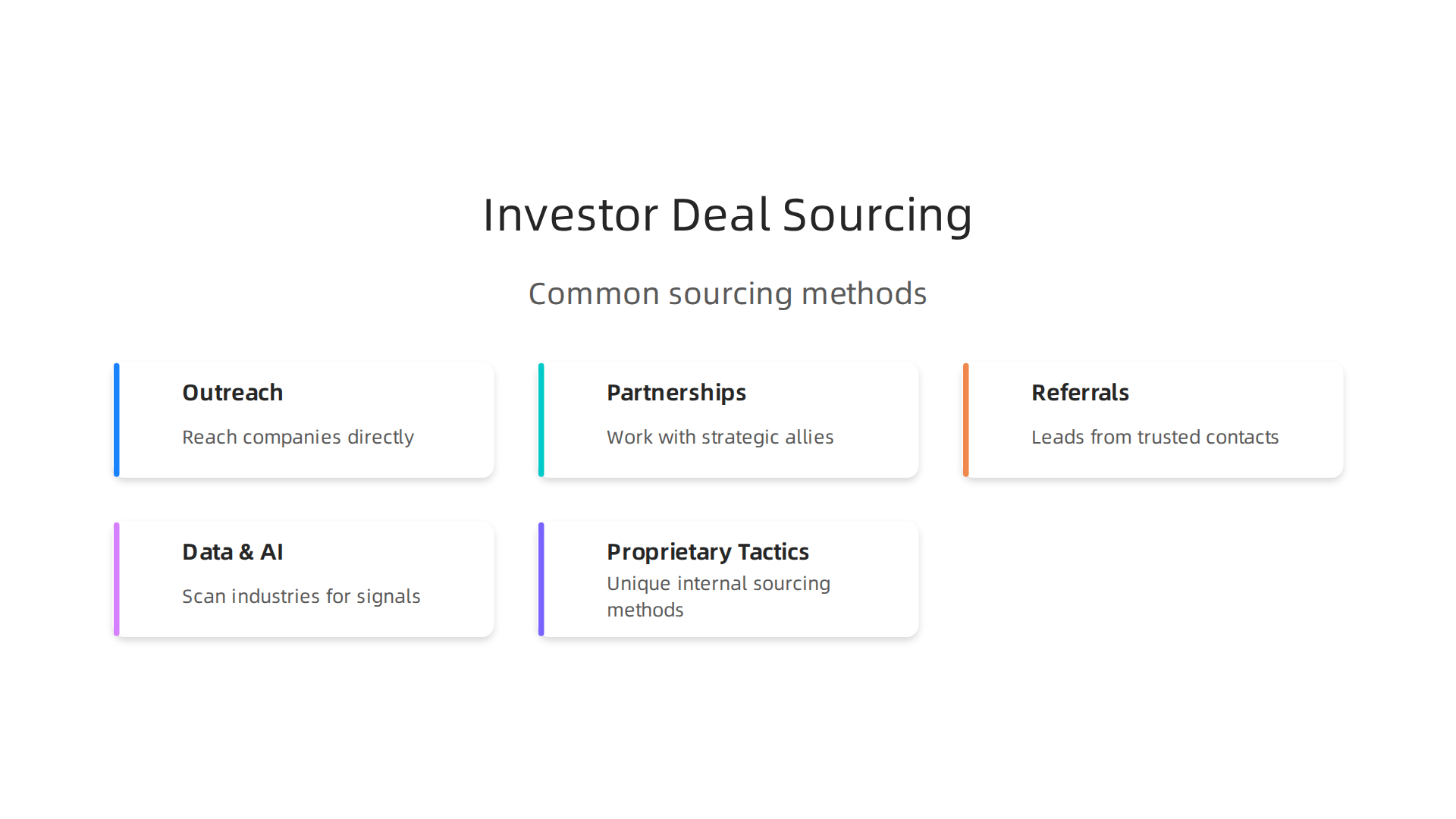
- Direct Outreach: This means reaching out directly to companies they think would be a good fit. They often have specific ideas about what kind of business they want to help transform Deal Sourcing Strategies for M&A Success in 2026.
- Strategic Partnerships: Firms work with other businesses, consultants, or banks who might know of companies needing help. These partners can suggest good matches.
- Referral Networks: Often, the best leads come from people they already know and trust. This includes lawyers, accountants, or other investors who hear about companies looking for change. Building a database of possible opportunities and refining it is a critical step in deal sourcing A guide to M&A deal sourcing and origination best practices.
- Using Data and AI: In 2026, many firms use special computer programs and AI to scan industries and find companies that show transformation signals. They can look for things like new patents or changes in leadership that suggest a company might be ready for investment 10 Revolutionary Strategies to Transform Your M&A Pipeline in 2026.
- Proprietary Pipeline Tactics: Some firms develop their own special ways to find deals that others might miss. This could involve deep market research or attending specific industry events to uncover "hidden gems" Deal Sourcing Strategies and Pipeline Management for Investors.
These methods help ensure a steady flow of potential transformation opportunities for investors. By actively seeking out companies with clear needs and the potential for big improvements, firms can make sure their transformation capital goes to good use.
Once a promising company is found, the next critical step is to look very closely at it. This careful checking is called "due diligence." It’s like checking every part of a car before a long trip to make sure it’s safe and ready.

For transformation capital investments, this check is even more detailed because investors are not just looking at how much money a company makes now. They are looking at its potential to change and grow big with their help.
More Than Just Money: What Investors Really Look At
When a firm like Reef Capital Partners or Altamont Capital Partners considers investing transformation capital, they look far beyond just the numbers in a company’s bank account. They want to know if the company can truly make the big changes needed to become much better.
Here’s what they check:
- Technology and Data: Is the company’s technology old or new? Can it be easily updated with smart tools like AI? They check if the company has useful data that can help make better choices. They also look at any risks with using new AI tools, thinking about rules that are in place in 2026.
- Team and Leadership: Do the people running the company have good ideas and strong leadership? Are they ready for big changes? Good leaders are key to making any transformation work. Investors want to see a team that is open to new ways and can make hard decisions. Studies show that successful transformations depend a lot on engaged leadership and board support Transformation with a capital T.
- Readiness for Change: Is the company truly willing to change, or will it fight new ideas? This is a very important question. A company might look good on paper, but if its people are not ready for a big shift, the investment might not work out. Key factors for a deal’s success include keeping important customers and good employees, and a company’s culture for change. For more on what to consider, see How to execute a transformational deal.
Special Checks for Transformation Investments
For companies looking to make a big change, especially those moving into AI, investors like Sun Capital Partners and Partners Funding Inc have special things they look for:
- Can the Technology Grow? They want to know if the company’s tech can handle a lot more users or new features. If it can’t, it will be hard to grow.
- Data Quality: Is the company’s data clean and safe to use for AI? Bad data can lead to bad decisions. Also, they check if the company handles customer data carefully to avoid problems.
- People Skills: Does the team have the right skills for new AI projects? If not, how will they learn or hire new talent? This includes knowing how to select the best AI capital partners for startup funding in 2026.
- Culture of Innovation: Is the company excited to try new things and learn from mistakes? A company that is stuck in old ways will struggle with transformation.
These checks help investors decide if their transformation capital will truly help a company succeed and make a big, positive difference. It’s about finding hidden gems and helping them shine.
Keeping up with the latest in AI and how it affects business is vital for anyone in this space.
The AI Newsletter Worth Reading offers clear daily AI updates to help you stay informed.
After a firm like Altamont Capital Partners decides to invest transformation capital, the real work of helping the company grow and change begins. This is called scaling portfolio operations. It means putting good plans in place, making sure everyone is working towards the same goals, and leading the company through big changes.
How Companies Get Support for Transformation
When a company gets transformation capital, it needs strong help to make big changes. This support can come in two main ways:
- Internal Teams: Some investment firms, including those that work with
reef capital partners, have their own special teams of experts. These teams work directly inside the companies they invest in. They help with things like fixing problems, making processes better, and guiding the company’s leaders. Because they are "in-house," they often know the company very well and can quickly step in to help. Leading firms are now investing in dedicated transformation leadership within their portfolio companies to drive value faster Five practices reshaping PE value creation. - External Partners: Other times, companies bring in outside experts, like consulting firms. These external partners bring new ideas and special skills that the company might not have. They can offer a fresh view and help with specific tasks, like setting up new technology or improving how the company works. This can be especially helpful for big projects where specialized knowledge is needed.
Both ways aim to make sure the company gets the help it needs to use the transformation capital well and make big, successful changes.
Setting Clear Goals with KPIs and Good Management
To make sure a transformation works, everyone needs to agree on what "success" looks like. This is where Key Performance Indicators (KPIs) come in.

KPIs are like scorecards that show how well the company is doing compared to its goals.
For example, if Sun Capital Partners invests transformation capital to help a company use more AI, a KPI might be how much money the AI saves each month or how many new customers it helps reach. These KPIs help to:
- Align Everyone: Founders, investors, and the teams leading the change all look at the same numbers. This helps them stay on the same page and work together. A good strategy for this is to use a clear "value creation playbook" that guides how a company makes more money and grows Navigating Private Equity’s Value Creation Playbooks.
- Track Progress: Regular checks of KPIs show if the company is moving in the right direction. If a KPI isn’t looking good, it’s a sign that something needs to change.
- Make Smart Choices: When leaders see how the company is performing, they can make better decisions about where to put more effort or money. Firms are now adopting next-generation value creation playbooks that are systematic and data-driven PE Value Creation Playbook.
This careful tracking and guiding are called "governance." It’s like having a clear set of rules and regular meetings to ensure the transformation stays on track. It includes defining the right metrics and drafting policies. You can learn more about finding top companies in AI for smart investing by checking out articles on top AI companies 2026.
By setting clear KPIs and having good governance, investors and companies can work together to achieve big goals with their transformation capital. This helps ensure that the changes lead to real growth and success.
When a company uses transformation capital to grow, the investment firm that provided the money must also show its own investors that their strategy is working. These investors are called Limited Partners, or LPs. For funds focused on transformation, like those managing money for Altamont Capital Partners, sharing clear plans and results is key.
Positioning Transformation Capital to Limited Partners
Funds need to explain to LPs why their special way of investing, focused on changing and improving companies, will bring good returns. This is about showing a strong "fund thesis." It means telling LPs exactly what kinds of companies the fund will help and how its transformation capital approach will make them much more valuable than regular investments.
For example, a firm might highlight how it works closely with companies to make operations better, or how it uses new technology to boost sales. This special way of working is what makes a fund stand out. In 2026, global private markets are seeing a lot of activity, and LPs look for funds that can show a clear path to success through hands-on transformation, as noted in the Global Private Markets Report 2026.
Metrics and Reporting LPs Expect
LPs want to see how their money is helping companies grow. This means funds must send regular reports showing clear progress. These reports use the same Key Performance Indicators (KPIs) that companies use to track their own goals.
Imagine a fund from Reef Capital Partners or Sun Capital Partners investing transformation capital. Their reports to LPs would show things like:
- Financial Growth: How much the company’s earnings have gone up, or how quickly its sales are increasing.
- Operational Improvements: How new ways of working have made the company more efficient or saved money.
- Value Creation: How the overall worth of the company has increased since the investment.
These updates help LPs understand that their investment in transformation capital is being managed well and is leading to real, measurable success. Learning how different investment firms manage their strategies can be very useful. For a deeper look, check out our guide on PE and VC Firms: Your Strategic Guide to AI Funding Success.
To stay updated on the latest news and insights in the world of AI and startup funding, consider getting The AI Newsletter Worth Reading.
When investors give money, they want to see things grow and work well. But even with good plans and transformation capital, there are always risks. For companies getting this special funding, it’s key to manage things like new rules, doing things the right way, and making sure changes actually happen.
Managing regulatory, ethical, and execution risks in transformation investments
Making a company better with transformation capital often means using new technology, like AI. But new tech comes with new rules. In 2026, many places are putting out guidelines for how companies should use AI. For example, the European Union has the AI Act, which sets clear rules. Also, in the U.S., the NIST AI Risk Management Framework helps companies use AI safely. Funds like Altamont Capital Partners and Sun Capital Partners must make sure the companies they invest in follow these rules. This includes keeping data private and making sure AI systems are fair and not biased. Not following these rules can lead to big problems and cost a lot of money. It’s important to understand the bigger picture of AI Regulation: How It Works, What It Requires, and … to avoid issues.
Beyond rules, there are also ethical concerns with AI. Companies need to think about how AI might affect people, like making sure it’s fair for everyone. This helps build trust and keeps the company’s good name strong. Thinking about AI for Good: Real-World Risks, Opportunities, and Leader Imperatives for 2026 can guide these choices.
Lastly, even with great ideas and money, making big changes is hard. This is called "execution risk." It means things can go wrong when you try to put plans into action. For transformation capital to work, everyone in the company needs to be on the same page. This is "team alignment." If teams aren’t working together, projects can slow down or fail. "Change management" is also important. It means helping people get used to new ways of working. Without good change management, employees might resist new tools or processes.
Another risk is "technical debt." This happens when companies use old systems or make quick fixes that cause problems later. It’s like building a house with cheap materials that then needs many costly repairs. Funds like Reef Capital Partners and partners funding inc watch these execution risks closely. They know that even the best ideas need careful planning and teamwork to really succeed.
Summary
Transformation capital is an active form of investment that combines capital with operational expertise to rebuild companies from the inside out, especially in AI-driven markets in 2026. This article explains how transformation capital differs from pure growth funding, why investors now favor deeper, technology-led change, and how market trends are shifting capital toward longer‑term value creation. It outlines common signals that a company needs transformation (legacy systems, unused data, leadership gaps), describes how investors source and diligence those opportunities, and details the practical levers—product, go‑to‑market, engineering, and data—that drive value. The piece also covers how to scale transformations with in‑house teams or external partners, set KPIs and governance for progress, report results to LPs, and manage regulatory, ethical, and execution risks tied to AI adoption. After reading, investors and operators will know how to spot transformation opportunities, run disciplined diligence, and structure hands‑on programs that turn investment into durable growth.