
How to Sell Private Stock Smart Strategies for Maximum Capital Turnaround
Overview
Why selling private stock is hard – and what this guide will solve
Imagine you own a piece of a very exciting AI company. You helped it grow, and now you have shares of its private stock. But what if you need to sell some of those shares? Maybe you want to free up some money or change your investment plan. This is where it gets tricky. Selling private stock is often much harder than selling shares in big companies listed on public stock markets. This is especially true for founders and investors in the fast-moving AI sector.
One big reason is that there isn’t just one easy place to sell private shares. Unlike public stocks where you can just click a button, private shares are sold in what we call private secondary markets. The US Securities and Exchange Commission (SEC) explains that these are markets where investors can sell their shares of private companies to other investors Private Secondary Markets – SEC.gov. This market is not always easy to access.
Also, the rules for how to sell private stock can be very complex. There are many legal steps and a lot of paperwork. This can feel like trying to find your way through a maze, especially for busy AI founders and smart investors who are not experts in legal stock sales. The lack of clear information adds another challenge. It’s often hard to know the true value of your private stock. And finding the right buyers, or partners funding your exit, can be a big hunt. It’s not always clear who wants to buy or what a fair price might be for your shares.
But don’t worry! This guide is here to make it easier for you to understand how to sell private stock. We will give you a simple, practical roadmap that focuses on building trust and making smart choices. This will help you achieve a good capital turnaround from your investment.
We will cover all the important parts you need to know. This includes understanding the different ways you can sell your shares, how to figure out what they are worth, what documents you will need, how to find interested buyers, how to set up the deal, and making sure you follow all the necessary rules. We will also point you to helpful sources and checklists along the way.
If you are an AI startup founder looking for ways to get money and grow your business, knowing how to talk to investors is a vital skill. Find out more about how to find the right people to back your vision by reading our guide on how to find private investors for small business ai startups in 2026. And to stay smart about all the new things happening in AI funding, make sure you get regular updates. The AI Newsletter Worth Reading
Now that we know selling private stock can be tricky, let’s look at the main ways you can actually do it. There are a few main paths to consider, each with its own good points and tricky parts. Understanding these options is key to figuring out how to sell private stock and making smart choices for your shares.
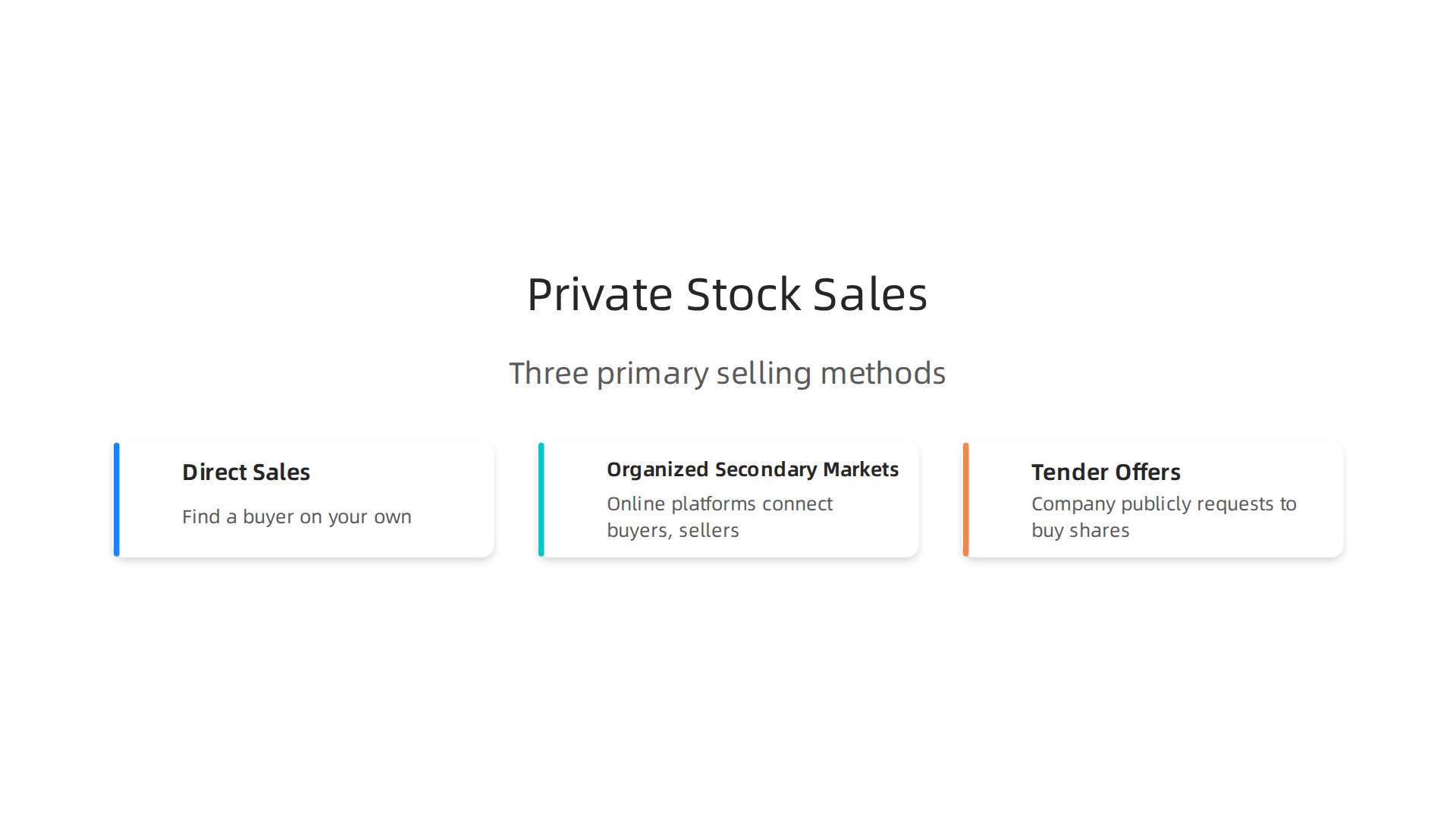
Here are the main ways to sell your private company shares:
Direct Sales
A direct sale is just what it sounds like: you find a buyer on your own and sell your shares directly to them. This might be someone you know, like another investor or a business partner.
- Good points: You have a lot of say in who buys your shares and what the price is. It can also be very private.
- Tricky parts: It can be very hard to find the right buyer. Also, it’s tough to know the fair price for your shares because there isn’t a public market setting it. This means you might spend a lot of time looking for
partners fundingyour exit.
Organized Secondary Markets
These are special places, often online platforms, that connect many buyers and sellers of private company shares. Think of them as a more organized way to find a buyer than a direct sale. These platforms have grown a lot, and in 2026, many companies use them as part of their plan for managing capital.
- Good points: You get to reach more possible buyers, which can help you get a better price. These platforms can also help make the selling process a bit smoother. You can find the Best Secondaries Platform in 2026 to connect with more buyers.
- Tricky parts: There might be fees involved, and you might have less control over the selling process than in a direct sale. Pricing can still be tricky, though these markets often provide more clues than a single direct negotiation. Actually, secondary market deals are now seen as a normal part of how a company handles its money, according to PwC Secondary transactions guide: PwC.
Tender Offers
A tender offer happens when a company itself, or another party, makes a public request to buy a certain amount of shares from many shareholders at a set price and for a set time. This is a common way to sell shares in private companies, especially those that are growing fast Secondary Sales and Tender Offers.
- Good points: For sellers, tender offers can be fast and clear. You know the price you’re getting, and if you agree, the sale can happen quickly. It’s a way for companies to offer liquidity and create a
capital turnaroundopportunity for their investors. - Tricky parts: You usually have less power over the price. If the company sets a price, you either take it or leave it. Also, there are strict rules and time limits for tender offers that you must follow Tender Offer Rules & Regulations: What Private Companies Need to ….
Understanding these different ways to sell shares is important. It’s like learning the rules of practice stock trading, but for real money in private companies. This knowledge helps you pick the best strategy for your own situation. The AI market landscape in 2026, for example, is constantly changing, so knowing your options is crucial for investors. To learn more about the broader financial trends impacting your investments, consider our insights on the AI market landscape 2026 global investment and future trends.
After learning about the different ways to sell your private company shares, the next big question is: how to sell private stock for the best price? This is where understanding valuation comes in. It’s not always easy to figure out what your private shares are truly worth, but there are good ways to get a fair idea.
Valuation, pricing, and market signals for private shares
To set a good price for your private shares, you need to look at a few things.
It is like learning the rules of practice stock trading, but for real money in private companies.
How to Find a Fair Price
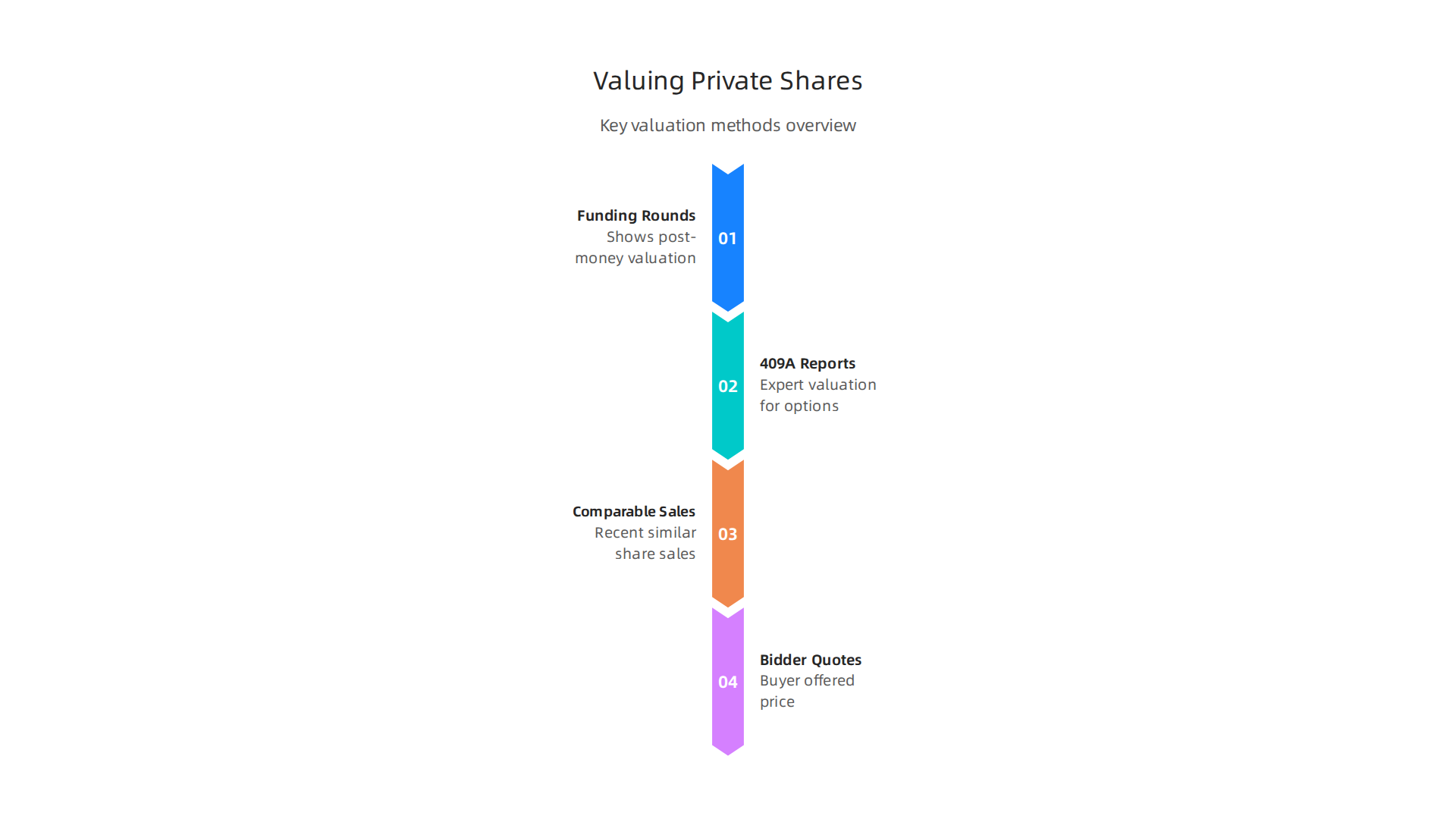
- Recent Funding Rounds: One important way to guess the value of your shares is to look at the company’s most recent funding rounds. If the company just raised money from new investors at a certain price, that gives you a strong clue about its value. This is often called the company’s "post-money valuation" and it’s a key number when thinking about a
capital turnaround. - 409A Valuation Reports: Companies also get special reports called "409A valuations." These are official reviews done by experts to set a fair price for employee stock options. While not always the exact price you’d get in a sale, it’s a legal benchmark and a good starting point for understanding value, especially for tax reasons. The AICPA guide, covering valuation of privately held shares often includes looking at all types of transactions to determine fair value estimates.
- Comparable Secondary Sales: Another helpful method is to look at similar shares that have been sold on secondary markets. These markets act like a thermometer for private company values. In 2026, many reports track these sales, showing that pricing in secondary markets has remained strong, with many deals closing at or above expected values, according to the 2026 Secondary Market Report from William Blair. Checking reports like the Lazard Interim 2026 Secondary Market Report or the 1H 2026 Secondary Market Flash Report helps you see what other
partners fundingsuch transactions are willing to pay. Some investors even predict pricing stability through 2026, as noted in a William Blair Q2 2026 newsletter. - Bidder Quotes: Finally, sometimes the best way to know what your shares are worth is simply what a buyer is willing to offer. If you have a few interested buyers, their offers can give you a real-world idea of the market price.
Market Signals to Watch in 2026
Beyond these numbers, you also need to pay attention to bigger market signals in 2026. These are the general vibes and trends that can change how much people are willing to pay for private company shares.
- Investor Appetite: How eager are investors for private shares right now? If many investors are looking to buy, prices tend to go up. Reports in 2026 show that pricing has been resilient, especially for single-asset deals, as detailed in the Evercore H1 2026 Secondary Market Review. This high demand means it might be a good time to consider how to sell private stock.
- Sector Momentum: Is the industry your company is in doing really well? For example, AI companies have seen a lot of interest. If your company is in a hot sector, you might get a better price. Private equity AI deals hit record levels in 2025 and continue to shape trends in 2026, showing strong investor interest in this area.
- Macro Factors: Even bigger economic conditions can play a role. Things like interest rates, overall economic growth, or big global events can affect how much investors want to put into private companies. Keeping an eye on these larger trends helps you time your sale well.
Understanding these valuation methods and market signals is crucial for anyone looking to sell private stock wisely. For more daily insights into investment trends and market shifts, especially in the fast-moving AI sector, consider subscribing to The AI Newsletter Worth Reading.
When you know what your private company shares are worth, the next step is to handle all the paperwork and rules needed to sell them. Think of it like finishing your practice stock trading lessons and now doing it for real. You want to make sure the sale goes smoothly and legally.
Legal Documents You’ll Need
Selling private shares involves several important papers. These documents make sure everyone agrees on the sale and that it follows all the rules.
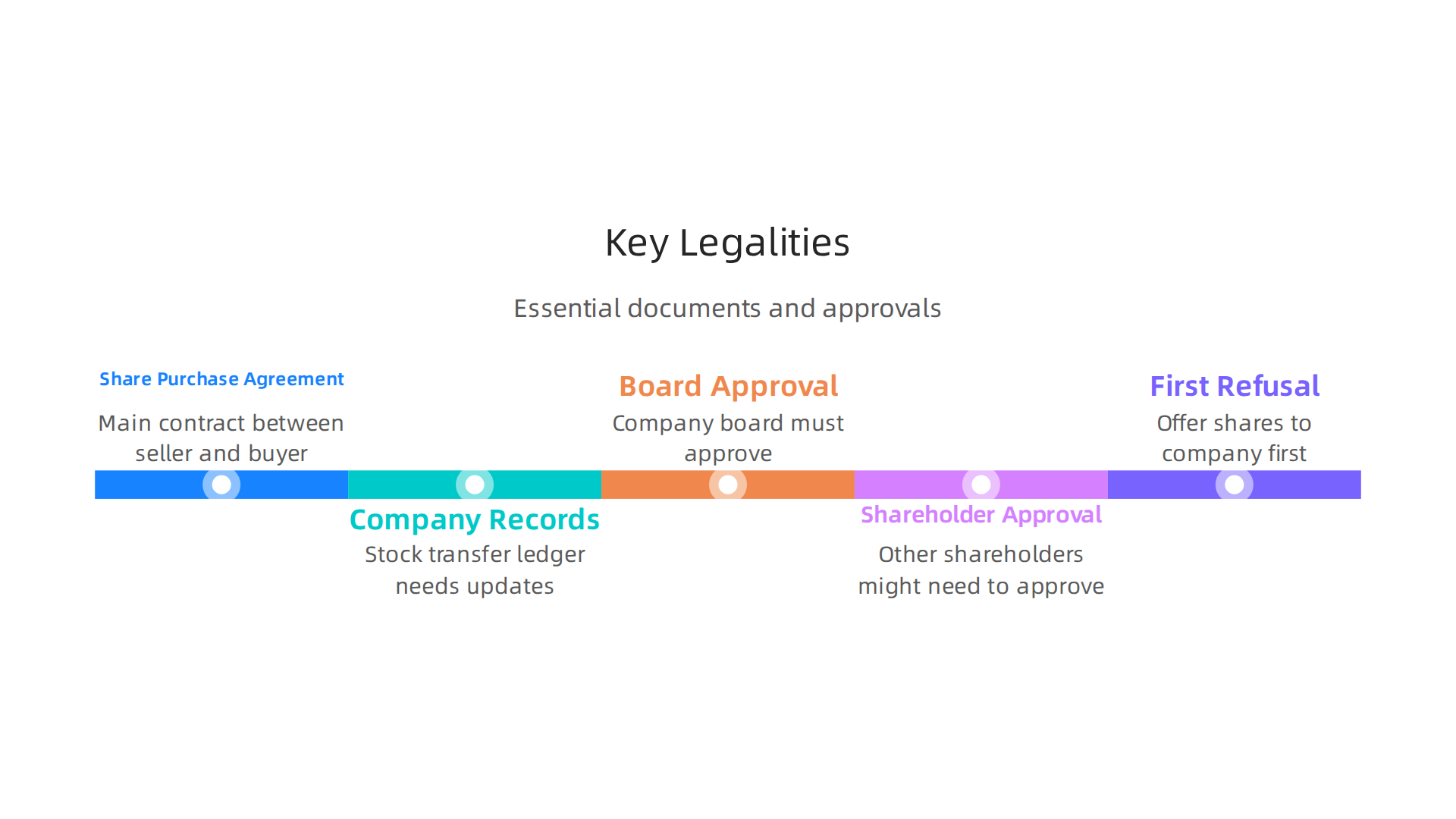
- Share Purchase Agreement (SPA): This is the main document. It’s like a contract between you (the seller) and the buyer. It spells out how much the shares cost, when the money will be paid, and other important details. The SPA also includes things called "representations and warranties," which are like promises from both sides that certain facts are true. For example, a good SPA will make sure that the payments can be made free of tax to the buyer, as seen in a Legal Business Solutions Academy guide on share purchase agreements. Sometimes, an escrow holdback is used, where some money is held back by a neutral third party to cover any promises that might not be true later.
- Company Records: After the sale, the company’s official records, like the stock transfer ledger (a list of who owns shares), need to be updated. This shows the change in ownership. The company’s main rules (like the charter and bylaws) also often have sections about how shares can be bought and sold. Information about these and other
capital turnarounddocuments is often needed for secondary transactions, according to A Guide to Secondary Transactions.
Important Approvals and Rules
Private companies have special rules about selling shares that public companies don’t. These rules are usually set up to protect the company and its other owners.
- Board and Shareholder Approval: Many times, you can’t just sell your shares without telling the company first. The company’s board of directors or even other shareholders might need to say "yes" to the sale.
- Right of First Refusal (ROFR): This is a common rule. It means that if you want to sell your shares, you first have to offer them to the company or its existing shareholders at the same price and terms as your outside buyer. Only if they say no can you sell to someone else. This is a key part of how to sell private stock, making sure existing
partners fundingthe company get a say. - Other Restrictions: There might be other rules too, like limits on who you can sell to or how many shares you can sell at once. These are usually written in the agreements you signed when you first got the shares. A detailed legal guide on secondary transactions for private equity funds explains that the purchase agreement will cover these terms, along with other important details like closing conditions and what happens if something goes wrong.
Following the Rules: KYC, AML, and Securities Law
When you sell private shares, it’s not just about the company’s rules. You also have to follow bigger government rules.
- KYC (Know Your Customer) and AML (Anti-Money Laundering): The buyer will usually need to show proof of who they are and where their money comes from. This is to prevent illegal activities like money laundering.
- Securities-Law Compliance: Selling private shares means you are dealing with "securities." There are strict laws about who can buy and sell these, and how. Most private sales happen under special exemptions so they don’t have to go through the lengthy public market process. It’s smart to talk to a lawyer to make sure your sale follows all these laws.
How Stock Types Affect Your Sale
Not all shares are the same. Companies often have different kinds of stock, and this affects how to sell private stock.
- Common Stock vs. Preferred Stock:
- Common Stock: This is the most basic type of share. It usually gives you a vote in company decisions, but you’re last in line to get money if the company sells or goes out of business.
- Preferred Stock: This kind of stock often doesn’t give you voting rights, but it usually means you get paid back before common stockholders if the company has problems. Preferred stock holders also might have special rights that make their shares more attractive or easier to sell.
- Cap Table Mechanics: The "cap table" is short for capitalization table. It’s a full list of who owns what shares in the company, including how many shares they have and what kind. A messy or unclear cap table can make it harder to sell your shares. Buyers want to know exactly what they’re getting and that the company’s ownership records are clear. If you’re looking for more insights on capital and investment, you can explore topics like private equity AI funding.
By understanding these legal steps and documents, you can be better prepared to sell your private stock with fewer surprises.
The previous section taught you about the papers and rules for selling your private company shares. Now, let’s talk about the people who might want to buy them. Finding the right buyer is a big part of how to sell private stock and get your money. It’s like moving from practice stock trading to finding real investors.
Finding Buyers and Liquidity: Platforms, Funds, and Strategic Purchasers
There are a few main groups of people and companies that buy private shares in 2026. Knowing them helps you know where to look.
- Secondary Funds: These are special investment groups that focus on buying shares from people who want to sell before a company goes public. They are important for providing liquidity (cash) to sellers. The secondary market has grown a lot, with special funds raising billions of dollars in 2026 to buy these shares. For example, private equity secondaries funds raised $29.7 billion globally in the first quarter of 2026 alone, as reported by Preqin. These funds help with the
capital turnaroundof investments for many people. - Family Offices: These are groups that manage money for very wealthy families. They often look for good private investments to add to their holdings. In 2026, family offices are a big buyer group for late-stage private shares, often making large investments of $1 million to $25 million, as noted by Limen Markets Private.
- Strategic Corporate Buyers: Sometimes, another company might want to buy your shares. They do this because your company is in their industry, or they see a business reason to own a part of it. These are often
partners fundinga larger strategy. - Accredited Individual Buyers: These are wealthy individuals who meet certain rules that allow them to invest in private companies. They often look for promising startups or growing businesses.
Where to Find Buyers: Platforms, Brokers, and Direct Paths
Once you know who might buy, you need to know how to reach them.
- Online Platforms and Marketplaces: These are websites made just for buying and selling private company shares. Think of them like online markets for private stock. They connect many different buyers and sellers. In 2026, using a Best Secondaries Platform can make the process easier.
- Using a Broker: For bigger or more complex sales, you might hire a special broker. These professionals know many buyers and can help you find the right one. They can also help with the tricky parts of the sale, like setting the price and handling talks.
- Controlled Auction or Direct Outreach: For very large share packages, a company might run a "controlled auction." This means a few selected buyers are invited to make offers. Or, you might reach out directly to potential buyers you already know, like other shareholders or industry players.
The secondary market for private shares is buzzing in 2026. We’re seeing more kinds of deals, like when existing fund investors sell their stakes (LP-led secondaries) or when the fund manager restructures parts of the fund (GP-led secondaries). These trends show how important it is to stay updated on the investment landscape, especially in areas like AI investments 2026.
This continuous growth in the private market means more ways for people to sell private shares and get liquidity. If you’re looking for clear daily updates on how the world of AI and technology is shaping investment, then you’ll want to get The AI Newsletter Worth Reading.
Once you find potential buyers for your private company shares, the next big steps are negotiating the deal and understanding the money side, especially taxes. This is a critical part of figuring out how to sell private stock smoothly.
Key Negotiation Points When Selling Private Stock
Selling private shares means you’ll sit down to talk about important details with the buyer.

These talks decide the final shape of the deal.
- Price: This is often the first thing people think about. What is your share truly worth, and what is the buyer willing to pay? Many things affect this, like how well the company is doing, its future plans, and how much other similar companies are worth.
- Representations and Warranties (Reps & Warranties): These are like promises or statements of fact that you, as the seller, make about the shares and the company. For example, you might promise that you truly own the shares and that the company’s financial reports are correct. These promises are very important because if they turn out to be false later, the buyer can make a claim against you. These agreements also state how long these promises last after the sale, which is called the "survival period," often 12 to 24 months for general statements, or even longer for things like tax or ownership facts, according to advice for sellers about reps and warranties in M&A.
- Indemnities: This is a promise to cover losses if a representation or warranty turns out to be false, or if certain problems come up after the sale. If you break a promise from the reps and warranties, the indemnity part of the deal says you’ll pay the buyer back for any harm. The purchase and sale agreement often covers these points, as detailed in a legal guide for secondary transactions.
- Escrow or Holdback: To make sure sellers keep their promises and to cover any indemnity claims, buyers often ask for an "escrow" or "holdback." This means a part of the money from the sale is not given to you right away. Instead, it’s put into a special account held by a neutral third party, called an escrow agent, for a set time. This money acts as a security blanket for the buyer. An escrow holdback can be used to protect against future claims or problems. This is a common practice, with a typical escrow being around 10% of the deal’s value if no insurance is used, as shared in a guide for sellers.
- Closing Conditions: These are things that must happen or be true before the sale can be finalized. Both you and the buyer will agree on these conditions. For example, it might be that certain approvals are needed, or that no big negative events have happened to the company.
Important Tax Considerations
When you sell private stock, thinking about taxes is crucial. Getting this right is a key part of how to sell private stock without big surprises.
- Character of Gain: This means whether your profit from the sale is seen as "capital gain" or "ordinary income" by the tax authorities. Capital gains usually have lower tax rates than ordinary income, so it’s often better if your profit counts as a capital gain. There isn’t a specific IRS rule that talks directly about how to tax a profit made above the usual value in secondary sales, according to The Tax Adviser.
- Timing: When you sell your shares affects when you need to pay taxes. Understanding this can help you plan your finances better.
- Withholding: Sometimes, a portion of the sale money might be held back by the buyer or a third party to cover potential tax obligations. This is often done to make sure taxes are paid correctly.
- Steps to Lessen Tax Surprises: To avoid unexpected tax problems, it’s smart to:
- Get professional advice: Talk to a tax expert who knows about private stock sales.
- Consider tax insurance: For bigger deals, buyers and sellers sometimes use special insurance policies to protect against tax risks. How payments from these policies are taxed is an important point to check, as discussed by RSM US.
- Address tax matters in the deal: Make sure the sales agreement clearly states how tax payments and responsibilities will be handled. The purchase agreement should clarify that payments for tax promises are treated as an adjustment to the price, notes a paper on M&A Hot Tax Topics. Using an escrow for tax-related claims is another way sellers can protect themselves, as noted by Bloomberg Tax.
Navigating these negotiation points and tax details can feel a lot different than simple [practice stock trading]. It’s the real world of capital turnaround for your investment and makes you feel like a real PE And VC Firms Your Strategic Guide To AI Funding Success player. Always remember to work with experienced legal and tax professionals to make sure your sale goes as smoothly as possible.
Navigating the tricky parts of selling private stock, like making deals and handling taxes, leads us to another big area: making sure everything is safe and follows the rules. This is about managing risks and being compliant so your sale goes smoothly and you keep your good name. It’s much more than just [practice stock trading]; it’s about smart capital turnaround for your investment.
Risk Management, Compliance, and Best Practices for Sellers and Investors
When you decide to sell your private company shares, it’s not enough to just find a buyer and agree on a price. You need to prepare your company’s paperwork and make sure you follow all the rules. This helps prevent problems later and makes the whole process easier for everyone involved. Think of it as getting your house in perfect order before you invite guests.
Pre-Sale Checklist: Getting Ready to Sell
Before you even think about putting your shares up for sale, there are some key things you must do.
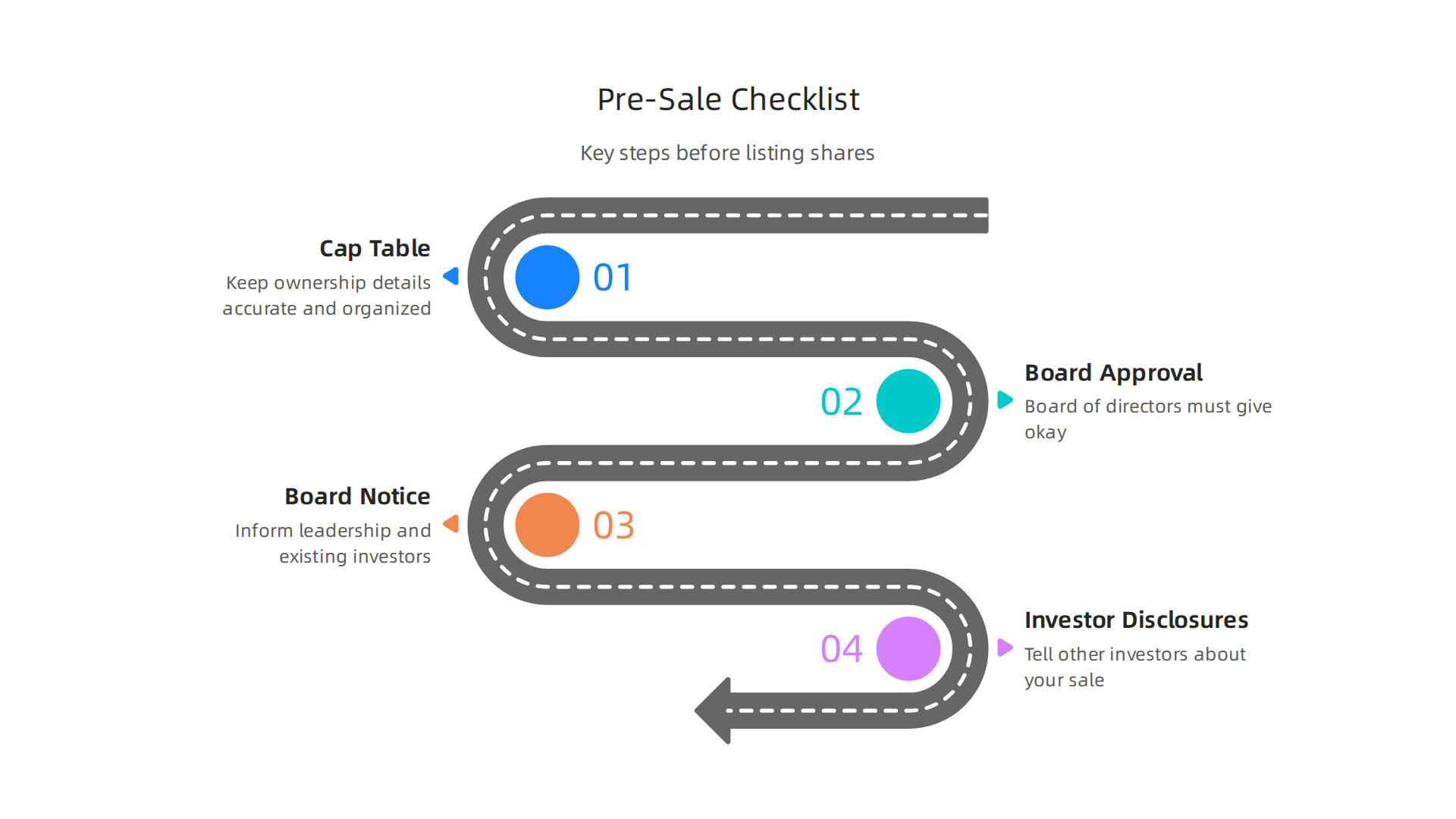
This preparation is a big part of how to sell private stock without bumps in the road.
- Cap Table Hygiene: Your "cap table" is a record of who owns how many shares in your company. Keeping it clean and accurate is super important. It means making sure all ownership details are correct, shares are properly issued, and records are organized. This helps everyone see a clear picture of who owns what, as explained in a Complete Guide for Private Companies Cap Table Management. Before any sale, you need to check for things like "rights of first refusal" (ROFR), where someone else might have the first chance to buy your shares, or "co-sale rights" where other shareholders can sell along with you. Finding and dealing with these rights beforehand is part of how to clean your cap table. After the sale, the cap table must be updated to show the new owners, removing the seller and adding the buyer with the same type of shares, as mentioned in a guide on Secondary Transactions: How Founders and Early Investors Sell. Keeping your cap table updated and fixing any "dead equity" are important best practices for ensuring a clean cap table in 2026.
- Corporate Approvals: Your company’s board of directors or other leaders usually need to give their official "okay" for the share transfer. This approval should be in writing.
- Board Communication: It’s a good idea to keep the company’s leadership team and existing investors informed about your plans to sell. Transparency can prevent misunderstandings.
- Investor Disclosures: You might need to tell other investors in the company about your sale. This makes sure everyone has the right information and no one feels left out.
Compliance and Good Governance Practices
Following rules and having good ways of doing things (governance) can really smooth out the selling process. It helps reduce potential arguments or friction during the deal and protects your reputation.
- Standardized Selling Windows: Some companies, especially those with many shareholders, create specific times each year for employees or early investors to sell shares. These are called "liquidity windows" or "tender offers." This approach helps ensure fairness and manages information for many sellers at once, according to the Founder-Led Secondaries 2025 Guide. These windows can offer Structured Liquidity Windows White Paper.
- Careful Buyer Selection: Choosing buyers wisely is a key way to manage risk. For example, setting limits on how much a single buyer can own helps keep the company’s governance clean.
- Shareholder Agreement Adherence: Any new buyer coming into the company should agree to follow the existing shareholder agreement. This helps maintain stability for the cap table and all shareholders, as discussed in an insight on Transfer of shares and cap table stability.
Making sure all these items are checked off before you try to sell your private stock will make the journey much easier. It protects both you and the company from problems. For those interested in the bigger picture of finding partners funding and understanding investor trends, there’s always more to learn.
Ready to dive deeper into the world of AI investments and funding trends?
The AI Newsletter Worth Reading
Summary
This guide explains why selling private company stock is more complex than trading public shares and gives a practical roadmap to get liquidity without avoidable mistakes. It walks through the main routes to sell—direct sales, organized secondary platforms, and tender offers—then shows how to value shares using funding rounds, 409A reports, comparable secondary deals, and bidder quotes. You’ll learn which buyers are active in 2026 (secondary funds, family offices, strategics, accredited individuals), what documents and company approvals you must prepare, and the key negotiation points like reps & warranties, escrow, and closing conditions. The article also covers tax basics, KYC/AML requirements, and how share classes and a clean cap table affect your outcome. By following the checklists and best practices here, founders and early investors will be able to plan a smoother sale, choose the right sale path, and minimize legal, tax, and reputational risks.